

How can you make ear piercing as safe as possible without turning a simple choice into a stressful one? If you’re searching for “tindik telinga selamat,” consider the whole process, not just the jewellery. Preparation, professional practice, material choice, and aftercare all play a part.
It’s reasonable to have questions about hygiene, infection, allergic reactions, or scarring. No piercing is entirely risk-free, but informed decisions can help you feel prepared. At Stellar Malaysia, professional ear piercing for adults and children is paired with jewellery options such as 14K gold, 925 sterling silver, and medical-grade titanium, as well as aftercare guidance and solution.
This guide covers what to consider before, during, and after a piercing, including how to choose jewellery if you have sensitive skin. You’ll also learn which changes may occur during healing and which signs, such as worsening pain, pus, or fever, warrant medical attention. Use these points to make your next step with greater confidence.
Key Takeaways
- Assess the full piercing process, including professional practice, jewellery selection, and aftercare, when considering tindik telinga selamat.
- Use a professional consultation to discuss placement, personal concerns, jewellery options, and the care guidance you’ll follow.
- Compare 14K gold, 925 sterling silver, and medical-grade titanium, remembering that individual sensitivities vary.
- Prepare for your appointment, follow the aftercare instructions provided, and pay attention to changes as your piercing heals.
- Recognise when symptoms such as worsening pain, pus, or fever may need medical attention.
What Makes Ear Piercing Safer? Start With the Whole Process
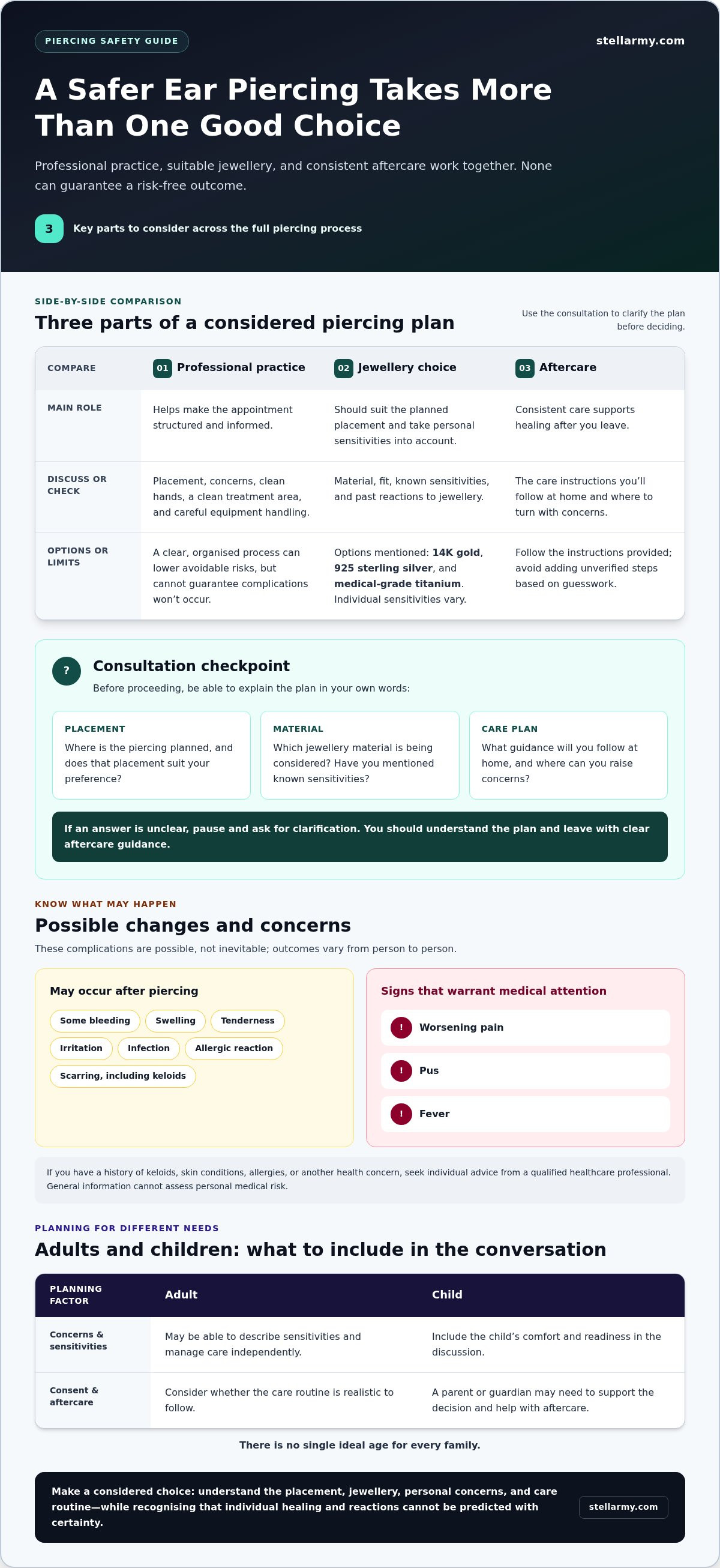
A safer piercing experience depends on several decisions working together. Professional practice helps make the appointment structured and informed. Jewellery should suit the placement and take personal sensitivities into account. Consistent aftercare supports healing once you leave. No single choice removes every risk, and outcomes vary from person to person.
Safer piercing comes down to professional practice, suitable jewellery, and consistent aftercare. This is a practical way to assess tindik telinga selamat without expecting a guarantee. A consultation gives you the opportunity to discuss placement, material preferences, concerns, and care instructions before deciding. Stellar provides professional ear piercing for adults and children, with jewellery options including 14K gold, 925 sterling silver, and medical-grade titanium. A general introduction to ear piercing also describes common placements and risks.
Which risks should you understand before getting pierced?
Some bleeding, swelling, or tenderness may occur after a piercing. Irritation can develop, and infection or an allergic reaction is also possible. Some people develop scarring, including keloids. These complications are not inevitable, but it’s useful to understand the possibilities before deciding. If you have a history of keloids, skin conditions, allergies, or another health concern, seek individual advice from a qualified healthcare professional. General information can’t assess your personal medical risk.
Does safety guidance differ for adults and children?
Planning can differ because age, consent, comfort, and the ability to follow aftercare all matter. An adult may be able to describe sensitivities and manage care independently. A child may need a parent or guardian to support the decision and help with aftercare, while their comfort should remain part of the conversation. There’s no single ideal age for every family. For baby or child-specific considerations, use a dedicated child ear-piercing safety guide alongside professional guidance.
Before proceeding, consider the full picture: placement, jewellery, personal concerns, and the care routine you can realistically follow. Raise anything unclear during the consultation instead of relying on assumptions. This helps you make a considered choice while recognising that individual healing and reactions can’t be predicted with certainty.
How Professional Piercing Practices Help Reduce Avoidable Risks
A professional piercing experience should be clear before it begins. You should have time to discuss the planned placement, jewellery, relevant sensitivities, and aftercare rather than feeling rushed into a decision. These conversations help you understand the plan and prepare for the care involved. Stellar provides a professional ear piercing service for adults and children, with professional guidance as part of the experience.
Good hygiene lowers avoidable risks, but it can’t guarantee that complications won’t occur. Clean hands, a clean treatment area, and careful handling of equipment matter because piercing breaks the skin. Pay attention to whether the process is clean and organised, and make sure you understand what will happen before proceeding.
What should happen during a piercing consultation?
A useful consultation covers the intended placement and jewellery, gives you room to raise concerns, and explains the aftercare you’ll need to follow. Mention known sensitivities, past reactions to jewellery, or concerns about healing. For a child, include their comfort and readiness in the discussion. Clear answers help you decide whether you understand the plan and feel prepared to proceed.
Think of the conversation as a practical checkpoint, not a formality. Before the piercing, you should be able to explain in your own words:
- Where the piercing is planned and whether that placement suits your preference.
- Which jewellery material is being considered and whether you have known sensitivities.
- What care guidance you’ll follow at home and where to turn with concerns.
If an answer is unclear, pause and ask for clarification. You don’t need to know every technical detail about the equipment. You do need to understand the plan, feel comfortable with the discussion, and leave with clear aftercare guidance. Taking time to make these decisions supports tindik telinga selamat.
What hygiene practices should readers look for?
Clean hands and a clean treatment area are basic expectations for a procedure that breaks the skin. Equipment should also be handled carefully to avoid unnecessary contamination. Look for a tidy, organised process and ask questions if you’re unsure how an aspect of the procedure is managed.
Aftercare continues the hygiene effort at home. Follow the instructions provided for your piercing and avoid adding unverified steps based on guesswork. The Association of Professional Piercers publishes general aftercare guidance that can help explain common care principles. Use it as supplementary information, follow the instructions given for your piercing, and seek medical advice if concerning symptoms develop.
Professional guidance, careful hygiene, and clear aftercare work together. They can help you make a more confident decision without promising a risk-free outcome. These same rigorous hygiene standards and consultative principles apply to other specialised skin treatments, such as those provided by RK Exquisite Aesthetic Clinic.
How to Choose Piercing Jewellery for Comfort and Skin Sensitivity
Jewellery choice is more than a style decision. The material rests against your skin, and the fit affects whether the piece presses on the piercing or catches during everyday movement. For tindik telinga selamat, consider material and fit together, and discuss both during your professional consultation. Stellar offers jewellery options including 14K gold, 925 sterling silver, and medical-grade titanium.
Which earring materials may suit sensitive ears?
No material can be assumed to suit everyone. Compare the available options with your personal history and preferences instead of treating one as a universal answer. 14K gold, 925 sterling silver, and medical-grade titanium are distinct jewellery choices, but the material name alone can’t predict how your skin will respond. If you’ve reacted to jewellery before, share that experience before choosing.
For a practical discussion, explain what happened when you wore the jewellery. Note where the reaction occurred, what symptoms you noticed, and whether you know which material was involved. This doesn’t diagnose an allergy, but it gives the professional useful context. If you’ve had a significant metal reaction, or aren’t sure whether past symptoms were an allergy, irritation, or another issue, seek advice from a qualified healthcare professional.
Keep the choice specific to you:
- 14K gold: A gold jewellery option offered by Stellar. Discuss your past experience with gold jewellery if you’ve worn it before.
- 925 sterling silver: A different material option. Mention any previous discomfort or skin changes associated with silver jewellery.
- Medical-grade titanium: Another option to consider in light of your sensitivities and preferences.
These descriptions identify the options, not a guaranteed outcome. Skin responses vary, and no material can promise a reaction-free experience. A sensitive-earrings guide can help you explore material considerations, but treat general reading as background rather than a substitute for individual medical advice.
How should the jewellery fit the piercing?
Fit matters because jewellery that presses against the area or repeatedly catches can add avoidable discomfort. During the consultation, discuss how the piece sits and whether it feels secure without undue pressure. The right fit depends on the piercing and the individual, so don’t assume one shape or size works for every placement. Don’t force jewellery that feels tight or painful. Raise the concern and get appropriate guidance.
Consider everyday movement, too. Hair, clothing, headphones, or accessories may catch on a piece depending on its position. Mention regular activities that could affect comfort so placement and jewellery can be discussed with those practical details in mind. Material and fit are separate decisions: a preferred material still needs a comfortable fit, and a comfortable fit doesn’t rule out sensitivity.
Use your past experiences, preferences, and the piercing’s placement to guide your decision. Discussing these factors helps you choose with care without treating any jewellery category as risk-free.
What to Do Before and After Piercing to Support Healing
Good preparation makes it easier to understand the care a new piercing needs. Before your appointment, think through what you want to discuss. Afterward, follow the instructions provided and pay attention to changes rather than relying on guesswork. This practical routine supports a more informed tindik telinga selamat experience, but it can’t guarantee a particular healing outcome.
How can you prepare for a piercing appointment?
Be ready to explain any known skin or jewellery sensitivities, relevant health concerns, your preferred placement, and the materials you’re considering. Mention previous reactions, even if you’re unsure what caused them. Use the consultation to clarify what will happen and what care will involve. Before proceeding, make sure you understand the instructions well enough to follow them at home.
A simple preparation checklist can help:
- Write down questions about placement, jewellery, and aftercare so you remember them during the discussion.
- Share relevant health concerns or past reactions clearly instead of assuming they won’t affect the decision.
- Make sure you know which care instructions apply to your piercing and where to find them afterward.
- If a child is being pierced, consider their comfort and how a parent or guardian can help them follow the care guidance.
Don’t proceed with unanswered questions. If you’re uncertain about a health concern or how it could affect piercing, get appropriate medical advice before deciding. General online tips aren’t a substitute for instructions tailored to your appointment.
When should you seek medical advice after piercing?
Some tenderness or mild irritation may occur, but symptoms that are severe, persistent, or getting worse deserve attention. Seek medical advice if you notice worsening pain, increasing swelling, redness that spreads, unusual discharge such as pus, or fever. These signs can have different causes, so don’t try to diagnose an infection from a photo or online description. A healthcare professional can assess your symptoms and advise you.
Pay attention to the direction of change. If the area becomes increasingly painful or inflamed instead of settling, seek advice rather than waiting for a routine check-in. Fever or rapidly spreading redness calls for prompt medical attention. If you’re caring for a child, involve their parent or guardian and seek medical help for concerning symptoms.
For routine care, follow the instructions given for your piercing instead of adding products or steps based on assumption. Stellar’s piercing aftercare guidance explains the care information relevant to your new piercing, alongside the aftercare solution Stellar offers. Use the guidance to understand your routine, and turn to a healthcare professional for symptoms that are concerning or worsening.
Review the aftercare guidance before your appointment so you’re prepared to follow it. Explore the piercing aftercare guidance as you plan your care.
A Confident Next Step: Plan Your Ear Piercing With Stellar
A considered piercing decision brings together three things: a professional consultation, jewellery chosen with your preferences and sensitivities in mind, and aftercare guidance you understand. No process can promise zero risk or guaranteed healing. Clear information can help you know what to expect and decide whether you feel ready to proceed.
What can you expect from Stellar’s piercing service?
Stellar provides professional ear piercing for adults and children. You can explore jewellery options including 14K gold, 925 sterling silver, and medical-grade titanium, then discuss your preferences as part of the planning process. The consultation gives you an opportunity to discuss placement, jewellery, personal concerns, and the care information you’ll need afterward. The aim is to support an informed choice, not to promise that every person will have the same experience.
Before deciding, consider what matters most to you. You may want to discuss a preferred placement, past jewellery reactions, or how you’ll manage the aftercare routine. If you’re planning a piercing for a child, include their comfort in the decision and consider how you’ll support their care afterward. Bring your questions to the consultation so you understand the plan and next steps.
How can you move forward with confidence?
Review the service information and aftercare guidance before making a decision. Make sure you understand the planned placement, jewellery options, and the instructions you’ll follow at home. Raise anything unclear during the consultation. If a health concern or previous reaction needs individual assessment, seek guidance from a qualified healthcare professional before proceeding.
Confidence doesn’t mean assuming nothing can go wrong. It means knowing what choices you’re making, understanding the care involved, and recognising when a concern needs professional attention. That framework can make tindik telinga selamat feel less uncertain, whether you’re planning a piercing for yourself or a child.
When you feel informed and ready, review the ear piercing appointment details as your next step. Take the time you need to make sure the plan and aftercare feel clear.
Make Your Piercing Plan Feel Clear
A piercing decision doesn’t need to be rushed. Take time to consider what you want, understand the care involved, and raise questions that could affect your comfort or confidence. That thoughtful approach is at the heart of tindik telinga selamat: making an informed choice while recognising that each person’s experience can differ.
If you’re ready to take the next step, explore Stellar’s professional ear piercing service and review the information that can help you plan. The service is available for adults and children, with jewellery options including 14K gold, 925 sterling silver, and medical-grade titanium. Stellar also provides piercing aftercare information and an aftercare solution, so you can consider the appointment and ongoing care together.
Explore Stellar’s professional ear piercing service when you feel prepared. A clear plan can help you move forward with greater confidence.
Frequently Asked Questions
Is ear piercing safe when it is done professionally?
Professional hygiene and clear aftercare guidance can reduce avoidable risks, but no piercing is entirely risk-free. Irritation, infection, allergic reactions, or scarring are possible, though they don’t happen to everyone. A consultation helps you discuss your health history and understand the decision before proceeding. For tindik telinga selamat, consider the full process, not just the moment of piercing. Seek individual medical advice if you have relevant health concerns.
Can ear piercing cause an infection or an allergic reaction?
Yes, infection and sensitivity to jewellery materials are possible, but neither is inevitable. Hygiene, following the care instructions provided, and choosing jewellery with your sensitivities in mind all matter. No material or routine can guarantee a reaction-free outcome. If discomfort or skin changes worsen, or you experience a significant reaction, seek medical advice rather than trying to identify the cause or manage it based on an online description.
What is the safest earring material for sensitive ears?
There’s no single material guaranteed to suit everyone. Stellar offers 14K gold, 925 sterling silver, and medical-grade titanium, which you can discuss during a piercing consultation. If earrings have caused itching, redness, or discomfort before, describe what happened and which jewellery you were wearing, if you know. For serious or recurring reactions, speak with a healthcare professional for individual advice before choosing a material.
How should I care for newly pierced ears?
Follow the specific aftercare instructions provided for your piercing, and avoid improvising with products or routines you haven’t verified. Where practical, keep hair products and fragrances from contacting the area. Stellar’s piercing aftercare guidance can help you understand the care information offered alongside its aftercare solution. If symptoms worsen or concern you, seek medical advice instead of changing your routine based on guesswork.
How can I tell whether a new piercing needs medical attention?
Increasing pain, redness that spreads, unusual discharge, or fever can warrant prompt medical assessment. These signs need individual evaluation, and general information can’t confirm what’s causing them. Seek urgent care for severe or rapidly worsening symptoms. Don’t rely on photos or online advice to diagnose the problem, and don’t treat this general guidance as a substitute for professional medical advice.
Is ear piercing safe for children and babies?
Whether and when to pierce depends on the child, family preferences, and individual circumstances; there’s no universal ideal age. Consider consent where applicable, the child’s comfort, and whether a parent or caregiver can support the aftercare routine. Stellar provides professional ear piercing for adults and children. For questions specific to babies or children, consult dedicated child-piercing safety guidance and discuss individual concerns during a professional consultation.