
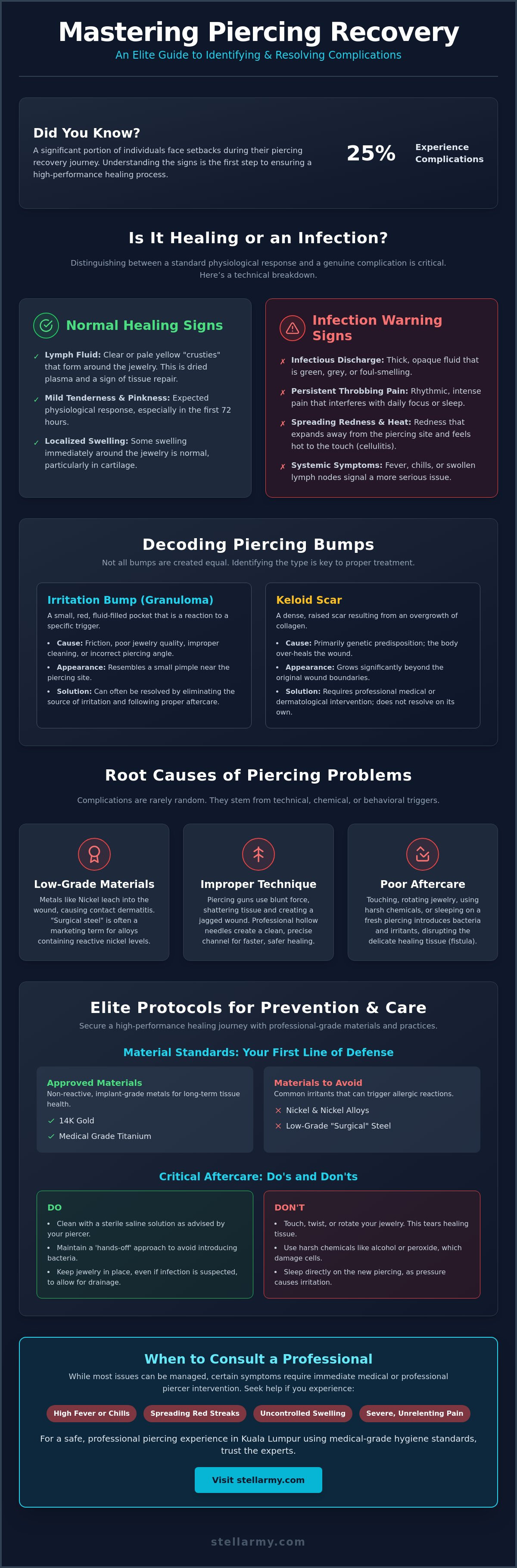
Did you know that approximately 25% of individuals experience complications during their piercing recovery? When you're facing a persistent masalah tindik telinga, it's easy to assume you've just had a run of bad luck. You expected a seamless aesthetic upgrade, but instead, you're managing throbbing pain, unsightly bumps, or the looming fear of permanent scarring. It's stressful to oscillate between hoping for a normal recovery and fearing a deep-seated infection.
We understand that your physical presentation is part of your personal infrastructure. This elite guide eliminates the ambiguity by providing professional protocols to resolve irritation and secure a high-performance healing journey. We'll help you diagnose the root causes of your discomfort and provide actionable steps to restore your ear's health. You'll learn how to identify specific issues, implement rigorous aftercare standards, and recognize exactly when to consult a technical professional in Kuala Lumpur to protect your aesthetic investment. Let's move from frustration to total operational mastery of your recovery process.
Key Takeaways
- Learn to distinguish between normal lymph fluid and infectious discharge to ensure your piercing recovery remains on a high-performance trajectory.
- Identify how low-grade materials and outdated piercing tools trigger a persistent masalah tindik telinga and how to pivot to elite-level solutions.
- Master professional protocols for managing irritation, including why maintaining jewelry placement is critical when addressing suspected infections.
- Understand the technical advantages of 14K gold and Medical Grade Titanium in preventing allergic reactions and securing long-term tissue health.
- Discover the operational standards required for a safe piercing experience in Kuala Lumpur, from medical-grade hygiene to specialized care for children.
Identifying Common Ear Piercing Problems (Symptoms)
Identifying the specific symptoms of a masalah tindik telinga requires a technical eye and a calm approach. During the first 72 hours, mild tenderness and slight pinkness are standard physiological responses. However, if you experience persistent, rhythmic throbbing that interferes with your daily focus, you're likely facing a complication rather than routine healing. Recognizing these signals early prevents a minor irritation from evolving into a significant setback.
Distinguishing between biological waste and active infection is your first priority. You'll frequently notice "crusties" or a clear, pale yellow fluid known as lymph. This is a sign of a healthy immune system at work, flushing out cellular debris. In contrast, infectious discharge is typically thick, opaque, and may appear green or grey. Understanding these common body piercing risks helps you categorize your symptoms accurately before they escalate.
Swelling is another area where precision matters. Localized swelling around the jewelry is expected, especially in cartilage. Spreading redness that feels hot to the touch, known as cellulitis, indicates a systemic issue. If red streaks begin to migrate from the piercing site toward your neck or jaw, your body is struggling to contain the bacteria. This is a clear indicator that your masalah tindik telinga has moved beyond simple irritation.
Signs of Infection vs. Normal Irritation
A true Tanda Tindik Telinga Jangkitan involves more than just a localized itch. You'll notice intense heat radiating from the ear, a persistent low-grade fever, or even swollen lymph nodes. Don't mistake the "crustie" phenomenon for a failed piercing; these are simply dried plasma and represent a natural stage of tissue repair. If you experience a high fever, chills, or spreading red streaks, seek immediate emergency medical intervention to prevent systemic complications.
Identifying Piercing Bumps and Keloids
There's a critical technical difference between an irritation bump and a genetic keloid. An irritation bump, or granuloma, is a small, red pocket of fluid caused by friction, poor jewelry quality, or improper cleaning. A keloid is a dense, raised scar that grows significantly beyond the original wound site and is often tied to genetic predispositions. Often, the placement angle of the piercing creates uneven pressure on the ear canal, triggering these growths. If a bump appears, it's vital to check for a tanda tindik telinga jangkitan to determine if the cause is bacterial or mechanical.
Root Causes: Why Piercing Issues Occur
A persistent masalah tindik telinga rarely occurs without a specific technical or chemical trigger. Most complications stem from a fundamental mismatch between the jewelry material and your body's biological requirements. Low-grade metals, particularly nickel, are notorious for leaching into the wound and causing contact dermatitis. While many retailers label products as 'surgical steel,' this is often a marketing term for alloys that still contain reactive levels of nickel. Switching to 14K gold or medical-grade titanium is the standard protocol for eliminating metal-based irritation.
Technical execution is the second pillar of a successful healing journey. Traditional piercing guns, common in high-traffic mall kiosks, rely on blunt force trauma to push a dull stud through the ear. This process shatters the tissue and creates a jagged wound that struggles to heal. In contrast, professional studios follow the Association of Professional Piercers safety standards, utilizing sterile, single-use hollow needles to create a clean, precise channel. This precision minimizes trauma and significantly reduces recovery time.
Behavioral factors also play a role in recovery failures. Touching or rotating your jewelry is an outdated practice that introduces bacteria and tears the delicate healing tissue, or fistula. Similarly, hair products or sleeping on a fresh piercing can introduce external irritants or cause pressure-related swelling. Maintaining a 'hands-off' approach is essential for protecting your aesthetic results and ensuring the long-term health of your tissue.
The Impact of Low-Grade Metals
Nickel is the primary culprit for allergic reactions in the Malaysian climate. Heat and humidity can accelerate metal leaching, leading to localized redness, itching, and discharge. Hypoallergenic earrings provide a stable, non-reactive environment for the ear to heal properly. By prioritizing 14K gold or medical-grade titanium, you eliminate the chemical variables that often lead to a chronic masalah tindik telinga.
Poor Piercing Techniques and Placement
Precision in placement is non-negotiable for a healthy piercing. If a piercing is performed at an improper angle, it creates constant pressure against the jewelry, leading to stubborn irritation bumps. Initial jewelry also needs sufficient 'breathing room' or post length to accommodate natural swelling during the first few weeks. Our professional ear piercing services emphasize these technical nuances to ensure your piercing is a success from day one. If you're ready for a superior experience, explore our boutique standards at stellarmy.com.
Elite Protocols for Managing Piercing Complications
When managing a persistent masalah tindik telinga, your immediate reaction might be to remove the jewelry. This is a critical tactical error. Removing the stud while an infection is present can cause the skin to seal over, trapping the bacteria inside and leading to a localized abscess. The golden rule is to keep the jewelry in place to ensure a drainage channel remains open while you implement a recovery protocol.
For minor irritations, the LITHA method, or Leave It Alone, is the ultimate low-friction protocol. Most issues stem from over-cleaning or physical manipulation. By eliminating all touching, rotating, or sleeping on the ear, you allow the body's internal repair mechanisms to function without interference. This disciplined approach often resolves redness and minor swelling within 48 to 72 hours.
Sterile saline is your primary tool for debris removal. Unlike harsh chemicals, an isotonic saline solution flushes out discharge without damaging new, fragile skin cells. It maintains the ideal osmotic balance for the wound site. Knowing when to escalate your care is vital. Consult a professional piercer for mechanical issues like jewelry that is too tight. Visit a medical doctor if you experience systemic symptoms like fever, chills, or spreading red streaks.
Safe At-Home Care for Irritated Ears
Success starts with high-quality supplies. Use a dedicated larutan penjagaan tindik twice daily to irrigate the site. Avoid alcohol, hydrogen peroxide, and thick ointments; these substances suffocate the wound and kill beneficial bacteria. After cleaning, moisture is your enemy. Use a hair dryer on a cool setting or a piece of non-woven gauze to ensure the area is completely dry. This prevents the growth of opportunistic bacteria in the humid Malaysian climate.
Professional Troubleshooting in Kuala Lumpur
If your ear is swelling beyond the capacity of your current stud, a professional piercer can "upsize" your jewelry to a longer post. This provides the necessary room for blood flow and drainage. For piercings that have started to close due to neglect, a professional can often perform a "tapering" procedure to gently stretch the channel back to its original size without re-piercing. For long-term tissue health and prevention of a recurring masalah tindik telinga, follow our comprehensive guide on ear piercing aftercare.
Preventing Recurrence with Elite Material Standards
Resolving an active masalah tindik telinga is only the first phase of a successful recovery. To ensure long-term tissue stability, you must transition from reactive troubleshooting to a proactive material strategy. The primary cause of recurring inflammation is the use of sub-par alloys that leach irritants into the skin. By upgrading to biocompatible materials, you eliminate the chemical triggers that lead to chronic swelling and discharge. Stellar Malaysia exclusively utilizes medical-grade standards to protect the integrity of your piercing site.
Medical Grade Titanium (Ti-6Al-4V ELI) represents the pinnacle of piercing technology. This specific grade is used in surgical implants because it's completely inert and lacks the nickel content found in "surgical" steel. Its extra-low interstitial (ELI) status means it won't react with body fluids, even in the humid environment of Kuala Lumpur. For those prone to metal sensitivities, this material provides a high-performance barrier against irritation, ensuring your aesthetic goals aren't compromised by biological rejection.
Design architecture is just as critical as the metal itself. Traditional "butterfly" backs are notorious bacteria traps, as the tight loops collect dead skin cells and moisture. We prioritize screw-back and flat-back designs that offer a smooth, low-profile surface. These designs reduce friction against your pillow during sleep and prevent the jewelry from being pulled into the tissue if swelling occurs. Investing in professional-grade jewelry is a strategic decision that prioritizes operational excellence over temporary fashion trends.
The 14K Gold Advantage
14K gold is the international benchmark for initial jewelry because it strikes a perfect balance between purity and durability. While 24K gold is too soft and susceptible to scratches that harbor bacteria, 10K gold contains a high percentage of base metals that cause the "green ear" effect through oxidation. 14K gold remains stable, preventing the chemical breakdown that often triggers a masalah tindik telinga. Utilizing hypoallergenic earrings is your primary defense against the formation of irritation bumps and chronic redness.
Design Features of Professional Jewelry
Elite jewelry must feature a mirror-polish finish. This microscopic level of smoothness prevents healing skin from adhering to the metal, which is a common cause of tearing and bleeding during cleaning. Flat-back studs are particularly effective for cartilage piercings, as they minimize the pressure that leads to improper angles and unsightly granulomas. To secure your healing journey with the highest material standards, view our selection of medical-grade titanium earrings at Stellar Malaysia.
Professional Piercing in Kuala Lumpur: The Stellar Standard
Choosing a venue for your next procedure is a high-stakes decision that dictates your long-term aesthetic success. At Stellar, we've engineered a boutique experience that prioritizes technical precision and medical-grade hygiene above all else. Most individuals encounter a masalah tindik telinga because they settle for high-traffic mall kiosks that lack specialized infrastructure. Our goal is to provide a seamless, luxury environment where expertise and safety converge to eliminate recovery risks.
The Stellar standard is built on a foundation of complete operational mastery. We don't just perform a service; we act as your strategic ally in maintaining ear health. By utilizing exclusively sterile, single-use equipment and biocompatible materials, we eliminate the variables that lead to recovery failure. This rigorous approach ensures that every client, from first-timers to seasoned collectors, receives a percentile-based quality standard that is unmatched in the region. We value quality over quantity, ensuring every placement is technically perfect.
Our commitment to excellence extends to the environment we create. Each boutique is designed to be a sanctuary of cleanliness and luxury, moving away from the clinical feel of a doctor's office while maintaining higher-than-average sterilization protocols. This balance of modern accessibility and elite exclusivity makes us the premium partner for those who refuse to compromise on their physical presentation. Whether you're starting your journey or resolving a past complication, we provide the ultimate filter for technical excellence. For those who want to extend this high standard of care to their overall wellness, you can discover Emagene Life to learn about functional medicine and hormone optimization.
A Safe Environment for All Ages
Safety is our primary quality seal. We maintain a strict 'no-gun' policy, utilizing only professional needles to minimize tissue trauma and prevent the blunt force issues that often lead to chronic swelling. This is especially critical for our younger clients. We focus on making the first piercing a safe, positive memory by combining a gentle touch with elite sterilization protocols. For parents looking to secure a safe start for their children, our professional kids ear piercing guide provides a detailed roadmap for a complication-free experience.
Expert Consultations and Styling
Anatomy is the blueprint for every successful placement. Our experts conduct thorough consultations to ensure your piercing aligns with your unique ear structure, avoiding the pressure points that cause a masalah tindik telinga. We specialize in the 'Curated Ear' approach, strategically placing 14K gold and medical-grade titanium pieces to create a cohesive aesthetic without overcrowding the tissue. This precision-led styling prevents the chronic irritation often seen in haphazardly planned layouts. If you're ready to upgrade your piercing experience, you can book an ear piercing appointment at our KL or Selangor locations today to secure your session with our technical leaders.
Secure Your Aesthetic Future
A persistent masalah tindik telinga is an avoidable complication when you apply elite material standards and technical precision. Success in your healing journey requires a shift from reactive troubleshooting to a proactive, high-performance strategy. You now understand that 14K gold and medical-grade titanium aren't just luxuries; they're essential infrastructure for tissue stability. By combining these biocompatible materials with a disciplined aftercare protocol, you protect your physical presentation and ensure a seamless aesthetic outcome.
Stellar Malaysia offers the ultimate filter for technical excellence in Kuala Lumpur and Selangor. Our boutiques provide a sterile, high-stakes environment where expert piercers prioritize your long-term health over speed. We've eliminated the variables that cause recovery failure by rejecting outdated tools in favor of professional, needle-based precision. It's time to elevate your standards and partner with a team that values quality above all else. Book Your Professional Piercing Consultation at Stellar Malaysia to secure your appointment today. Your journey toward a perfect, complication-free piercing begins with a commitment to professional mastery.
Frequently Asked Questions
Is it normal for a new piercing to be red and swollen?
Minor redness and swelling are standard physiological responses during the initial 72 hours of healing as your body initiates its localized inflammatory response. This is a routine part of the tissue repair process. If the redness begins to spread toward the jawline or the swelling doesn't subside after the first week, it signals a potential complication that requires an immediate professional assessment to prevent long-term damage.
What should I do if my ear piercing starts bleeding?
Apply firm, steady pressure to the site using sterile, non-woven gauze for several minutes to stop any localized bleeding. Bleeding is common if a fresh piercing is bumped, snagged, or subjected to friction during the early stages of recovery. If the bleeding is heavy or remains persistent despite direct pressure, consult a professional to ensure the jewelry hasn't caused internal tissue trauma or displacement.
How can I tell the difference between a keloid and an irritation bump?
An irritation bump is typically a small, fluid-filled pocket that fluctuates in size and remains localized to the entry or exit point. A keloid is a dense, raised scar that grows significantly beyond the original wound and doesn't respond to standard aftercare. Identifying this distinction is crucial for resolving a persistent masalah tindik telinga effectively before the scar tissue becomes a permanent aesthetic issue.
Can I change my earrings if my piercing is still irritated?
You should only change irritated jewelry if the current material is causing a reaction and you're upgrading to 14K gold or medical-grade titanium. Performing this swap yourself can cause further trauma and introduce harmful bacteria into the wound. A professional should perform the procedure to ensure the new jewelry is sterile and properly sized to accommodate any existing swelling without causing additional friction.
Is it safe to use salt water to clean my piercing issues?
Sterile saline solution is the only safe standard for irrigation; homemade salt water is often non-sterile and improperly balanced for human tissue. Excessively salty mixtures can dehydrate the site and stall the healing process. Stick to a 0.9% sodium chloride spray to flush out debris without damaging the fragile new skin cells forming in the fistula, ensuring a stable recovery environment.
When should I see a doctor for my ear piercing problem?
Seek medical intervention immediately if you experience systemic symptoms like fever, chills, or nausea following a piercing. Localized signs that require a doctor include thick, green discharge and red streaks radiating from the piercing site. These indicators suggest the infection has bypassed your localized immune response and requires professional medical treatment, such as antibiotics, to prevent the infection from spreading further. For patients seeking a highly coordinated medical and surgical approach to recovery, you may visit Aeden Health to learn more about their specialist services.
Why does my piercing smell even though I clean it?
A mild odor is often caused by the natural accumulation of sebum and dead skin cells that can't be shed naturally because of the jewelry. While this is common, a foul or pungent odor accompanied by pain or discharge indicates a more serious masalah tindik telinga. If the smell persists despite a regular saline cleaning routine, it's time for a professional assessment to rule out deep-seated bacteria.
How do I prevent my ear piercing from closing if it's infected?
Keep your jewelry in place to ensure the wound remains open for drainage and prevents an abscess from forming. If you remove the stud, the skin can seal over the infection, trapping bacteria inside the tissue. Maintain your sterile saline cleaning routine and consult a professional piercer to manage the infection while keeping the piercing channel viable through the use of high-quality, biocompatible jewelry.