

Keep skincare off a new earlobe piercing while it heals. The facial skincare application rules around newly pierced earlobes are simple: wash your hands before touching the area, cleanse the piercing gently, and use sterile saline for aftercare. Don’t apply moisturiser, serum, exfoliants or other facial products to or around the pierced skin.
It’s easy for cleanser or skincare to reach your ears while washing your face, so a careful routine matters. Use a mild, fragrance-free cleanser around the area, rinse thoroughly, and pat the piercing dry with a clean disposable paper product. Keep products and tools from catching on the jewellery, and watch for changes: mild tenderness can occur early on, but worsening redness, swelling or discharge may need medical attention. This guide explains how to clean a fresh piercing, how to apply skincare without irritating it, and how to distinguish expected healing from signs that need attention. You’ll also learn which products and habits to keep away until the piercing has healed.
Key Takeaways
- Clean the piercing gently and use sterile saline for aftercare; avoid harsh or homemade solutions.
- Keep moisturiser, serum, exfoliants and other skincare away from the pierced skin while it heals.
- Learn which early changes can occur during healing and which signs, such as worsening redness or discharge, may need medical attention.
- Wash your face with clean hands and careful movements to keep cleanser and tools from irritating or catching on the jewellery.
- Choose suitable earrings and follow a consistent aftercare routine to support a smoother healing process.
How should I clean my piercing?
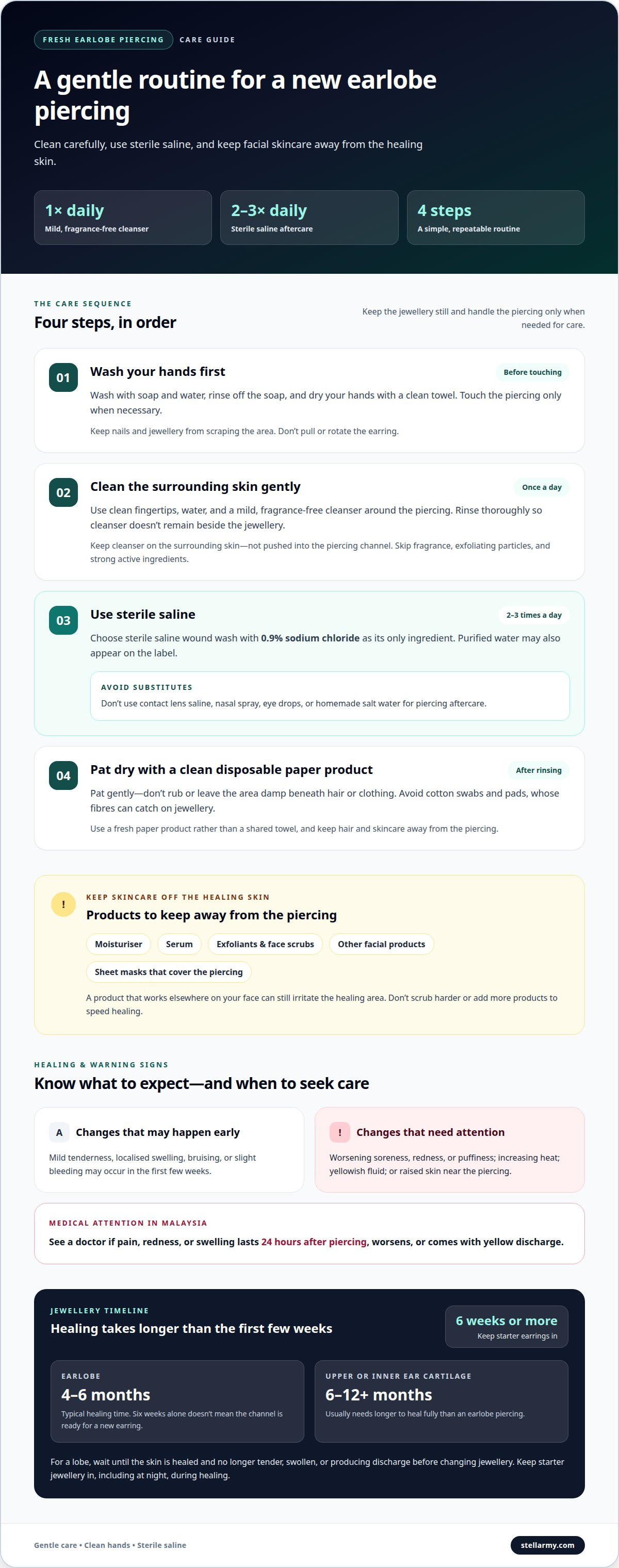
Use a gentle routine for a new lobe piercing: wash your hands, cleanse the area, apply sterile saline, then pat it dry. Keep the jewellery in place and avoid products that can irritate the healing skin.
-
Wash Hands Before Cleaning
Wash your hands with soap and water before touching the piercing or jewellery. Rinse off the soap and dry your hands with a clean towel so residue does not transfer to the lobe. Touch the area only when necessary for care, since frequent handling can introduce dirt and irritate tender skin.
Keep nails, rings and other jewellery from scraping the fresh piercing. Don’t pull or rotate the earring to reach the skin. Clean gently around the entry and exit points without pressing on the jewellery or healing tissue.
-
Cleanse With a Mild Fragrance-Free Cleanser
Gently wash the skin around the piercing once a day with water and a mild, fragrance-free cleanser. Use clean fingertips to loosen surface residue, then rinse thoroughly so cleanser doesn’t remain beside the jewellery. Keep the cleanser focused on the surrounding skin rather than pushing it into the piercing channel.
Choose a simple cleanser without fragrance, exfoliating particles or strong active ingredients. For example, skip a scented face wash near the lobe and use a mild formula instead. Daily cleansing is one part of care; it doesn’t replace saline, and scrubbing harder won’t make the piercing heal faster.
-
Clean the Piercing With Sterile Saline
Spray the new piercing with sterile saline two to three times a day. Choose a sterile saline wound wash with 0.9% sodium chloride as its only ingredient; purified water may also appear on the label. The Association of Professional Piercers recommends this type of saline for piercing aftercare.
Use sterile saline as directed for piercing aftercare, allowing it to reach the area around the piercing while keeping the jewellery still. Don’t substitute contact lens saline, nasal spray or eye drops, and don’t mix homemade salt water. Its concentration may be too strong, dry the skin and disrupt healing. Using more products will not speed up healing.
-
Keep the Fresh Piercing Dry and Clean
After rinsing, gently pat the lobe dry with a clean, disposable paper product. Don’t rub or leave the area damp beneath hair or clothing. Avoid cotton swabs and pads, as loose fibres can catch under the jewellery and irritate the skin. Use a fresh paper product rather than a shared towel.
Keep skincare, hair products and dirty hands away from the piercing between cleaning sessions. Cleaning won’t prevent every problem, so notice changes as you care for the area. Yellow fluid or raised skin, which may signal a developing keloid, needs more attention than ordinary surface residue. For consistent steps throughout healing, follow this piercing aftercare routine.
Signs of healing, irritation and infection
Keep starter earrings in for six weeks or more, and wait until the lobe has healed before changing them; earlobe healing typically takes 4-6 months. In Malaysia, see a doctor if pain, redness or swelling lasts 24 hours after piercing, worsens, or comes with yellow discharge.
- Watch for changes in the skin as the piercing heals. Mild tenderness, localised swelling, bruising or slight bleeding may occur in the first few weeks. Increasing soreness, redness or puffiness may indicate irritation or infection. Yellowish fluid from the piercing hole can be a sign that something is wrong. Don’t dismiss worsening changes simply because the piercing is new.
Raised skin near the piercing may be a developing keloid scar. Notice whether the area becomes more raised or uncomfortable, and avoid squeezing or picking it. A bump and yellow discharge are different signs, but either calls for attention rather than extra skincare or vigorous cleaning.
- Use the healing timeline to guide earring changes. Earlobe piercings typically take around 4-6 months to heal, so six weeks is not proof that the channel is ready for a new earring. Leave starter jewellery in for six weeks or more, including at night, and don’t remove it during healing. Changing too early can irritate the piercing or allow it to close.
Cartilage piercings usually need longer, with upper or inner ear piercings taking 6-12+ months to heal fully. Don’t use an earlobe timeline for cartilage. For a lobe, wait until the skin is healed and no longer tender, swollen or producing discharge before changing jewellery.
- Keep exfoliants and active skincare away from the healing piercing. Face scrubs and chemical exfoliants can irritate fresh skin; if you exfoliate nearby, choose a less abrasive formula and keep it clear of the hole and jewellery. Avoid moisturisers, antibacterial products, lotions and soaps around the piercing while it heals. A product that works elsewhere on your face can still irritate this sensitive area.
Avoid sheet masks that could cover the piercing, and don’t use contact lens saline, nasal sprays or eye drops as aftercare substitutes. Keep skincare simple around the lobe. Don’t test a new product directly on irritated skin.
- Act on symptoms that persist or intensify. If pain, redness or swelling continues for 24 hours after the piercing, seek medical care in Malaysia. Get medical advice sooner if the area becomes increasingly hot or puffy, or yellowish fluid appears. Persistent signs of possible infection need assessment rather than repeated product changes or extra exfoliation.
Use a clean pillowcase and avoid putting pressure on the pierced ear while sleeping. Friction can aggravate tenderness and disturb the jewellery. Keep hair clear of the lobe so it doesn’t catch as the skin heals.
Aftercare for ears, ear cartilage and facial piercings
Keep jewellery, hair and skincare from disturbing a new piercing during its initial healing. These habits apply to lobe, cartilage and facial piercings, with extra care around products that touch the area.
- Leave the starter jewellery in place as the piercing heals, including at night. Removing it too early can allow the hole to close, while rotating or twisting it may irritate the healing channel. Clean around the jewellery rather than removing it. If an earring falls out, don’t force it back through tender skin, as this can cause further irritation.
Different sites heal at different rates. Cartilage piercings can take longer than lobe piercings, and upper or inner ear piercings may need 6-12+ months to heal fully. Don’t use a lobe’s progress to judge a helix or facial piercing.
- Keep hair and clothing clear of the piercing whenever possible. Tie back long hair before washing your face, brushing it or applying hair products. Take care with overhead shirts, sweaters and towels, which can snag an earring as they pass over the ear. A sudden pull can injure the lobe or disturb healing skin.
Change pillowcases and towels regularly, and use clean ones after washing your hair. Avoid pressing the pierced ear into the pillow while sleeping, as friction can make it sore. These simple steps reduce contact with surfaces and help prevent the jewellery from catching.
- Keep beauty products away from a healing piercing. Shampoo, conditioner, hair oil, makeup, hairspray, perfume and toning mist can irritate the skin if they reach the opening. If a product gets near the piercing, rinse the area gently and clean around the jewellery. Don’t use alcohol or other harsh products to remove residue.
Keep sheet masks, face scrubs and chemical exfoliants away from a healing facial piercing. When washing your face or applying serum, work around the piercing rather than rubbing over it. Keep your skincare routine simple until the skin has healed.
- Wash your hands before necessary contact, and don’t remove jewellery to inspect the piercing. If a clasp or post feels caught, stop pulling and don’t force it to move. Clean around the area as directed for aftercare, then leave the jewellery undisturbed.
After swimming or bathing in a pool, lake, ocean, bathtub, sauna or hot tub, rinse the area gently and keep the piercing clean and dry. If pain, redness or swelling worsens, or yellow fluid appears, seek medical advice instead of changing the jewellery or adding skincare products.
How long should you wait before applying skincare products near newly pierced earlobes?
Keep skincare off the pierced skin throughout healing rather than relying on a fixed number of days. Healing times vary, and products can irritate the area before it has fully healed. The facial skincare application rules around newly pierced earlobes are to keep products away from the opening until healing is complete.
- Apply facial products around, not over, a piercing while it heals. Leave a clear space around the earring’s entry and exit points when using cleanser, moisturiser or serum. Residue can sit against the jewellery or reach the opening, so avoid rubbing the lobe as you apply products.
For example, apply moisturiser to your cheeks and forehead first, then work carefully around the ear. Don’t spread leftover product onto the lobe. Follow the facial skincare application rules around newly pierced earlobes by keeping the jewellery and pierced skin clear of skincare while the piercing heals.
- Use the healing timeline as a guide, not an automatic green light. Earlobe piercings typically need around 4-6 months to heal, but a calendar alone can’t show whether your piercing is ready for skincare contact. Keep products away if the area remains tender, red, swollen or produces discharge.
Cartilage piercings may take longer to heal than lobe piercings, so don’t assume the same healing timeline applies to both. The piercing location and how the skin is healing affect when products can be used nearby.
- Keep exfoliants away from the pierced area while it heals. Face scrubs and chemical exfoliants can irritate fresh skin, even when used carefully on other areas. Avoid exfoliating toner near the ear, and don’t sweep product close to the piercing with a cotton pad.
If you exfoliate another part of your face, leave the skin around the earring untouched. A less abrasive formula still isn’t suitable for the piercing opening. Wait until the piercing has healed before exfoliating nearby.
- Avoid products that can coat or irritate the piercing opening while it heals. This includes moisturisers, lotions, antibacterial products and sheet masks that could cover the ear. Keep perfume, hairspray and hair oil from settling on the jewellery while you style your hair.
If cleanser or another product accidentally reaches the piercing, rinse it away gently. Don’t apply alcohol, petroleum jelly or another skincare product to counteract it. Resume your usual piercing aftercare routine.
- Resume nearby skincare only once the piercing has healed. Check for ongoing tenderness, redness, swelling or discharge before changing your routine. If any of these signs remain, keep products away instead of testing them on the area.
When you resume skincare, introduce products carefully around the lobe. Apply a small amount to nearby facial skin without touching the piercing, and keep the jewellery clear. Stop applying products near the area if irritation returns.
How to wash your face without irritating a newly pierced earlobe
Wash your face carefully to keep cleanser, water and your hands from disturbing the earring. Follow these steps in order, then continue your usual piercing aftercare.
- Tie back long hair before you begin, especially if you’re using shampoo or styling products. Wash your hands with soap and water, then prepare a clean face cloth or disposable paper product. Move hair away from both ears so it can’t brush across the piercing as you cleanse. Remove rings that might catch the earring if your hands move near your lobes.
- Wet your face with clean water, directing the flow away from the pierced ear. Dispense a mild, fragrance-free cleanser onto your fingertips, not directly onto the lobe. Start at your forehead and cheeks, then work around the ear with small, controlled movements. Don’t scrub the pierced skin or pull the earring to reach behind it.
- Rinse your face carefully, guiding water away from the piercing with your hands. Check that cleanser hasn’t collected around the front or back of the jewellery. If suds reach the lobe, rinse them away gently without twisting the earring. Shampoo, conditioner and face wash can leave residue, so rinse thoroughly before drying your face.
- Pat your cheeks and forehead dry with a clean towel, keeping its edge away from the jewellery. If the piercing gets wet, gently pat it dry with a clean disposable paper product. Don’t rub with a towel or cotton pad: fabric can snag the earring, and loose fibres can catch beneath it. Keep the earring still as you dry around it.
- Apply moisturiser or serum only after your face and lobe are dry. Use clean fingers and keep the product off the pierced skin. Keep exfoliating toner, face scrubs and chemical exfoliants away from the opening while it heals. If product touches the piercing, rinse it gently rather than rubbing or adding another product.
For help planning a new ear piercing and its care routine, explore ear piercing services.
Stellar Malaysia
Stellar Malaysia offers ear piercing and earrings in 14K gold, 925 sterling silver and medical grade titanium. If you’re planning a new piercing, its team can provide a piercing consultation and help you consider suitable jewellery, including options for sensitive skin. A considered choice of earrings is one part of starting well; careful aftercare and keeping skincare away from the healing area remain essential.
For an ear-piercing consultation or help choosing earrings, contact Stellar Malaysia.
Make your next step a confident one
A new piercing calls for one adjustment to your routine: treat the area as healing skin, not as an extension of your usual skincare zone. Keep facial products away from the piercing, and pay attention to changes in tenderness or appearance. The facial skincare application rules around newly pierced earlobes are easiest to follow when you keep the routine simple and avoid experimenting with products near the opening.
If you’re planning an ear piercing, Stellar Malaysia offers ear piercing alongside 14K gold and 925 sterling silver earrings. You can explore these options as you consider your next step, while keeping aftercare central to your decision.
Contact Stellar Malaysia about ear piercing and take the next step with a clear plan. A consistent routine can help you care for your new piercing with confidence.
Frequently Asked Questions
What products should I use for piercing aftercare?
Use sterile saline wound wash and water, plus a mild, fragrance-free cleanser for surrounding skin. The Association of Professional Piercers recommends saline with 0.9% sodium chloride as the only ingredient; purified water may also be listed. Choose a product labelled for wound washing, not contact lens care. Avoid homemade salt mixtures, which can be too concentrated and dry the skin. Keep your routine simple while the piercing heals.
Can facial cleanser, toner, moisturizer, or sunscreen be used around a fresh ear piercing?
Keep cleanser, toner, moisturiser and sunscreen off the pierced skin while it heals. You can apply facial products to areas such as your forehead and cheeks while leaving the lobe clear. If a product runs toward the jewellery, gently rinse it away with clean water. Avoid cotton pads near the opening, as fibres may catch beneath the jewellery and irritate the area.
How do I clean a new earlobe piercing, and how often?
Wash your hands first, then spray the piercing with sterile saline two to three times daily. Clean surrounding skin once daily with mild, fragrance-free cleanser and water, then rinse thoroughly. Pat the area dry with a clean disposable paper product. For example, after washing your face, check that no cleanser remains around the earring. Don’t twist or remove the jewellery during cleaning.
Which ingredients should I avoid near a fresh ear piercing, such as acids, retinoids, and benzoyl peroxide?
Keep chemical exfoliants and face scrubs away from the piercing while it heals. Avoid acids and keep retinoid or benzoyl peroxide products off the pierced skin. Prevent active skincare from reaching the opening or sitting against the jewellery. Apply these products only to separate areas, and gently rinse the piercing if residue reaches it.
Can makeup, hair products, or perfume get on a new earlobe piercing?
Keep makeup, hairspray, hair oil, shampoo, conditioner and perfume away from the jewellery and piercing opening while it heals. These products can leave residue or irritate the area. Tie back your hair before styling, and apply face makeup without sweeping brushes across the lobe. If shampoo or another product reaches the piercing, rinse it away carefully and continue your regular aftercare routine.
What are the signs of infection or an allergic reaction in a newly pierced earlobe?
Increasing soreness, redness or puffiness can signal irritation or possible infection. Yellowish fluid from the hole is another warning sign. Jewellery metals can also trigger an allergic reaction in some people, so notice whether discomfort occurs where the metal touches the skin. Don’t diagnose the cause from appearance alone. Seek medical advice if symptoms persist or worsen, or if there is discharge, rather than repeatedly changing products.
What do Malaysian health authorities or professional piercers recommend for new ear piercing aftercare?
For specific professional aftercare advice, the Association of Professional Piercers recommends sterile saline wound wash containing 0.9% sodium chloride as its only ingredient, although purified water may also be listed. Their guidance also advises against homemade salt solutions and products such as contact lens saline. Follow a consistent cleaning routine, keep skincare away from the healing opening, and seek medical care for worsening symptoms.