

Placement matters as much as the jewelry. A helix piercing in Malaysia goes through the upper outer cartilage of the ear, with the exact position shaped by your anatomy and preferred look. Sensitivity varies from person to person, so understanding the appointment can help you decide whether it suits you.
You may already have a style in mind, but placement, jewelry material and aftercare all matter. This guide explains what to expect, what to discuss with a professional and how to prepare, so you can make an informed decision.
Learn how helix placement and styling work, what to know about the piercing process and jewelry materials, and how to care for a new piercing. We also cover appointment planning in Malaysia to help you make a clear, informed choice.
Key Takeaways
- Learn how ear anatomy and styling goals shape helix placement, including whether a hidden placement may suit your ear.
- Understand what to consider about piercing needles and jewelry materials before your appointment.
- Get a practical overview of aftercare and the habits that help protect a fresh piercing as it heals.
- Find out what to plan for when arranging an appointment in Malaysia, including questions around age and parental consent.
- See how Stellar Malaysia’s ear piercing and Disney piercing options may fit your jewelry preferences.
Aftercare guidance
A helix piercing sits in cartilage, so careful handling matters during healing. Keep the area clean, limit pressure and follow the aftercare instructions provided with your piercing. One person’s account of being four days past their piercing is an anecdote, not a healing schedule. Healing varies, and appearance alone cannot confirm that the piercing has healed.
Start with clean hands whenever care involves the ear. Wash them before touching the jewelry or nearby skin, then follow the product directions for cleaning. A piercing aftercare solution can support a consistent routine; use it as directed rather than adding extra products. The piercing aftercare guidance explains care for a new piercing.
- Clean hands before any contact with the piercing.
- Use the recommended aftercare solution according to its instructions.
- Keep hair, headphones, and clothing from catching or pressing on the jewelry.
- Pat the area dry gently after washing; avoid rubbing or snagging it with a towel.
- Leave the jewelry in place unless a qualified professional advises otherwise.
Pressure is easy to overlook. Sleeping directly on the pierced ear can press jewelry against cartilage, while over-ear headphones may rub the same spot. Position your pillow to keep weight off that side, and adjust headphones if they touch the piercing. Clothing, towels and hairbrushes can also catch a stud, so take care when dressing or grooming.
Avoid turning, twisting or repeatedly checking the jewelry. These movements can irritate the area and complicate routine care. Keep makeup, hair products and fragrance away from the piercing. If residue reaches your ear, follow the aftercare instructions rather than scrubbing the piercing.
Swimming can expose a fresh piercing to water and surfaces that are difficult to control. Avoid submerging it in pools, lakes or seawater while it heals. If water reaches the area in the shower, follow the care instructions afterward. Don’t use alcohol, peroxide or other harsh household products unless a healthcare professional specifically directs you to.
Watch for increasing redness, heat, swelling, pain or unusual discharge. These signs warrant prompt medical attention, especially if they worsen or you feel unwell. If infection is a concern, don’t remove the jewelry yourself. Seek medical advice about what to do next. A helix piercing needs consistent care, not repeated handling or improvised treatments.
Anatomy-specific ear piercing and styling
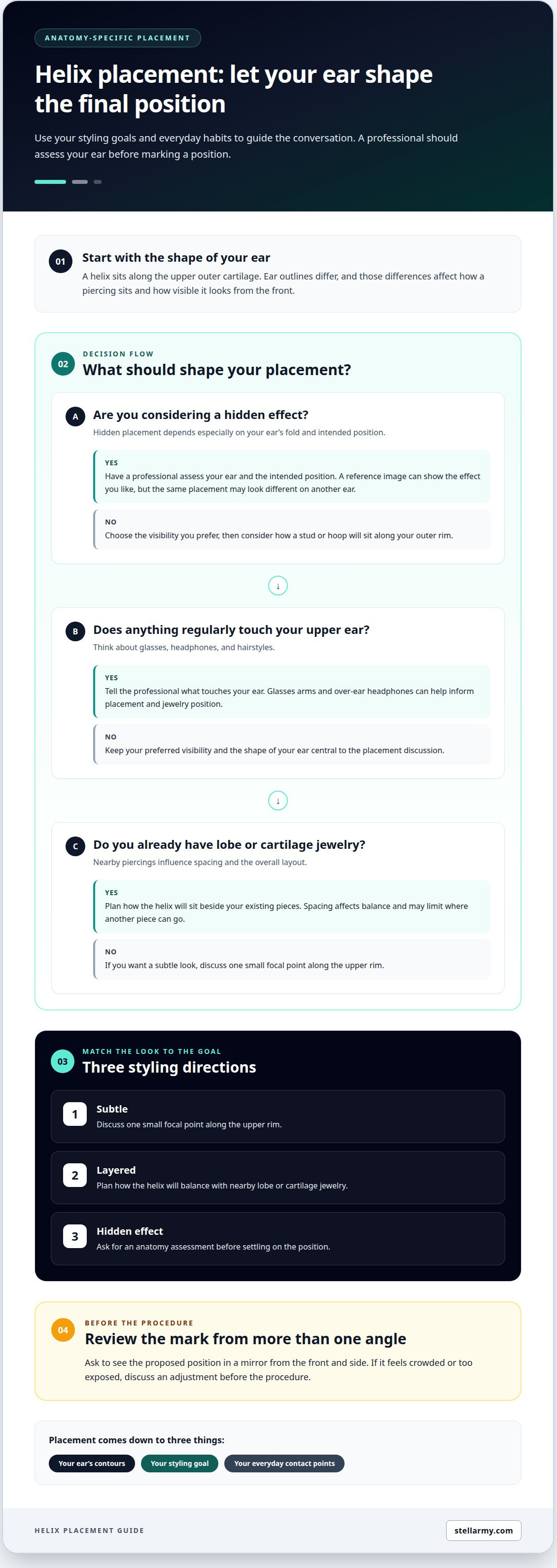
A helix piercing follows the upper outer cartilage, but every ear has a different outline. One person’s rim may curve smoothly; another’s may have a shallow fold or a more pronounced ridge. These differences affect how the piercing sits and how visible it looks from the front. A professional should assess your ear shape before marking the position, rather than copying a photograph.
Placement also depends on your styling goal. A single stud creates a focused accent, while a small hoop follows the ear’s outer curve. A cluster can create a layered look, but its balance depends on available space and nearby piercings. The professional considers your cartilage shape, the jewelry’s position and how the design looks from different angles.
A hidden helix placement needs particular attention to anatomy. Its suitability depends on your ear, so a professional should assess the fold and intended position. A reference image can help communicate the effect you want, but the same placement may look different on another ear. The final mark should suit your anatomy, not just the image.
- For a subtle look: discuss one small focal point along the upper rim.
- For a layered look: plan how the helix will sit beside existing lobe or cartilage jewelry.
- For a hidden effect: ask for an anatomy assessment before settling on the placement.
- For daily comfort: mention glasses, headphones, or hairstyles that touch the ear.
Bring practical details to the consultation. Glasses arms may rest near the upper ear, and over-ear headphones may cover the helix. Sharing these habits helps the professional consider placement and jewelry position together. Mention any existing piercings too, as spacing affects the overall balance and may limit where another piece can sit.
Styling works best as a coordinated layout, not a set of isolated choices. A professional can map the helix in relation to your lobe jewelry, ear contours and preferred visibility. Review the proposed mark in a mirror from the front and side. If it feels crowded or too exposed, discuss adjusting the position before the procedure.
For a placement-focused appointment, explore the piercing options and discuss the look you want with a professional.
Piercing needles and jewelry materials
A helix piercing passes through upper-ear cartilage, so the procedure and starter jewelry deserve clear attention. A piercing needle creates the channel for the jewelry; it is not the jewelry itself. Before the procedure, the professional should explain the sequence, show the planned placement, and describe how the jewelry will sit. That conversation helps you understand each step before it begins.
Piercing methods differ, so ask how the professional’s instrument works and why it suits the planned placement. The angle matters because the piercing and jewelry need to align with the ear’s curve. A clear explanation is more useful than choosing a method based only on a short online clip or someone else’s experience.
Material is another decision. Common options include medical grade titanium, 14K gold, 18K gold, and 925 sterling silver. These labels identify different materials, but they don’t describe every detail of a particular piece. Ask what the jewelry is made from, how it fastens, and whether its shape fits the marked placement. For example, a stud and a hoop create different profiles against the outer rim.
Sensitive skin also affects the discussion. Hypoallergenic options may be relevant, but the material and construction still matter. Share any known metal sensitivity before selecting jewelry. A professional can then talk through the available material options and how each piece works with the placement. Avoid assuming that a gold-coloured finish means a piece is solid gold; clarify the stated material.
- Medical grade titanium: discuss this option if you’re prioritising a material often selected for sensitive-skin jewelry.
- 14K or 18K gold: clarify which gold option the piece uses.
- 925 sterling silver: confirm whether the specific design suits the intended piercing.
- Shape and fastening: consider how the jewelry sits, moves, and may catch on hair or clothing.
In Malaysia, jewelry pricing depends on material, design, and whether the piercing service is included; the amount is provided after a quote request. A simple comparison should account for both the jewelry choice and the procedure, rather than judging by appearance alone. For example, compare a gold stud with a titanium option by material and construction, not colour.
Before proceeding, the professional can confirm the selected piece matches the marked location and explain its fit. A piercing appointment gives you a chance to discuss the needle procedure and jewelry choice together, so the decision reflects both placement and material.
Piercing services and appointments in Malaysia
In Malaysia, appointment planning starts with the piercing location, jewelry choice, and the person receiving the piercing. Age and consent arrangements also matter when the appointment is for a minor.
Piercing Service Options
Ear piercing can cover different placements, including the lobe, helix, and forward helix. Each position has a different location and appearance, so identify the piercing you want before arranging an appointment. An 18K gold piercing or Disney piercing can also shape the jewelry decision. Review the ear piercing services to understand the service options.
Be specific about the intended placement. A helix piercing sits on the upper outer ear, while a forward helix sits near the front upper fold. Naming the location helps focus the appointment on the piercing you want.
Appointment Arrangements
Plan the appointment around the piercing location and jewelry selection. Keep the intended ear and placement in mind, and note whether you want a lobe, helix, or forward helix piercing. If you have a reference image, use it to communicate the style, not as a template for identical placement.
Before your visit, consider which ear you sleep on, whether glasses rest near the planned site and which jewelry material you prefer. These details make the appointment discussion more specific. Allow time to review the proposed placement and jewelry before the procedure.
Age and Parental Consent
For a minor’s piercing appointment in Malaysia, include a parent or legal guardian in the planning. Age acceptance and consent requirements depend on applicable rules and the service provider’s policy, so avoid assuming one age threshold applies to every piercing. The young person’s age, requested placement, and consent arrangements all affect how the appointment proceeds.
Make the requested piercing clear when arranging the visit, especially if the young person wants a cartilage placement rather than a lobe piercing. A helix and a forward helix are different locations. The parent or guardian can help communicate the requested placement and take part in the consent process.
Use a simple preparation sequence: decide on the piercing location, consider suitable jewelry, and plan who will attend. For minors, include the parent or guardian from the start. These steps make the appointment discussion more precise without relying on assumptions about age or consent.
What age and parental consent rules apply to piercings in Malaysia?
For a piercing appointment in Malaysia, distinguish the age accepted for service from the consent process. These are practical appointment requirements, and the answer can depend on the piercing requested and the setting. Don’t assume that a rule for a lobe piercing automatically applies to a helix placement.
For a minor, involve a parent or legal guardian before arranging the appointment. Make the young person’s age and requested piercing clear from the start. A lobe piercing and a cartilage piercing involve different locations, so the requested service matters when discussing age and consent arrangements.
Consent should be an informed conversation, not only a signature. The adult and young person should understand the intended placement, jewelry choice, procedure, and aftercare responsibilities. For example, a teenager requesting a helix piercing should be able to explain the desired location, while the accompanying adult understands the care involved afterward.
- Identify the piercing: specify whether the request is for a lobe, helix, or forward helix.
- State the age: share the young person’s age when arranging the appointment.
- Plan adult involvement: arrange for a parent or legal guardian to take part in the consent discussion.
- Discuss the decision: ensure the young person understands the placement and ongoing care.
These steps prevent avoidable uncertainty at the appointment. They also help distinguish the young person’s preference from the adult’s role in consent. If a parent is attending, discuss the specific piercing together before the visit. A clear shared decision is especially useful when the young person wants cartilage jewelry rather than a familiar lobe piercing.
Consent is not a substitute for readiness. A young person may feel unsure about the placement, jewelry or aftercare routine. Pause if they cannot describe what they want or seem pressured. Wanting a friend’s helix style is different from feeling comfortable with the piercing and its care.
Keep the appointment discussion focused on three points: the young person’s age, the exact ear location, and the parent or guardian’s participation. These details clarify which consent process applies to that appointment. Avoid relying on advice meant for another country, another piercing location, or a different service setting.
Planning a piercing for a young person? Arrange a piercing appointment with the age, placement, and parent or guardian involvement ready to discuss.
Stellar Malaysia: Disney Piercings
Stellar Malaysia offers Disney Piercings alongside ear piercing, giving you a focused option if you want a character-themed style. For a different look, its jewelry selection includes 14K gold earrings and 925 sterling silver earrings. Choose based on the style and material you prefer, then discuss how the selected earrings fit your intended piercing.
If you’re considering a helix piercing, bring your placement preference and jewelry questions to the appointment discussion. For a lobe piercing or a Disney-themed choice, the same clear approach helps connect the look you want with the piercing service.
Contact Stellar Malaysia to discuss Disney Piercings or ear piercing and decide which option suits your style.
Make Your Next Piercing Decision With Confidence
A helix piercing in Malaysia is a personal style choice, so consider the look you want and how it fits your everyday routine. Think beyond the first impression: do you want a subtle accent, a coordinated ear style or a character-inspired detail? A clear preference gives your appointment conversation a useful starting point.
Stellar Malaysia offers ear piercing, with 14K gold earrings and 925 sterling silver earrings among its jewelry options. These choices can help shape the direction of your look, whether you’re planning a new piercing or exploring jewelry for an existing one. Focus on the style and material that feel right for you, then discuss your preference as you arrange your appointment.
Ready to take the next step? Contact Stellar Malaysia to book and start planning a piercing that feels like your own. A considered choice today can make your next style decision easier.
Frequently Asked Questions
What is a helix piercing and how is it done?
A helix piercing is placed through the upper outer cartilage of the ear. Stellar Malaysia’s professional ear-piercing service uses an advanced instrument operated by hand pressure, with minimal sound, and disposable earring cartridges. A professional will position the piercing according to your ear and selected placement. Before the procedure, discuss the intended location and jewelry to align the appointment with your preferred look.
How much does a helix piercing cost in Malaysia?
Stellar’s piercing studs start from RM 229 and above, with prices varying by material, design, and size. The piercing service itself is complimentary when you purchase piercing studs. Prices and product descriptions may change, so treat the listed starting figure as a guide rather than a fixed quote. The final amount depends on the stud selected and its design.
Which piercing studios in Malaysia offer helix piercings and what are their reviews?
Stellar Malaysia offers professional ear piercing, including helix placement. This FAQ doesn’t provide a verified customer rating, so it would be misleading to assign a review score. For useful feedback, focus on comments that describe the appointment process, staff explanations, and aftercare support, rather than relying on a star rating alone. That detail can help you understand what the piercing experience involves.
What jewellery materials and sizes are safe for a new helix piercing?
Stellar’s piercing studs are offered in solid 18K gold, 14K gold, and medical grade titanium. The right fit depends on the piercing’s position and your ear’s shape, so discuss the stud’s size and fit during the appointment. Don’t assume a decorative earring will suit a fresh piercing simply because it looks similar. Ask which stud is intended for the selected placement.
What is the typical helix piercing healing time?
Healing time varies, so no single timeframe applies to every helix piercing. Your care routine, pressure on the ear and irritation from catching or rubbing can all affect healing. Don’t judge progress by appearance alone or change jewelry based only on a calendar. Follow the care directions and seek medical advice if the area becomes increasingly uncomfortable.
How will a professional guide you in cleaning and caring for a new helix piercing?
Stellar provides after-care lotion with a piercing-stud purchase and instructs customers to use it daily as directed. The purchase also includes two complimentary consultations, where you can discuss care questions. Follow the product directions rather than adding treatments or changing the routine on your own. If a concern develops, explain what you’re noticing during a consultation.
What are the risks and signs of infection or cartilage damage from a helix piercing?
Increasing pain, heat, swelling, redness or unusual discharge can signal a problem and warrant prompt medical attention. Cartilage irritation can also result from repeated pressure, snagging or rough handling. Don’t try to diagnose the cause or treat worsening symptoms with household products. Seek medical advice if symptoms intensify, spread or occur with feeling unwell, and follow the clinician’s instructions about the jewelry.
Can you swim, sleep on, or wear headphones with a new helix piercing?
Swimming can expose a new piercing to water and surfaces that are difficult to control, so avoid submerging it while it heals. Sleeping directly on the ear can press the jewelry, and over-ear headphones may rub the site. Choose a sleep position that avoids pressure and use headphones only when they don’t touch or push against the piercing. Resume activities according to healing progress and care guidance.