
Most "standard" piercing advice in Malaysia is dangerously outdated, relying on harsh chemicals that actually stall your body's biological healing process. You likely want that perfectly curated look without the persistent nightmare of redness or the fear of developing "keloid" bumps. It's frustrating to follow common cleaning tips only to find your skin reacting to low-quality materials or aggressive antiseptics. We understand that your piercing isn't just a hole; it's a strategic investment in your personal style infrastructure.
This guide provides the 2026 elite protocol for lobe piercing aftercare malaysia, moving beyond basic hygiene into high-performance recovery standards. You'll master the professional techniques required to ensure a lifetime of irritation-free jewelry styling. We'll reveal why sterile saline is your only non-negotiable tool, how medical-grade titanium prevents common complications, and the exact timeline for switching to 14K gold with total confidence. This article delivers a clear, actionable roadmap to a complication-free heal that respects your time and your skin's biological integrity.
Key Takeaways
- Master the 12-week biological healing cycle to prevent premature jewelry changes that disrupt essential tissue maturation.
- Adopt the 2026 elite standard for lobe piercing aftercare malaysia by utilizing sterile saline irrigation and the "Leave It The Heck Alone" rule.
- Select medical-grade titanium or 14K gold to ensure maximum biocompatibility and eliminate the risk of irritation from low-quality materials.
- Mitigate environmental risks specific to the Malaysian climate, such as high humidity and sweat, through targeted post-activity rinsing protocols.
- Secure your piercing infrastructure with a professional downsizing appointment to prevent jewelry migration and ensure long-term aesthetic alignment.
The Biology of Lobe Piercing: Understanding the 12-Week Recovery Cycle
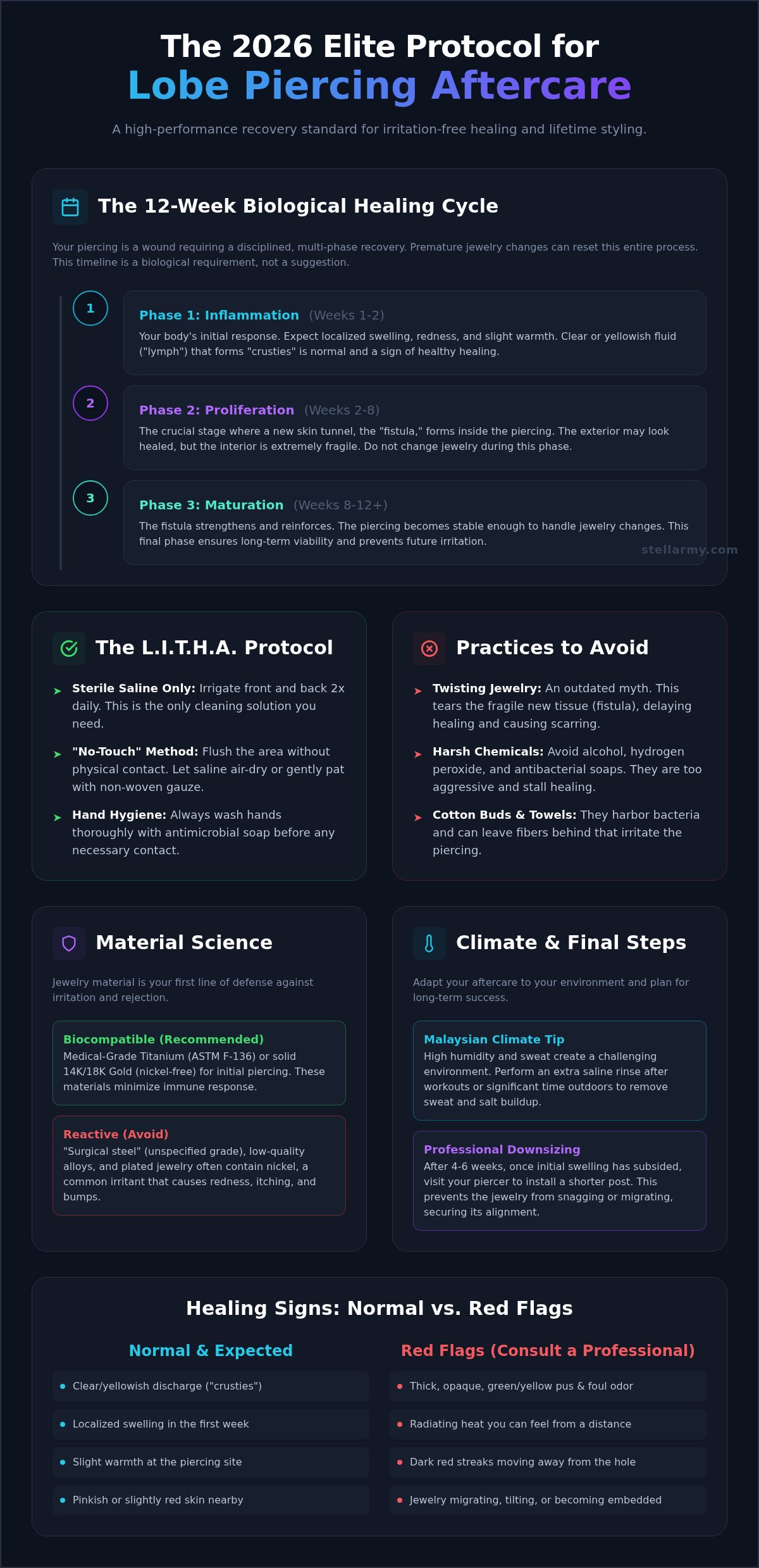
View your lobe piercing as a controlled, surgical-grade puncture rather than a simple cosmetic change. Your body treats this as an open wound, initiating a complex biological response that can't be rushed. Understanding The Biology of Piercing Healing is essential for anyone pursuing lobe piercing aftercare malaysia. The process isn't instant; it requires 8 to 12 weeks of physiological stability to ensure the tissue matures correctly. This timeline isn't a suggestion; it's a biological requirement for long-term jewelry success.
The healing journey follows three critical phases. First, inflammation occurs immediately, where the body sends white blood cells to the site to fight potential pathogens. Second, proliferation begins as new skin cells form the "fistula," or the internal skin tunnel. Finally, maturation strengthens this tunnel, reinforcing the new skin so it can withstand the weight of jewelry. While the surface might look "healed" in 14 days, the internal structure remains fragile for months. Skipping steps here leads to the recurring irritation many people mistakenly blame on sensitive skin.
Why Lobe Piercings Require a Disciplined Timeline
The fistula is the infrastructure of your piercing. It's a delicate tube of skin that must form completely around the jewelry. Changing earrings too early causes micro-tears in this developing tissue, essentially resetting your healing clock. These tears lead to scarring, bumps, and localized trauma. Lobes benefit from higher blood flow than cartilage, which accelerates the initial stages of inflammation and proliferation. However, this increased blood flow doesn't mean you can skip the maturation phase. Discipline during this window ensures your piercing remains viable for a lifetime of high-end jewelry styling without the risk of the hole closing or becoming irritated.
Normal vs. Abnormal: Identifying the Red Flags
Distinguishing between natural recovery and complications is a core skill for successful lobe piercing aftercare malaysia. You'll likely see "lymph fluid," which is a clear or slightly yellowish discharge that dries into "crusties." This is a sign of healthy cellular activity and is part of the body's natural defense mechanism. Pus, however, is thick, opaque, and often accompanied by a foul odor or a throbbing sensation. Watch for these specific signals:
- Localized Swelling: Normal within the first week. If it extends to the cheek or neck, it's a red flag.
- Temperature: A slight warmth is expected. Persistent heat that you can feel from a distance indicates a potential infection.
- Color: Pinkish skin near the site is standard. Dark red streaks radiating from the hole or a deep purple hue require immediate professional verification.
- Stability: The jewelry should stay in place. If it starts to migrate or tilt at an angle, the tissue may be rejecting the material.
If you're unsure about your progress, consult a piercing expert. Total operational mastery of your healing means knowing when to seek a second opinion rather than waiting for a minor issue to escalate.
The 2026 Daily Aftercare Protocol: Precision Cleaning Steps
Success in lobe piercing aftercare malaysia depends on one foundational principle: L.I.T.H.A., or "Leave It The Heck Alone." Modern piercing standards have evolved beyond the aggressive scrubbing of the past. Your primary objective is to facilitate biological repair without introducing external trauma. This means abandoning the "No-Twist" myth. Rotating your jewelry is a legacy practice that delays healing by tearing the delicate skin cells forming the internal fistula. Every time you twist, you break the scabbing that protects the wound, effectively resetting your recovery timeline.
The Sterilization Sequence
Establish a disciplined routine to maintain a sterile environment. Start with rigorous hand hygiene. Never touch the piercing site or jewelry without washing your hands with antimicrobial soap. For actual cleaning, use a sterile saline spray for irrigation. This "no-touch" method flushes the area without physical contact. Spray the front and back of the lobe twice daily to maintain optimal hygiene levels.
If "crusties" or lymph fluid buildup occurs, don't pick at them. Soften the debris by saturating a piece of non-woven gauze with saline and gently wiping the area. Avoid using cotton buds or bath towels, as they harbor bacteria and leave behind fibers that snag on jewelry. Once cleaned, pat the area dry with fresh gauze. Following Professional Piercer Aftercare Standards ensures you don't introduce new contaminants during this vulnerable phase.
Products to Avoid: Eliminating Corrosive Chemicals
Many people sabotage their recovery by using "tissue-toxic" substances. Alcohol and hydrogen peroxide are far too aggressive; they kill the very cells required for wound maturation. Similarly, antibiotic ointments are counterproductive. They create an occlusive barrier that traps bacteria and blocks oxygen, leading to localized inflammation. This lack of "breathability" is a primary cause of persistent redness and delayed stability.
The Stellar Aftercare Solution is the optimized choice for Malaysian users, providing the precise salinity needed for rapid recovery without the harshness of DIY salt soaks. By sticking to a sterile, minimalist approach, you ensure your piercing infrastructure remains sound and ready for high-end styling. If you need expert guidance on your healing journey, consider booking a professional piercing consultation to verify your progress and ensure your recovery is on track for the 12-week maturation goal.
Material Science: Why Jewelry Selection Dictates Recovery Speed
Jewelry selection isn't a secondary aesthetic choice; it's a critical component of your biological infrastructure. In the context of lobe piercing aftercare malaysia, the material sitting inside your wound dictates the speed of tissue maturation. While many retail outlets offer 925 sterling silver, this material is unsuitable for fresh punctures. Silver oxidizes when in contact with body fluids, potentially causing permanent skin staining or persistent inflammation. High-performance recovery requires materials that remain chemically inert and biocompatible.
The "Stellar Standard" prioritizes nickel-free verification. Nickel is the leading cause of allergic contact dermatitis in piercings, often found in low-grade "surgical steel" alloys. By filtering out these irritants, you eliminate the primary variable for localized swelling and redness. Backing design also impacts hygiene. Traditional butterfly backs are notorious for trapping moisture and bacteria in their complex loops. Conversely, screw-back designs provide superior airflow and security. They prevent the back from being pushed too tightly against the ear, allowing the lobe to swell naturally during the inflammation phase without cutting off circulation.
14K Gold: The Premium Standard for Longevity
14K gold offers the ideal balance of purity and durability for a healing wound. Unlike higher karats, which are too soft for secure daily wear, 14K gold maintains its structural integrity while remaining chemically stable. This stability is vital during the 12-week maturation cycle as it doesn't leach minerals into the developing fistula. Explore hypoallergenic 14K gold earrings to see how professional-grade materials support a complication-free heal. Using screw-back designs in 14K gold further enhances security, ensuring your jewelry stays in place without the over-tightening common in standard retail piercings.
Medical Grade Titanium: The Elite Alternative
Medical-grade titanium represents the elite tier of piercing materials. It's the same alloy used in surgical implants because the human body doesn't recognize it as a foreign object. This lack of immune response makes it the ultimate filter for individuals with extreme metal sensitivities. Additionally, titanium has a superior weight-to-strength ratio. It's significantly lighter than steel, which reduces gravity-based stress on a fresh wound. This prevents the piercing from migrating or "drooping" while the internal skin tunnel is still fragile. For those prioritizing a fast, low-friction recovery, titanium provides the most reliable results in the Malaysian climate.
Environmental Optimization: Healing in the Malaysian Climate
Malaysia's tropical environment presents specific operational challenges for wound recovery that standard global guides often ignore. High ambient humidity and consistent heat create a breeding ground for opportunistic bacteria. For successful lobe piercing aftercare malaysia, you must treat your environment as a variable that requires active management. Moisture is the primary antagonist during the first 12 weeks. When the air is saturated, your piercing stays damp, which softens the developing skin tunnel and invites fungal growth. Maintaining a dry, well-ventilated site is your top priority for ensuring a complication-free heal.
Humidity and Bacteria: A Malaysian Perspective
Humidity levels in Malaysia frequently exceed 80%, meaning natural evaporation is sluggish. This environment requires a proactive drying strategy. Never allow wet hair to rest against a fresh piercing site after showering, as hair traps moisture and introduces residual shampoo chemicals. "Airing out" the piercing is a non-negotiable daily requirement. If you find the area remains damp, use a hairdryer on a strictly "cool" setting for 30 seconds to ensure the site is bone-dry. This simple adjustment prevents the maceration of the tissue and keeps your recovery on a high-growth trajectory.
Lifestyle Adjustments for Active Recovery
Managing sweat is another critical component of the Malaysian protocol. Sweat is not sterile; it contains salts and oils that can irritate a fresh puncture. After any outdoor activity or workout, perform a quick saline rinse to flush away salt deposits. Beyond sweat, you must implement a strict 2-week "No-Swim" rule. Public pools, the sea, and even saunas are high-risk zones for infection. Physical trauma must also be filtered out of your daily routine. For the first 4 weeks, avoid tight helmets or over-ear headphones that apply direct pressure to the lobes. This pressure restricts blood flow and can lead to jewelry migration.
Your sleep posture and daily habits also dictate your success rate. Sleeping directly on a new piercing creates localized heat and pressure, often leading to "piercing bumps." Use a travel pillow or a specialized "donut" pillow to keep your ear suspended and pressure-free. Additionally, disinfect your phone screen daily. We touch our phones constantly and then press them against our ears, transferring a high density of bacteria directly to the wound. Protecting your piercing from hairsprays, dyes, and shampoos is equally vital to avoid chemical dermatitis. To maintain a sterile environment and accelerate your results, use the Stellar Aftercare Solution twice daily as your primary defense against tropical environmental stressors.
Professional Verification: The Path to a Curated Ear
Completing the initial 12-week protocol is a significant milestone, but the final phase of lobe piercing aftercare malaysia requires professional verification. You shouldn't guess the health of your internal tissue based on surface appearance alone. A professional check-up at Stellar Malaysia acts as a signature quality seal, ensuring your piercing infrastructure is sound before you transition to high-end, heavy, or complex jewelry styles. This step filters out latent complications and secures your investment in your personal aesthetic.
What Happens During a Professional Consultation?
The primary objective of a follow-up is technical assessment. Your piercer evaluates the fistula for "tilting" or migration, which often occurs if you've accidentally applied pressure during sleep or through helmet use. They also perform professional cleaning and jewelry sterilization to remove any deep-seated debris that home irrigation might miss. The most critical action during this window is "downsizing." We initially use longer posts to accommodate the inflammation phase, but once swelling subsides, these long posts become a liability. They snag easily and can shift the angle of the piercing through leverage. Swapping to a shorter, precision-fit post is essential for long-term stability. Book your piercing follow-up or next session to ensure your alignment remains perfect.
Designing Your Signature Stack
Once your lobes have achieved total maturation, they serve as the foundational layer for a more complex ear design. This is where your disciplined adherence to aftercare pays off. You've built a robust infrastructure that can now support more adventurous styling, such as 14K gold hoops or intricate charms. Many clients use this verification appointment as a strategic planning session for their next addition. Whether you're considering a Helix or a Forward Helix, your piercer can assess your anatomy to ensure the next puncture complements your existing stack without compromising blood flow or comfort.
Mastering your ear design requires a long-term vision and operational patience. For those ready to move beyond basic recovery and into elite styling, consult our Curated Ear Malaysia: The Elite Guide to Designing Your Signature Ear Stack (2026). By treating your piercings as a high-growth project rather than a one-time event, you ensure a lifetime of irritation-free jewelry styling. This disciplined approach is the hallmark of a seasoned insider in the world of professional piercing.
Securing Your Long-Term Aesthetic Infrastructure
Executing a flawless recovery requires more than just luck. It demands disciplined adherence to biological timelines and high-performance material standards. By prioritizing the 12-week maturation cycle and utilizing medical-grade titanium or 14K gold, you eliminate the variables that lead to chronic irritation or jewelry rejection. Mastering your lobe piercing aftercare malaysia is the essential first step toward building a complex, curated ear stack that remains healthy for a lifetime. This isn't just about hygiene; it's about maintaining the structural integrity of your skin.
Stellar Malaysia acts as your strategic ally, providing the technical expertise and premium materials required for operational success. Our studios maintain rigorous medical-grade hygiene standards, ensuring every procedure is precise and safe. We exclusively use nickel-free 14K gold and medical-grade titanium to protect your skin's biological integrity. Every session includes access to complimentary professional aftercare consultations to verify your healing progress and ensure your jewelry alignment remains perfect. Secure your professional piercing appointment at Stellar Malaysia today to start your journey with total confidence. Your future style deserves a foundation of excellence.
Frequently Asked Questions
How long does a lobe piercing take to heal in Malaysia?
A standard lobe piercing takes approximately 8 to 12 weeks to reach physiological maturation. While the surface might appear closed within 14 days, the internal skin tunnel requires this extended window to stabilize. In the humid Malaysian climate, maintaining a dry environment is crucial during this period to prevent moisture-related complications. Patience ensures your piercing infrastructure is strong enough to support heavier jewelry styles in the future without risking closure or trauma.
Can I use Dettol or alcohol to clean my new piercing?
You shouldn't use Dettol, rubbing alcohol, or hydrogen peroxide on a fresh piercing. These substances are tissue-toxic, meaning they kill the healthy cells your body produces to heal the wound. Using harsh antiseptics often leads to prolonged redness, chemical burns, and delayed recovery. Instead, stick to a sterile saline solution or the Stellar Aftercare Solution, which provides the precise salinity needed to irrigate the site without damaging developing tissue.
What should I do if my lobe piercing starts to swell or feel hot?
If your piercing experiences persistent swelling, throbbing, or feels hot to the touch, seek professional verification immediately. These symptoms often indicate localized infection or a reaction to low-quality materials. Don't remove the jewelry yourself, as this can trap the infection inside the tissue. Contact an expert for a consultation to assess whether you need a jewelry change to medical-grade titanium or a more rigorous cleaning protocol to manage the inflammation.
Is it safe to go swimming in a pool after getting my ears pierced?
It's not safe to swim in pools, seas, or saunas for at least two weeks following your procedure. Standing water is a primary source of bacteria and chlorine, both of which can cause severe irritation or infection in an open wound. If you must get wet, ensure you perform a thorough saline rinse immediately afterward to flush out contaminants. Protecting your lobe piercing aftercare malaysia results requires avoiding these high-risk environments during the initial inflammatory phase.
Why shouldn’t I twist my earrings during the healing process?
Twisting your earrings is a legacy myth that actively disrupts the healing process. Every time you rotate the jewelry, you tear the delicate skin cells that are trying to form the internal fistula. This physical trauma causes micro-scarring and resets your recovery timeline. Modern professional standards dictate a "no-touch" approach. Leave the jewelry stationary to allow the body to build a smooth, stable skin tunnel around the post without constant mechanical interference.
When can I change my starter earrings to something else?
You can typically change your starter earrings after the 12-week maturation cycle is complete. However, you should only do this if the site shows no signs of redness, discharge, or tenderness. For the best results, visit a professional for a downsizing appointment first. They can verify that the internal tissue is sufficiently reinforced. Prematurely switching to heavy or low-quality fashion jewelry can cause the fragile fistula to collapse or become permanently irritated.
What is the best jewelry material for sensitive ears in Malaysia?
Medical Grade Titanium and 14K Gold are the elite standards for sensitive ears. These materials are biocompatible and nickel-free, eliminating the primary cause of piercing-related dermatitis. Titanium is particularly effective due to its high strength-to-weight ratio, reducing stress on the earlobe. Choosing these high-performance materials ensures your lobe piercing aftercare malaysia remains complication-free. Avoid sterling silver or "surgical steel" alloys during the first few months, as these materials often leach irritants into the skin.
Do I need to clean the back of my ear piercing as well?
You must clean the back of the piercing with the same precision as the front. The area behind the lobe is a notorious trap for sweat, hair products, and dead skin cells, which can lead to bacterial buildup. Use your saline spray to irrigate the back of the ear twice daily. Ensure you dry the area thoroughly using non-woven gauze or a hairdryer on a cool setting, as trapped moisture in this hidden zone often causes persistent irritation.