
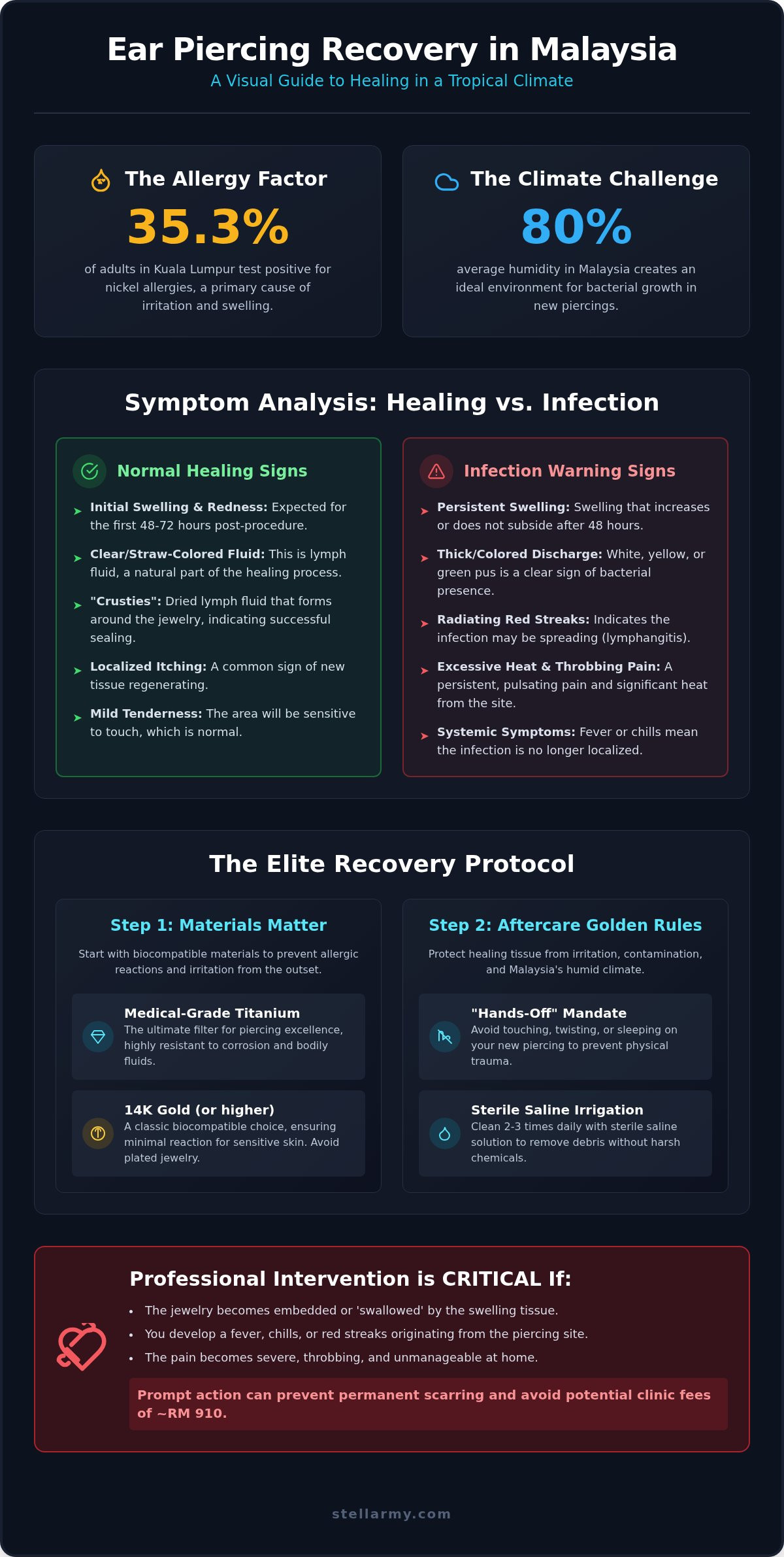
With 35.3% of adults in Kuala Lumpur testing positive for nickel allergies, that persistent throbbing in your earlobe might not be the standard healing process you expected. In Malaysia's aggressive 80% humidity, the environment is optimized for bacterial growth, turning a minor irritation into a high-stakes recovery mission. You're likely feeling the heat and seeing the discoloration, struggling to identify if you're experiencing a metal allergy or a full-scale bacterial infection. Managing ear piercing swelling and redness malaysia requires more than just patience; it demands a rigorous, material-first protocol tailored to our tropical climate.
We understand the stress of a potential keloid or a failing piercing. This 2026 elite recovery guide provides the exact criteria you need to distinguish between normal inflammation and a clinical complication that could cost you RM 910 in private clinic fees. You'll learn how to deploy medical-grade solutions and professional aftercare to reduce swelling while keeping your piercing intact. We'll preview the latest 2026 Medical Device Order standards and the specific performance-based materials, like 14K gold and medical-grade titanium, that act as the ultimate filter for piercing excellence.
Key Takeaways
- Apply the 48-hour rule to accurately distinguish initial tissue trauma from secondary complications like spreading lymphangitis.
- Mitigate the risks of Malaysia's 80% humidity by understanding how tropical heat accelerates bacterial biofilm colonization in fresh piercing tracts.
- Implement a material-first strategy for ear piercing swelling and redness malaysia by utilizing biocompatible 14K gold or medical-grade titanium.
- Adopt the "Hands-Off" mandate and sterile saline irrigation protocol to protect the healing tissue from physical irritation and cross-contamination.
- Recognize the clear visual indicators that necessitate a professional assessment or clinical medical intervention in the KL and Selangor area.
Symptom Analysis: Is it Normal Healing or an Infection?
Distinguishing between initial tissue trauma and a secondary infection requires a disciplined approach to symptom monitoring. Within the first 48 hours, minor ear piercing swelling and redness malaysia is a standard physiological response to the procedure. This is the 'trauma phase' where your body initiates an inflammatory response to stabilize the new channel. If the swelling expands beyond the immediate site or persists with increasing intensity past this 48-hour window, you've moved from recovery into a complication zone.
Visual markers provide reliable data. Localized redness concentrated around the jewelry is often benign. However, thin red streaks radiating away from the site indicate lymphangitis, which means the infection is entering the lymphatic system. Fluid identification is equally vital. Clear or slightly straw-colored lymph fluid is a byproduct of healthy healing. In contrast, thick white, yellow, or green discharge signals bacterial presence. Sensory cues offer the final diagnostic layer. Standard tenderness is expected. Persistent, rhythmic throbbing that aligns with your heartbeat suggests significant internal pressure. Understanding these body piercing risks is the first step in maintaining your piercing's integrity.
The Normal Healing Timeline
Your immune system is highly efficient. During the first 72 hours, you'll likely notice 'crusties' forming around the jewelry. This isn't dirt; it's dried lymph fluid and dead white blood cells working to seal the wound. It's a sign of operational success. You might also experience localized itching. In a tropical climate, this often triggers a fear of infection, but it's typically a sign of tissue regeneration. Following a strict piercing aftercare protocol during this window ensures these natural processes aren't interrupted by external contaminants.
Red Flags Requiring Immediate Attention
Precision monitoring means knowing when the situation has escalated beyond home management. If localized pain is accompanied by systemic symptoms like fever or chills, the infection is no longer localized. Significant heat radiating from the cartilage area is another critical indicator of active bacterial colonization. Most dangerously, if the tissue swells to the point where the jewelry is being 'swallowed' or embedded, you must seek professional intervention immediately to prevent permanent scarring.
The Malaysia Factor: Why Humidity and Heat Complicate Recovery
Malaysia's average humidity of 80% creates a biological pressure cooker for new piercings. In this environment, moisture isn't just an atmospheric condition; it's a catalyst for bacterial colonization. This constant dampness facilitates the rapid development of biofilms, which are structured communities of bacteria that adhere to the jewelry and the piercing tract. When these biofilms establish themselves, they trigger the ear piercing swelling and redness malaysia residents often mistake for a simple lack of hygiene. In reality, the climate is actively working against your recovery speed.
Urban life in Kuala Lumpur adds another layer of complexity. High concentrations of particulates and sweat create a corrosive mixture that can seep into a fresh piercing. Moving between the intense outdoor heat and dry, air-conditioned interiors causes rapid temperature fluctuations. These shifts force the skin to expand and contract, which can micro-tear the delicate new tissue. While environmental factors are critical, irritants such as Nickel allergy from jewelry become significantly more aggressive when the skin is constantly hydrated by perspiration and humidity.
Bacterial Growth in Tropical Climates
Staphylococcus aureus thrives in the high-moisture conditions typical of Selangor and KL. When moisture is trapped behind earring backings, it creates a stagnant reservoir for bacteria. Most standard aftercare protocols developed for temperate European climates fail here because they don't account for this "trapped moisture" effect. These dry-climate guides often suggest infrequent cleaning that allows tropical bacteria to reach critical mass far too quickly. Effective recovery in Malaysia requires a more aggressive, precision-driven approach to moisture management. Utilizing a specialized piercing aftercare solution is essential to neutralize these tropical pathogens before they compromise the site.
Environmental Management for KL Residents
Strategic management of your immediate environment can significantly reduce recovery friction. Keeping hair styled away from the ears prevents sweat and hair products from accumulating near the piercing. This is especially vital during the humid commute. After spending time outdoors, implement a cleaning protocol to remove urban particulates before they settle into the tract. During sleep, ensure your room is well-ventilated to prevent overnight moisture buildup. If you notice persistent irritation despite these measures, consider a professional assessment to ensure your jewelry material is compatible with your skin's heightened tropical sensitivity.
Irritation vs. Allergy: The Role of Jewelry Quality
Many Malaysians misdiagnose their symptoms during the first few weeks of healing. Persistent ear piercing swelling and redness malaysia is frequently a case of contact dermatitis rather than a bacterial invasion. Nickel sensitivity remains the primary driver of non-bacterial inflammation. When you use gold-plated jewelry, the thin outer layer eventually erodes due to the acidity of sweat and Malaysia's high humidity. This exposes a "mystery metal" core, often a nickel-rich alloy, directly to the open wound. This contact triggers a localized immune response that mimics the early stages of an infection.
Jewelry architecture also dictates recovery success. Thin, low-quality wires create the "cheese cutter" effect, where the weight of the earring causes the metal to migrate through the lobe. This physical trauma results in chronic irritation and localized heat. To prevent these complications, elite recovery protocols prioritize medical-grade titanium (ASTM F-136) or 14K solid gold. These materials are biocompatible and inert, ensuring the body focuses on tissue regeneration rather than fighting foreign toxins. Consult a medical guide to piercing aftercare to understand how material choice impacts the inflammatory phase.
Identifying Metal Hypersensitivity
Metal hypersensitivity often presents as itchy, dry, or flaky skin around the piercing site. Unlike a bacterial infection, which typically produces localized throbbing and pus, an allergy feels like a persistent, irritating "burn." It is a common misconception that you are safe if you haven't had reactions before; allergies can develop suddenly, even after years of wearing low-quality jewelry. If you experience these symptoms, switching to hypoallergenic earrings for sensitive ears malaysia is the only way to arrest the immune response and save the piercing.
The Stellar Malaysia Standard for Biocompatibility
We eliminate material-based failure by utilizing only 14K gold and medical-grade titanium for all procedures. These metals meet the highest percentile-based quality standards, ensuring they remain stable in Malaysia's aggressive climate. Our jewelry features internal threading and high-polish finishes, removing the microscopic burrs that can trap bacteria and tear delicate new skin. Stellar Malaysia’s piercing service utilizes only high-purity, biocompatible materials to eliminate the risk of contact dermatitis from the start. This disciplined approach to material selection ensures your recovery is dictated by biology, not by low-grade manufacturing flaws.
The Elite Recovery Protocol: Managing Swelling at Home
Managing ear piercing swelling and redness malaysia demands a disciplined, hands-off approach. Physical manipulation is the primary catalyst for secondary trauma. You must reject the outdated advice to "rotate" or "turn" your jewelry. This action destroys the delicate fistula, the skin tunnel currently forming, and introduces external bacteria into the wound. Efficiency in recovery is built on stability. Every touch is a potential point of failure.
To actively reduce inflammation, deploy a cold compress strategy. Apply a cold pack wrapped in a sterile barrier for ten minutes to constrict blood vessels and neutralize localized heat. Combine this with optimized sleep hygiene. Pressure-induced irritation is a common setback for side-sleepers. Use a travel pillow and position your ear in the center hole to eliminate contact with the mattress. This simple modification prevents the piercing from becoming a pressure sore while you rest. For the most reliable results, integrate a high-performance aftercare solution into your daily workflow.
The Sterile Cleaning Sequence
A precision-driven cleaning routine is your best defense against tropical complications. Follow this three-step sequence twice daily to maintain an optimal healing environment:
- Step 1: Thorough Hand Sanitization. Use a hospital-grade antibacterial soap. Never touch your ears with unwashed hands, as this is the most common vector for infection.
- Step 2: Precise Irrigation. Apply your sterile saline solution directly to the front and back of the piercing. Do not use cotton buds, which can snag on the jewelry.
- Step 3: Controlled Drying. In Malaysia's 80% humidity, moisture is the enemy. Use a clean, disposable paper towel to pat the area dry. Avoid cloth towels or cotton wool, as they harbor bacteria and leave microscopic fibers behind.
What NEVER to do with an Inflamed Piercing
Avoid the "over-cleaning" trap. Stripping the skin of its natural protective oils through excessive washing will delay tissue regeneration. Furthermore, never remove the jewelry if you suspect an infection. Removing the stud allows the hole to close prematurely, which can trap bacteria inside the tissue and lead to an abscess. Finally, strictly prohibit the use of alcohol or hydrogen peroxide. These chemicals are too aggressive for healing tissue; they kill the very white blood cells your body is using to fight off ear piercing swelling and redness malaysia. Stick to the sterile saline protocol for a safe, predictable recovery.
If your symptoms persist despite following this protocol, it may be time for a professional intervention. Book a professional assessment at one of our boutiques to ensure your recovery remains on track.
Professional Solutions: When to Seek Expert Care in KL
When home protocols fail to arrest ear piercing swelling and redness malaysia, professional intervention becomes a strategic necessity. A seasoned piercer acts as your first line of defense. They possess the technical infrastructure to distinguish between mechanical irritation and clinical infection, often saving the piercing before permanent damage occurs. If the swelling is so severe that the jewelry is compressing the tissue, a technical adjustment is required immediately. Waiting too long increases the risk of the jewelry becoming embedded, which requires surgical removal and results in significant tissue trauma.
Medical intervention is mandatory if you experience systemic symptoms. Fever, chills, or red streaks extending from the site indicate the infection has bypassed localized defenses. In Malaysia, private clinic fees for treating such infections can reach RM 910 for an initial visit, with follow-up costs adding another RM 125. Acting early with a professional assessment can prevent these high-stakes medical costs and potential hospital stays. We position ourselves as your strategic ally, helping you navigate these complications with speed and precision.
Distinguishing between keloids and hypertrophic scarring is vital for long-term health. Hypertrophic bumps are localized, red, and often resolve with better jewelry or a more disciplined aftercare routine. Keloids, however, are aggressive overgrowths of scar tissue that extend beyond the original wound site. These require specialized dermatological care rather than simple jewelry changes. Identifying these visual markers early is critical for your aesthetic preservation and overall skin health.
Stellar's Troubleshooting Consultations
Our boutiques in major KL and Selangor malls provide high-density expertise for troubleshooting. We often perform jewelry upsizing. This is a tactical move where we replace your current stud with a longer post to accommodate tissue expansion. This prevents necrotic pressure and allows the site to breathe, facilitating a faster recovery. Secure your priority slot with an ear piercing appointment deposit for a comprehensive assessment by our elite team. We ensure your piercing remains compliant with the highest percentile-based quality standards.
Long-term Aesthetic Preservation
Once the inflammatory phase is conquered, focus shifts to long-term stability. Transitioning to solid 14K gold or medical-grade titanium ensures your skin remains irritation-free in the long run. This stable foundation allows you to begin designing a curated ear that balances high-growth aesthetics with biological safety. Healthy piercings are a result of material excellence and a lifetime commitment to disciplined hygiene. Our mission-ready collective is here to support every stage of your aesthetic journey, ensuring your results are both beautiful and sustainable.
Securing Your Aesthetic Future: Precision Recovery for Malaysian Piercings
Securing your aesthetic journey requires a transition from passive observation to active, material-first management. We've established that Malaysia's 80% humidity isn't just a comfort issue; it's a biological factor that demands sterile saline irrigation and superior jewelry. By applying the 48-hour rule and identifying early red flags like spreading streaks or rhythmic throbbing, you can protect your piercing from permanent tissue changes. Each decision you make now determines the long-term success of your signature look.
Managing ear piercing swelling and redness malaysia is a high-stakes operation that shouldn't be left to chance. Our protocol combines 2026 Medical Device Order compliance with the use of biocompatible 14K gold and medical-grade titanium to eliminate nickel-driven inflammation. Our expert piercers are specifically trained in tropical aftercare to ensure your recovery meets elite performance standards. Don't let a minor irritation compromise your healing.
Take the next step toward total operational mastery of your recovery. Book an Elite Piercing Consultation at Stellar Malaysia and secure the expert guidance your aesthetic deserves. You've invested in your style; now invest in the precision care that preserves it.
Frequently Asked Questions
Is it normal for my ear piercing to be red and swollen after 3 days in Malaysia?
Minor inflammation is expected within the first 72 hours post-procedure. In Malaysia's 80% humidity, your body's inflammatory response may feel more intense due to heat-induced vasodilation. If the ear piercing swelling and redness malaysia residents experience doesn't begin to subside after the third day, or if it starts to expand, you've moved past the normal trauma phase into a potential complication zone.
Should I take my earring out if I see pus or significant swelling?
Never remove the jewelry during an active infection. Removing the stud allows the skin to close prematurely, which can trap bacteria inside the tissue and lead to a painful abscess. If you are experiencing extreme pressure, visit a professional boutique in KL for jewelry upsizing. This tactical move provides the necessary space for tissue expansion without compromising the piercing hole or trapping pathogens.
Can the Malaysian humidity actually cause my piercing to get infected?
High humidity acts as a catalyst for bacterial colonization. The constant moisture in Malaysia's air prevents the piercing site from staying dry, creating an ideal environment for Staphylococcus aureus to form protective biofilms. This environmental factor makes a disciplined aftercare protocol and the use of medical-grade materials essential. Standard dry-climate cleaning routines are often insufficient to combat the accelerated bacterial growth found in tropical regions.
What is the difference between an infected piercing and a metal allergy?
Infections typically present with rhythmic throbbing, localized heat, and thick white or green discharge. Conversely, a metal allergy, specifically to nickel, manifests as persistent itching, dryness, or flaky skin. While both cause ear piercing swelling and redness malaysia, an allergy feels like a localized "burn" rather than a deep, pulsing ache. Switching to biocompatible 14K gold or medical-grade titanium is the only solution for hypersensitivity.
How can I reduce swelling in my ear piercing overnight?
Deploy a cold compress for ten minutes and utilize a travel pillow to eliminate overnight pressure. Reducing the temperature of the tissue constricts blood vessels and neutralizes inflammation quickly. Ensure you don't sleep directly on the piercing, as this causes fluid buildup and mechanical irritation. Combining these physical tactics with a sterile saline rinse before bed provides the best environment for significant overnight reduction in swelling.
Is 14K gold better than silver for an irritated ear piercing?
14K solid gold is significantly superior to silver for healing piercings. Sterling silver oxidizes when it contacts body fluids and often contains copper or nickel, which trigger immune responses. Solid 14K gold is biocompatible and inert, meaning it won't react with your tissue even in Malaysia's corrosive, humid climate. For irritated sites, upgrading to gold or medical-grade titanium is a strategic move to ensure aesthetic preservation.
When should I visit a doctor for my ear piercing in Kuala Lumpur?
Seek medical attention if you develop systemic symptoms like fever, chills, or red streaks radiating from the site. These are indicators that the infection is spreading through your lymphatic system. You should also visit a clinic if the tissue has completely "swallowed" the jewelry. In Kuala Lumpur, private medical treatment for these complications can be costly, so early intervention at a professional piercing boutique is often the more efficient first step.
Why is my piercing still swollen even though I clean it twice a day?
Persistent swelling is often caused by the "over-cleaning trap" or low-quality jewelry materials. Cleaning more than twice a day strips natural protective oils and irritates the new tissue. If your aftercare is disciplined, the issue is likely mechanical trauma from sleeping on the ear or a reaction to "mystery metals" in gold-plated earrings. Switching to an internally threaded, medical-grade titanium post often resolves chronic swelling that cleaning alone cannot fix.