
Most people treat a new ear piercing like a simple fashion accessory, but your body views it as a precise puncture wound requiring elite-level biological management. It's not just a waiting game; it's about executing a high-performance recovery plan through the various ear piercing healing stages. You're likely monitoring your new lobe or helix piercing with a mix of excitement and anxiety, wondering if every "crusty" is a sign of progress or a red flag for infection. Distinguishing between normal lymphatic fluid and actual pus is a common pain point that shouldn't stall your journey to a fully healed ear stack.
This guide provides a clear roadmap of the recovery process, ensuring you master the biological timeline from the initial inflammatory phase to total tissue maturation. We promise to replace your confusion with technical confidence by outlining professional-grade aftercare protocols used by the top 1% of piercing experts. You'll learn how to leverage medical-grade materials like 14K gold and titanium to maintain a sterile chain of custody. We're breaking down the exact milestones you need to hit before you can safely swap your jewelry and scale your aesthetic. Precision matters. This is your definitive guide to a seamless recovery.
Key Takeaways
- Identify the immediate biological markers of the inflammatory stage to distinguish normal healing from high-risk complications.
- Master the ear piercing healing stages to understand why surface-level recovery often masks internal tissue fragility.
- Recognize the specific maturation timelines for lobe versus helix piercings to ensure you only change jewelry when the fistula is fully stable.
- Adopt the elite "LITHA" protocol and professional aftercare solutions to minimize irritation and maintain a sterile chain of custody.
The Inflammatory Stage: The First 72 Hours of Your Piercing
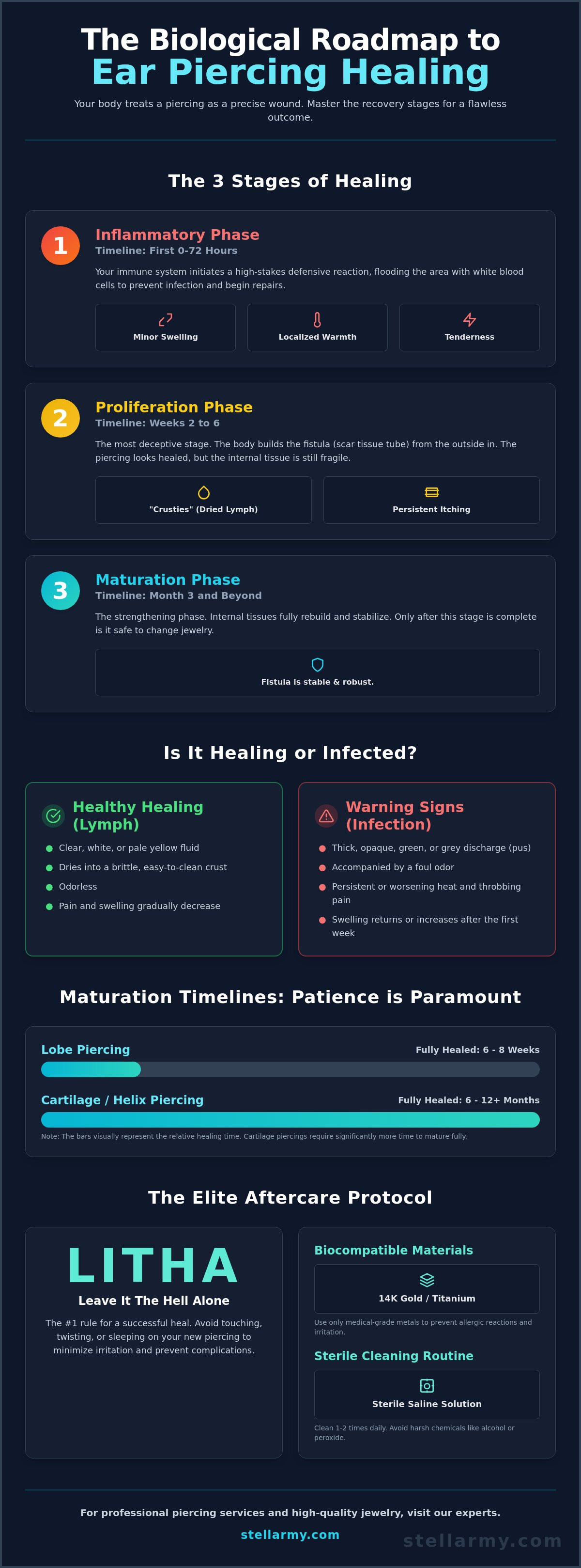
The first 72 hours represent the most volatile period of the ear piercing healing stages. Your body doesn't recognize a new 14K gold stud as a fashion statement; it identifies a breach in the skin's protective barrier. This triggers an immediate cascade of biological events known as the inflammatory phase. During this window, your immune system floods the area with white blood cells to prevent infection and initiate tissue repair. It's a high-stakes defensive reaction that dictates the trajectory of your entire recovery.
Identifying normal symptoms is crucial for maintaining peace of mind. You should expect minor swelling, localized warmth, and tenderness. These aren't red flags; they're indicators of a high-functioning immune system. However, the intensity of this response depends heavily on the initial procedure. Opting for professional piercing services ensures that this initial trauma is minimized through precision technique rather than blunt force, setting a stable foundation for the weeks ahead.
Managing Immediate Post-Piercing Sensitivity
Discipline is your greatest asset during these first three days. The hands-off rule is absolute. Every time you touch the piercing site, you introduce external bacteria and mechanical stress that re-triggers inflammation. This unnecessary friction can turn a standard recovery into a prolonged struggle. If you experience excessive initial swelling, apply a clean cold compress around the site to constrict blood vessels and reduce pressure. It's vital to distinguish between normal post-procedure redness and early-stage irritation. Normal redness remains localized to the piercing hole. If you notice spreading heat or persistent throbbing, it's a signal that the piercing healing process is being disrupted by external factors.
The Role of Professional Sterile Technique
Elite boutiques in Kuala Lumpur adhere to rigorous aseptic standards that significantly reduce your initial inflammatory load. The difference lies in the equipment. Professional needle precision creates a clean, surgical channel, whereas traditional piercing guns rely on blunt force trauma that crushes the surrounding tissue. This surgical approach results in less displaced skin and a much cleaner biological worksite for your body to repair. Additionally, initial jewelry fit is a non-negotiable standard. Expert piercers select studs with extra post length to provide room for swelling. This prevents the jewelry from embedding into the skin, an avoidable complication that often arises from amateur setups. Speed and precision during the first 72 hours are the ultimate trust signals for long-term success.
The Proliferation Phase: Weeks 2 to 6 (Healing from the Outside In)
Once the initial inflammation subsides, your body shifts its resources toward the proliferation phase. This is the most deceptive period of the ear piercing healing stages. During these weeks, your body focuses on creating the "fistula," a tube of scar tissue that lines the piercing track. This process happens from the outside in. While the entry and exit points might look calm and sealed after just 14 days, the internal tissue remains fragile, unorganized, and highly susceptible to trauma. It's a period of intense cellular reconstruction that requires total operational discipline.
You will likely encounter "crusties" during this stage. This is dried lymph fluid, a clear or pale yellow substance that acts as a natural byproduct of the body's repair mechanism. It's a sign that your immune system is successfully clearing out cellular debris. Similarly, a persistent itch around the site is common. This isn't a cause for alarm; it's a positive indicator of active nerve regeneration and new skin cell production. Mastering this phase means respecting the biological timeline rather than rushing toward a jewelry swap.
Lymph vs. Infection: How to Tell the Difference
Distinguishing between healthy recovery and a developing complication is a critical skill for any ear stack enthusiast. Many people mistake lymph for a problem, leading to over-cleaning and irritation. Use this high-density checklist to verify your status:
- Healthy Lymph: Clear, white, or pale yellow fluid that dries into a brittle crust. It is odorless and occurs without increasing pain.
- Potential Infection: Thick, opaque, green, or grey discharge. This is often accompanied by localized throbbing, persistent heat, and swelling that returns after the first week.
If you observe any tanda tindik telinga jangkitan, immediate intervention is required. You can consult with the specialists at a Stellar Malaysia boutique to verify the health of your piercing before a minor irritation becomes a setback. Following professional piercing aftercare standards is the best way to keep this phase on track.
The Dangers of Premature Jewelry Changes
The "6-week rule" is a dangerous myth that often leads to "channel collapse." Even if the surface looks perfect, the internal fistula is not yet strong enough to support itself without the jewelry's structural integrity. Removing the stud now can cause the delicate internal lining to tear or close instantly. High-quality 14K gold earrings are essential during this phase because they provide a biocompatible surface that doesn't leach irritants into the growing skin cells. Precision matters here. If you're ready to plan your next move, booking an expert consultation ensures your tissue is actually ready for a transition.
The Maturation Stage: Month 3 and Beyond (The Strengthening Phase)
The maturation stage represents the long-tail phase of the ear piercing healing stages. This is where the initial fistula transitions from a fragile skin tunnel into a permanent, resilient channel. While the soreness has likely vanished, your body is still performing high-density tissue reinforcement behind the scenes. This "strengthening phase" is where most people fail by assuming the journey is over. In reality, the tissue is still remodeling its collagen structure to handle the weight and friction of diverse jewelry styles. A seasoned piercing is only truly ready for heavy hoops or complex stacks once this structural maturation is complete.
The healing journey continues long after the surface appears sealed. You'll know you've reached a seasoned status when the skin around the hole is supple, the jewelry moves freely without any resistance, and there is zero discharge or redness even after a long day. Achieving this level of stability requires patience and a commitment to the biological timeline. Rushing this final stage often results in regressing back to the inflammatory phase, effectively resetting your progress.
Cartilage vs. Lobe: A Tale of Two Timelines
Blood flow is the primary driver of recovery speed. Earlobe tissue is highly vascular, typically reaching full maturation within 3 months. Conversely, cartilage—found in helix and conch placements—is avascular, meaning it lacks a direct blood supply. This architectural difference extends the timeline to 6-12 months. During these months, mechanical stress is your biggest enemy. Sleeping directly on a maturing piercing can cause "pressure bumps" or shift the angle of the channel. Utilizing a travel pillow or a specialized piercing pillow is a professional-grade strategy to protect the site's alignment during this extended maturation period.
The First Downsize: Why Professional Adjustment Matters
Precision aftercare requires more than just cleaning; it involves hardware optimization. Your initial jewelry was likely a longer post to accommodate the inflammatory swelling seen in the early stages. Once that swelling subsides, that extra length becomes a liability. A long post acts like a lever; every time it snags on hair or clothing, it puts torque on the delicate fistula. This often leads to "piercing migration," where the hole physically shifts or tilts over time.
Scheduling a follow-up for a professional downsize at a Kuala Lumpur service center is a non-negotiable step for an elite ear stack. A piercer will swap the long post for a shorter, flush-fitting one that minimizes movement. This technical adjustment reduces friction and ensures the fistula matures in a perfectly straight line. Don't leave your aesthetic to chance. Ensure you book a piercing service follow-up to secure the structural integrity of your curation.
How to Optimize Recovery: The Elite Aftercare Protocol
Achieving total operational mastery over your recovery requires more than just luck. It demands a disciplined adherence to the "LITHA" method: Leave It The Hell Alone. This protocol is the gold standard for navigating the ear piercing healing stages without setbacks. Every time you touch, rotate, or twist your jewelry, you disrupt the developing fistula and risk introducing pathogens into the wound. Your body is a high-performance machine; your job is to provide the optimal environment for it to function without interference.
Environmental factors in Malaysia significantly impact this process. The tropical humidity and frequent sweat from active lifestyles create a breeding ground for bacteria. Moisture trapped around a new piercing can lead to persistent irritation or localized infections. To counter this, you must integrate a specialized larutan penjagaan tindik into your routine. Using a professional-grade saline solution ensures the site remains sterile without the harsh, drying effects of alcohol or peroxide, which can stall cellular repair.
The Daily Cleaning Ritual
Consistency is the ultimate trust signal for your body's immune system. Follow this three-step protocol twice daily to maintain a sterile chain of custody:
- Step 1: Hand Hygiene. Scrub your hands with antimicrobial soap. Never approach your piercing with unwashed hands, as this is the primary vector for infection.
- Step 2: Saline Application. Spray your aftercare solution directly onto the front and back of the piercing. Do not rotate the jewelry. The fluid will naturally flush out debris through capillary action.
- Step 3: Precision Drying. Use the "cool" setting on a hairdryer or a clean piece of non-woven gauze to dry the area. Eliminating moisture is critical in Malaysia's climate to prevent the formation of moisture bumps.
Material Science: Why 14K Gold and Titanium Win
Material selection acts as a primary catalyst for success. Mystery metals found in budget jewelry often leach nickel, a common allergen that triggers contact dermatitis and chronic inflammation. This complicates the ear piercing healing stages by keeping the body in a permanent state of alarm. Stellar recommends Medical Grade Titanium or 14K Gold because these materials are biocompatible and chemically stable. For children and those with active lifestyles, 14K gold screw-back earrings offer a secure, hypoallergenic fit that prevents the backing from pressing too tightly against the ear. This ensures constant airflow, which is a non-negotiable requirement for high-quality healing. To secure your recovery, invest in an Aftercare Solution designed for elite results.
Professional Standards in KL: Why Where You Pierce Matters
Expert consultation is the ultimate filter for quality. When you work with a seasoned professional, you reduce the risk of masalah tindik telinga before the needle even touches your skin. This proactive approach identifies potential anatomical issues that could lead to migration or rejection, ensuring your ear stack remains structurally sound for years to come. This strategic foresight is what separates an elite curation from a standard piercing.
Elite Screening and Verification
Precision begins with a comprehensive assessment of your ear anatomy. Our trained professionals don't just "spot and shoot." We analyze the curvature of your cartilage and the thickness of your lobes to determine the optimal angle for long-term stability. This screening process is paired with a 100% sterile chain of custody. Every tool is single-use and factory-sealed, meeting the highest 2026 safety benchmarks. Our aftercare support doesn't end when you leave the boutique. We provide rigorous follow-up protocols to monitor your progress through the maturation phase, providing a safety net for your aesthetic investment.
Ready for Your Next Piercing?
Preparation is the first step toward a seamless recovery. Ensure you've eaten a balanced meal and are well-hydrated before your session to stabilize your blood sugar. Avoid caffeine or blood thinners 24 hours prior to minimize initial bleeding. When you're ready to scale your aesthetic with a professional-grade lobe or helix piercing, you can book your ear piercing appointment in KL to secure your session. The Stellar guarantee ensures that elite technique is always paired with premium 14K gold or medical-grade titanium jewelry. Don't settle for generic results. Choose the strategic ally that understands the science of the ear piercing healing stages and delivers total operational mastery.
Master Your Ear Stack Recovery
Mastering the science of your recovery requires respecting the biological timeline. You've learned that the ear piercing healing stages demand more than just patience; they require high-performance aftercare and elite-grade materials. From managing the initial inflammatory response to ensuring the final maturation of the fistula, every choice you make dictates your long-term results. Prioritizing medical-grade titanium and 14K gold prevents the setbacks commonly associated with inferior metals and amateur techniques.
Stellar Malaysia provides the technical infrastructure for a flawless ear stack. We specialize in safe piercings for children and adults, utilizing expert piercing consultations in KL and Selangor to ensure anatomical precision from the first touch. Don't leave your healing to chance or settle for generic mall kiosks. High-quality jewelry and professional-grade standards are the only way to secure a sterile foundation for your curation. Book your professional ear piercing at Stellar Malaysia today and start your journey with complete operational confidence. Your perfect, fully healed ear stack is within reach.
Frequently Asked Questions
How can I tell if my ear piercing is healing or infected?
Distinguish between healthy lymph fluid and actual infection by monitoring color and sensation. Healing involves clear or pale yellow discharge that dries into "crusties" without persistent heat. Infection presents as thick green or grey pus accompanied by throbbing pain and spreading redness. If you notice a foul odor or fever, your sterile chain of custody has been breached and requires immediate professional assessment.
Is it normal for a 2-week-old piercing to still be sore?
Yes, localized tenderness at the fourteen-day mark is a standard component of the ear piercing healing stages. You've transitioned from the inflammatory phase to the proliferation phase, where the internal fistula is still extremely fragile. Any mechanical stress, such as snagging the jewelry on clothing, will trigger temporary sensitivity as the body works to organize new skin cells.
When can I realistically change my earrings for the first time?
Wait at least three months for lobe piercings and six to twelve months for cartilage before attempting a jewelry swap. Rushing this transition risks channel collapse because the internal tissue hasn't achieved structural maturation. For the best results, schedule a professional downsize at a boutique to ensure your tissue is stable enough to handle the friction of a new earring post.
What should I do if my piercing starts to bleed during the healing stages?
Apply steady, gentle pressure with sterile non-woven gauze until the bleeding stops completely. Minor bleeding often occurs if you accidentally bump the site or if the jewelry rotates and tears the developing fistula. Don't remove the jewelry, as this can cause the track to close instantly. If the bleeding is heavy or persistent, consult your piercer to verify the hardware's alignment.
Can I swim in a pool or the ocean while my piercing is in the proliferation phase?
Why does my ear piercing have a small bump next to it?
This is typically an irritation bump caused by persistent mechanical stress or poor material choice. These bumps often appear during the ear piercing healing stages when the jewelry is bumped, slept on, or made of low-quality "mystery metals." Switching to medical-grade titanium or 14K gold and adhering to the "LITHA" method usually resolves the irritation by eliminating the source of friction.
Does the healing time differ for children compared to adults?
Biological timelines are remarkably consistent across age groups, though children often exhibit slightly faster cellular turnover. The primary difference lies in the risk of accidental trauma. Children require more rigorous supervision to ensure they don't touch the site with unwashed hands. Using 14K gold screw-back earrings is a strategic choice for children to minimize movement and prevent the backing from embedding.
How long should I use the aftercare solution on my new piercing?
Commit to a twice-daily cleaning ritual for the entire duration of the maturation phase. This means using your aftercare solution for at least three months for lobes and up to a full year for cartilage. Consistency ensures the site remains free of debris and bacteria while the fistula hardens. Stopping your routine prematurely can lead to localized irritation or a regression in the healing process.