
Healing is a biological progression, not a countdown. In Malaysia’s 80% humidity, your recovery isn't just a waiting game; it's a high-stakes operational phase where the environment actively tests your body’s resilience. You’ve likely felt the anxiety of distinguishing normal crusting from a potential infection while researching the ear piercing healing stages malaysia requires for success. It's frustrating to guess when it’s finally safe to swap your initial studs for something new.
This professional roadmap eliminates the guesswork by providing a clear timeline of what to expect during your recovery. We’ll analyze the three critical stages of cellular repair, identify the red flags that demand immediate action, and provide the elite aftercare protocols necessary for 2026’s high-performance jewelry standards. By mastering this biological timeline, you ensure your 14K gold or medical-grade titanium investment transitions seamlessly from a fresh wound to a permanent asset. We’re moving beyond basic advice to deliver total operational mastery over your recovery.
Key Takeaways
- Master the biological progression of your recovery by identifying the three distinct ear piercing healing stages malaysia requires for a successful, long-term outcome.
- Learn how to mitigate the "Moisture Trap" effect caused by Malaysia’s 80% humidity to prevent localized irritation and stalled healing.
- Gain the technical proficiency to distinguish between normal lymphatic crusting and high-risk red flags that demand immediate professional intervention.
- Decode the difference between a stable piercing and a fully mature fistula to determine exactly when it's safe to upgrade your jewelry.
- Optimize your recovery results by utilizing medical-grade materials and specialized aftercare solutions tailored for tropical climate resilience.
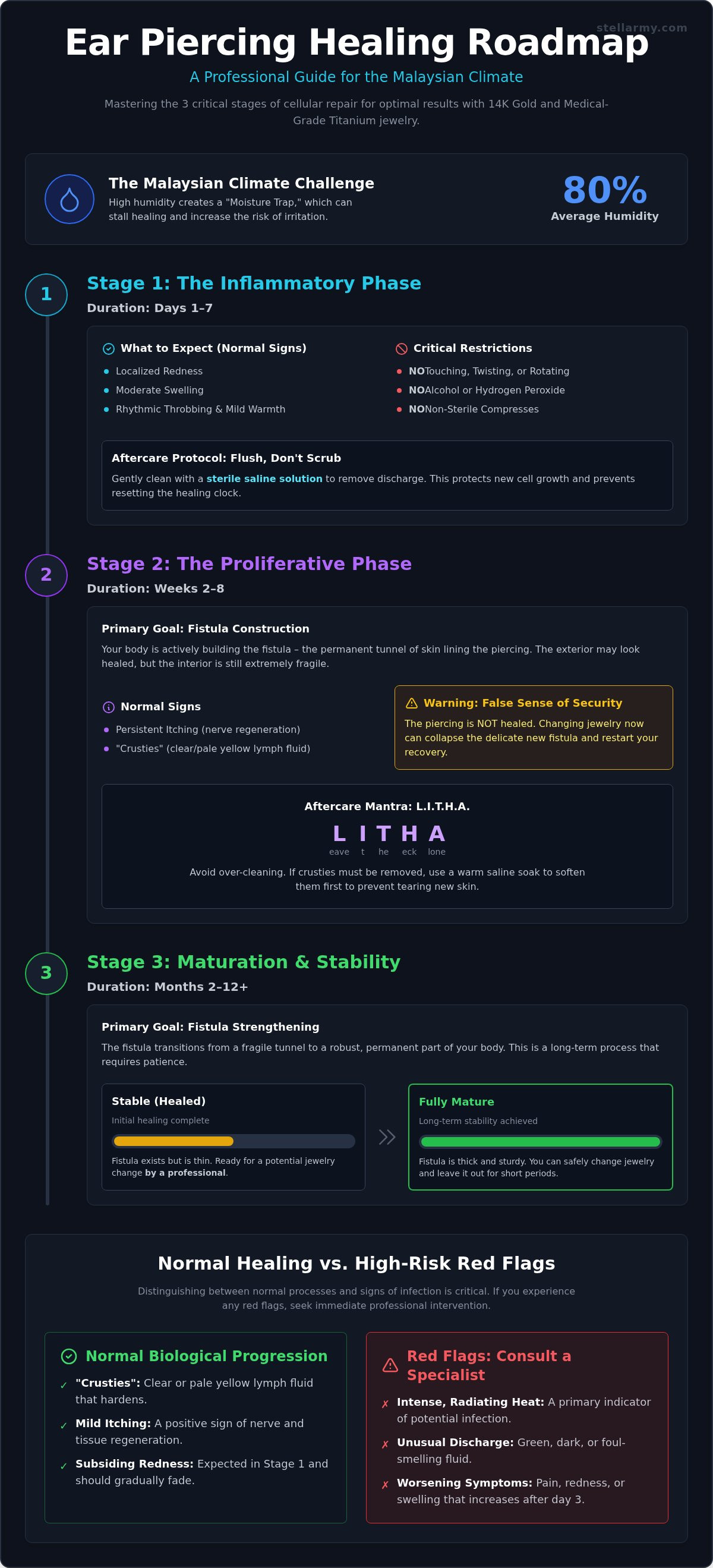
Stage 1: The Inflammatory Phase (Days 1–7)
The first seven days are the most volatile. Your body identifies the piercing as a tactical breach and initiates an immediate immune response. White blood cells, specifically neutrophils and macrophages, flood the site to neutralize pathogens and clear debris. This biological mobilization is the foundation of the ear piercing healing stages malaysia residents must navigate. It's a high-stakes week where your body’s internal defense systems are working at maximum capacity to secure the wound site.
Expect localized redness, moderate swelling, and a rhythmic throbbing sensation. These are standard operational signals of a healthy immune system in action. During this fragile week, do not touch, twist, or rotate your jewelry. Rotating the stud disrupts the initial cellular scaffolding, effectively resetting your healing clock and increasing the risk of scarring. Your goal is total site stability. Any movement at this stage can tear the delicate new tissue and introduce bacteria into the deeper layers of the skin.
Managing Initial Redness and Swelling
High-performance recovery starts with material selection. We utilize 14K gold and medical grade titanium because they lack the nickel triggers found in lower-tier jewelry. Using non-sterile ice packs or cold compresses is a common mistake; they often introduce external bacteria into the fresh wound. Learn to monitor the site's temperature with precision. A mild warmth is normal, but intense, radiating heat is a primary indicator of infection that requires professional attention. By choosing biocompatible materials, you minimize the inflammatory triggers that lead to prolonged swelling.
Cleaning Protocols for the First Week
Your objective is to flush, not scrub. Use a sterile saline solution to remove any early-stage discharge without disrupting the wound bed. This is a critical component of the Body Piercing Healing Process that ensures long-term stability. Never use alcohol or hydrogen peroxide. These substances are cytotoxic, meaning they destroy the healthy cells trying to close the wound. They dry out the skin and stall the biological progression of the ear piercing healing stages malaysia weather already makes challenging. For the definitive guide on maintaining a sterile environment, refer to our piercing aftercare protocol. Precision in Stage 1 ensures you don't stall when you reach the proliferative phase.
Stage 2: The Proliferative Phase and Tissue Formation (Weeks 2–8)
Proliferation marks the transition from defense to active construction. Between weeks two and eight, your body focuses on building the fistula. This is the permanent tunnel of skin cells that lines the piercing channel, acting as a protective barrier between the jewelry and your internal tissue. Navigating the ear piercing healing stages malaysia presents is particularly tricky during this phase because the surface often looks deceptive. While the intense redness from Stage 1 usually fades, the internal tissue remains incredibly fragile and under-developed.
You'll likely experience persistent itching throughout this period. Don't worry; this is a high-performance signal that your nerves and skin cells are successfully regenerating. However, this progress often creates a "False Sense of Security." You might assume the wound is fully closed because the external edges look clean and dry. In reality, the internal fistula wall is still paper-thin and easily damaged. Swapping your jewelry now is a high-risk maneuver that can collapse the new tunnel and force you to restart the entire recovery process from zero.
Dealing with "Crusties" and Discharge
During these weeks, you'll notice "crusties"—hardened deposits of lymph fluid around the entry and exit points. Pale yellow or clear discharge is a sign of healthy biological repair, not an infection. We advocate for the L.I.T.H.A. method: Leave It The Heck Alone. Disturbing these deposits too aggressively can tear the microscopic new skin cells forming underneath. If removal is necessary for hygiene, use a warm saline soak to soften the debris before gently wiping it away. This approach aligns with the global standards for Professional Piercing Aftercare, ensuring the wound bed remains undisturbed.
Sleeping Habits and Piercing Pressure
Constant pressure is the primary enemy of a straight, healthy piercing. Sleeping on a fresh piercing can cause "migration," where the weight of your head forces the jewelry to shift into a crooked angle. To prevent this, Side sleepers in KL should utilize a travel pillow, placing the ear in the center hole to create a "pressure-free zone." This simple hack prevents friction-based irritation bumps, which are frequently mistaken for bacterial infections. If you notice persistent bumps or a change in the piercing's angle, our specialists can evaluate the site through our Professional Aftercare Protocol to ensure your recovery stays on track. Stability in Stage 2 is the only way to reach long-term maturation.
Stage 3: Maturation and Long-Term Piercing Stability (Months 2–12)
Maturation is the final, most critical phase of the ear piercing healing stages malaysia residents must respect to ensure permanent success. While the previous stages focused on building the fistula, Stage 3 is about structural reinforcement. During these months, the skin tunnel thickens and strengthens through intensive collagen remodeling. Many enthusiasts mistake a "stable" piercing—one that no longer hurts or leaks—for a "fully mature" one. A mature piercing is a permanent biological feature. It can withstand the weight of diverse jewelry styles and temporary periods without a stud. Maturation takes time. Don't rush the process.
Cartilage piercings like the helix or forward helix demand significantly more patience than standard lobes. Because cartilage has a limited blood supply compared to fatty lobe tissue, maturation often extends to the full 12-month mark. Even at six months, your piercing remains susceptible to the "shrinkage" factor. If you remove your jewelry for just one hour, the fistula can constrict. This makes re-insertion impossible without causing significant trauma. Consistency is your primary tool for operational success. Keep your jewelry in place.
The First Jewelry Swap Milestone
Reaching the two-month mark for lobes or the four-month mark for helix piercings is a major achievement. However, your first jewelry change is a high-precision task. We recommend visiting a professional piercing service for this initial transition. A specialist ensures the new jewelry is inserted without tearing the still-developing fistula walls. Transitioning to high-quality 14K gold screw-backs provides the security needed for ongoing maturation. Once you've cleared this milestone, you can begin planning your aesthetic evolution using our curated ear guide to design a signature stack that matches your personal brand.
Long-Term Maintenance and Hygiene
Even a mature piercing requires disciplined maintenance. Over time, dead skin cells and sebum—natural body oils—can accumulate inside the fistula. This leads to a distinct odor often called "piercing funk." Regular irrigation with warm water or a gentle saline solution keeps the site clean and functional. Avoid heavy, dangling earrings until you've reached at least six months of maturation. This prevents the "cheese-cutter effect," where heavy weights pull and elongate the piercing hole. You’ll know you’ve reached full maturation when the edges of the hole are rounded, the tissue feels soft, and the jewelry slides through without resistance.
Environmental Variables: The Malaysian Humidity Factor
Malaysia’s 80% average humidity creates a high-friction environment for the ear piercing healing stages malaysia requires for success. Moisture is the primary enemy of cellular repair. In the tropical climate of KL, the air's saturation prevents the piercing site from drying efficiently. This creates a "Moisture Trap" where bacteria can colonize the wound bed. This environmental factor is the single most common cause of irritation bumps and stalled recovery in the region.
Wet hair and sweat are the leading drivers of complications. When moisture is trapped between the ear and the jewelry, it softens the developing skin of the fistula, making it vulnerable to tearing. During the Inflammatory and Proliferative phases, this moisture can lead to rapid-onset bacterial growth. Swimming in chlorine-heavy pools or tropical coastal waters is strictly prohibited during the first eight weeks. Chlorine acts as a harsh chemical irritant that can chemically burn the raw internal tissue, while natural bodies of water introduce unpredictable tropical bacteria into your system.
Sweat Management for Active Lifestyles
Standard Malaysian tap water can contain minerals and impurities that irritate fresh wounds. Additionally, shampoo and conditioner residue are common chemical irritants that disrupt the site's pH balance. Implement a "Final Rinse" protocol: after every shower, use a sterile saline solution to flush out any lingering tap water or hair products. This ensures your piercing remains in a controlled, sterile state. To maintain this high level of hygiene, secure your recovery with our Professional Aftercare Protocol and specialized solutions designed for tropical resilience.
Professional Intervention: When to Consult Stellar Malaysia Specialists
Success in the ear piercing healing stages malaysia residents navigate depends on recognizing when biological repair has stalled. While minor irritation is common, certain indicators signal a failure in the recovery protocol. Self-diagnosing via social media often leads to catastrophic outcomes. Attempting to treat a suspected infection with tea tree oil or aspirin paste is dangerous; these caustic substances cause chemical burns and exacerbate tissue trauma. If your recovery deviates from the roadmap, immediate professional intervention is the only way to salvage the piercing.
A professional check-up at our Kuala Lumpur boutique provides an objective assessment of your fistula’s health. We distinguish between localized irritation bumps and developing keloids—a distinction that requires technical expertise. Irritation bumps usually stem from friction or moisture, while keloids are permanent overgrowths of scar tissue. Early detection allows for corrective measures, such as adjusting jewelry length or material, before the damage becomes permanent. Precision at this stage prevents long-term scarring.
Red Flags vs. Normal Healing
You must monitor your progress with clinical precision. While some discomfort is expected in the first week, specific symptoms indicate a breach in your defense system. Consult a specialist if you experience:
- Persistent Throbbing: Rhythmic pain that continues or intensifies after Day 10.
- Pathological Discharge: Fluid that is dark green, thick, or carries a foul odor.
- Embedded Jewelry: Extreme swelling that causes the skin to "swallow" the earring or the backings.
The Elite Aftercare Advantage
Stellar’s operational model prioritizes high-performance materials to minimize Stage 2 complications. Our 14K gold and medical-grade titanium offerings are bio-inert, meaning they don't leach toxins into your bloodstream. We also manage the critical "downsizing" phase. As swelling subsides, the initial longer posts can cause friction and migration. Professional tapering to a shorter post ensures the fistula remains stable and straight. Don't leave your recovery to chance. Secure your guided healing journey by booking your piercing appointment deposit today. Total competence in aftercare is the difference between a temporary wound and a permanent aesthetic asset.
Secure Your Long-Term Aesthetic Success
Mastering the ear piercing healing stages malaysia residents face requires more than just patience. It demands a disciplined approach to biological recovery and environmental management. You’ve learned that successful healing isn't a simple countdown. It's a high-stakes progression from initial inflammation to full fistula maturation. By prioritizing moisture control in our tropical climate and utilizing medical-grade materials, you eliminate the common failure points that stall recovery.
We act as your strategic partner in aesthetic health. Our professional boutiques across KL and Selangor operate under expert 2026 safety standards to ensure every piercing is a permanent asset. We utilize specialized 14K gold healing jewelry designed for maximum stability and biocompatibility. Don't leave your results to chance by settling for generic aftercare. Secure your recovery with a team that values technical excellence and operational precision.
Just as you apply operational precision to your piercing recovery, you should apply the same standards to your global education goals. For Indian students in Malaysia seeking a strategic partner for their academic future, Lodestar Europe provides expert consultancy for master's programmes in Europe, ensuring your transition is managed with high-performance results.
Book Your Elite Piercing Consultation at Stellar Malaysia today. Your journey to a perfectly healed, curated ear stack starts with a professional foundation. We're ready to guide you through every stage of your recovery with total competence.
Frequently Asked Questions
How long does each stage of ear piercing healing last in Malaysia?
Stage 1 lasts approximately 7 days; Stage 2 spans weeks 2 to 8; and Stage 3 continues for up to 12 months. These timelines are biological benchmarks, but individual recovery speeds vary based on your health and jewelry material. Cartilage piercings always require the longest duration for full maturation. Malaysian humidity can extend these phases if the site remains consistently damp from sweat or hair.
Is it normal for my piercing to still be red after one week?
Mild redness is typical as you transition from the Inflammatory Phase into the Proliferative Phase. It indicates active blood flow to the wound site for cellular repair. However, if the redness expands or is accompanied by radiating heat and intense throbbing after the first week, it's a red flag. Healthy healing redness should gradually dissipate as the fistula begins to form and stabilize.
When can I safely change my earrings for the first time?
You can typically change lobe earrings after 8 weeks and cartilage after 4 months, once the initial fistula is stable. This transition is a critical milestone in the ear piercing healing stages malaysia residents must navigate with precision. We recommend having your first swap performed by a professional. This prevents accidental trauma to the fragile internal tissue that hasn't yet reached full structural maturation.
Why does my piercing feel itchy during the second week?
Itching is a high-performance signal that your nerves and skin cells are successfully regenerating. This sensation is common during the Proliferative Phase as the body builds the internal skin tunnel. Don't scratch or rotate the jewelry, as this resets the healing clock and introduces bacteria. Use a sterile saline flush to soothe the area without disrupting the delicate biological scaffolding under construction.
Can I go swimming in a pool or the ocean during the healing stages?
Avoid swimming in pools or the ocean for at least 8 weeks to protect the fresh wound. Chlorine is a harsh chemical irritant that can stall tissue formation, while natural bodies of water contain unpredictable tropical bacteria. If accidental exposure occurs, immediately perform a high-pressure rinse with sterile saline. Keeping the site dry is the primary rule for navigating the early recovery phases.
How do I tell the difference between a healing "crusty" and an infection?
Normal "crusties" consist of dried lymph fluid and appear clear or pale yellow. They're a standard byproduct of the Proliferative Phase. In contrast, an infection produces thick, opaque discharge that is dark yellow, green, or foul-smelling. If you notice this alongside persistent heat or extreme swelling, it's an operational failure that requires immediate professional evaluation at one of our boutiques.
What should I do if my piercing gets bumped during the proliferative phase?
Clean the site immediately with sterile saline and check for jewelry displacement or bleeding. Bumping a piercing during the Proliferative Phase can cause microscopic tears in the fragile fistula wall. If an irritation bump forms, don't apply home remedies like tea tree oil. Instead, return to a strict aftercare protocol and ensure the jewelry is not under pressure from clothing or sleeping positions.
Does the KL humidity actually make piercings heal slower?
High humidity stalls the natural drying process, which can prolong the ear piercing healing stages malaysia weather makes more complex. Persistent moisture softens the developing skin and creates a breeding ground for localized bacteria. To counteract this, use a hairdryer on a cool setting after every shower or workout. Ensuring the site remains dry is essential for maintaining a fast-paced recovery rhythm.