

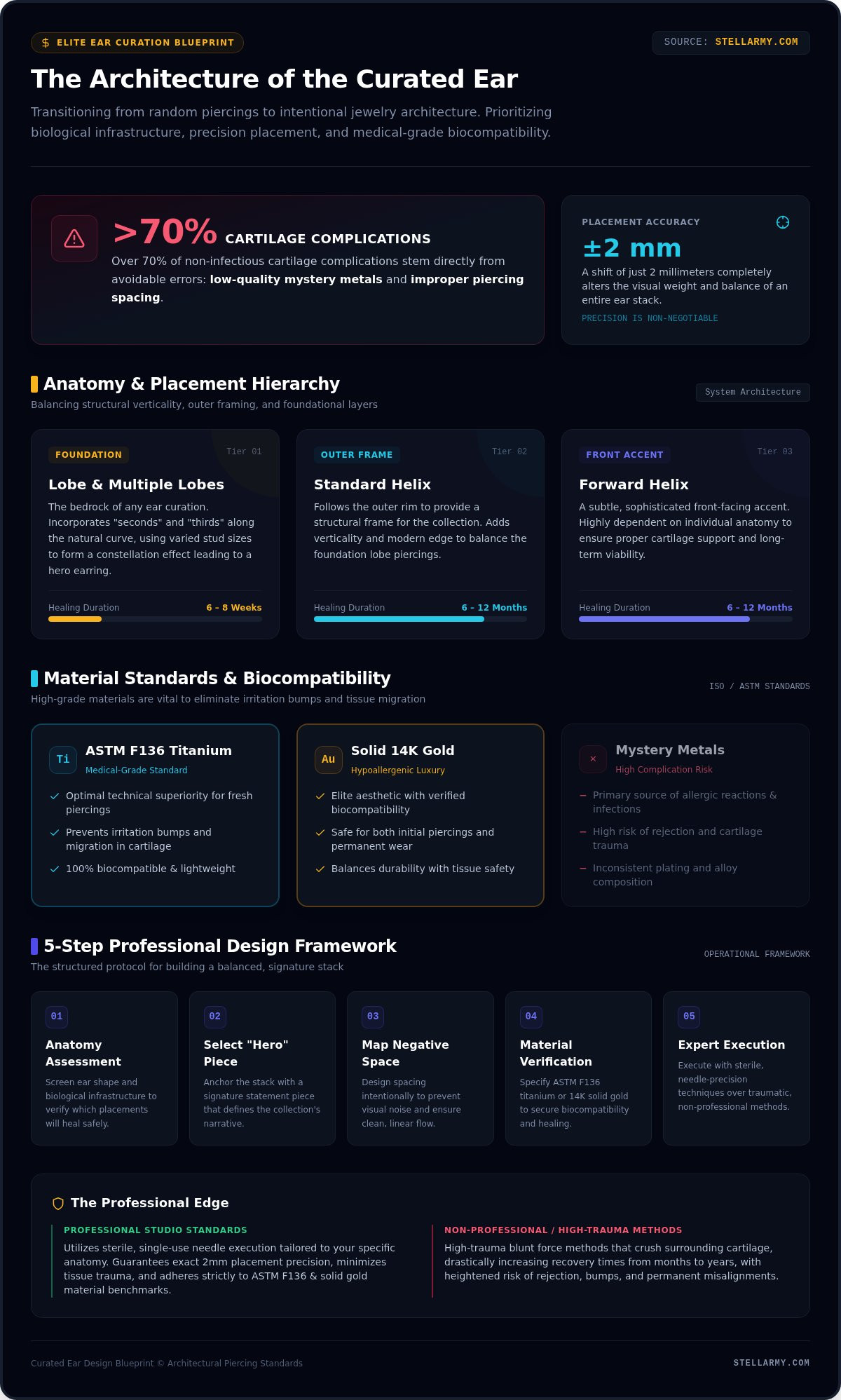
Did you know that over 70% of non-infectious cartilage complications stem from simple, avoidable errors like low-quality jewelry or improper spacing? Achieving a sophisticated style tindik telinga isn't just about adding more holes. It's an architectural discipline where safety standards and high-grade materials dictate the final aesthetic success. You likely want an ear stack that looks elite and intentional, yet the fear of infections from mystery metals or the confusion of mixing gold and silver often creates unnecessary hesitation.
It's time to move beyond the cluttered look and embrace professional ear curation. This guide provides the elite blueprint for designing a signature look that reflects your unique personality while prioritizing your long-term health. You'll discover the art of professional styling, from the technical superiority of ASTM F136 titanium to the strategic use of negative space. We will break down how to select hypoallergenic 14K gold, identify the best placements for your specific ear shape, and choose a provider that operates with the precision of a strategic ally. Get ready to transform your aesthetic with total operational mastery.
Key Takeaways
- Master the architectural discipline of the "curated ear," moving beyond random placements to create a deliberate, high-end aesthetic.
- Identify strategic placements like the helix and forward helix to add verticality and sophisticated edge to your foundational lobe piercings.
- Prioritize biocompatibility by choosing 14K gold or medical-grade titanium to ensure a safe, elite style tindik telinga that promotes optimal healing.
- Implement a professional five-step design framework to assess your anatomy and select a "hero" piece that anchors your entire stack.
- Mitigate health risks by opting for professional piercing services that utilize sterile, precise execution over high-trauma, non-professional methods.
Understanding the Curated Ear: The Evolution of Ear Piercing Styles
Ear piercing has transitioned from a simple rite of passage into a sophisticated form of personal branding. We've moved well beyond the era where a piercing was just a hole in a lobe. Today, high-end jewelry architecture defines the space. A curated ear is a bespoke arrangement of piercings designed to harmonize with the ears natural contours. This intentional approach ensures your style tindik telinga reflects total operational mastery rather than a cluttered collection of random placements. When you treat your ear as a canvas for technical excellence, the result is an elite aesthetic that stands out in any professional environment.
Understanding the sejarah dan variasi tindik telinga reveals how ear styling has transitioned from traditional lobe work to complex cartilage arrangements. Modern curation requires a strategic ally to navigate these choices. By seeking a professional piercing consultation, you ensure that every placement respects your unique biological infrastructure. This isn't just about aesthetics; it's about verifying that each piece of jewelry sits perfectly to allow for optimal healing and long-term comfort.
The Philosophy of Modern Ear Styling
In 2026, the trend landscape balances sharp minimalism with calculated maximalism. It's not about how many piercings you have; it's about how they interact. Your ear stack functions as a permanent accessory for your professional image. It projects competence and attention to detail. Many clients now use signature stacks to mark significant personal or career milestones, turning jewelry into a narrative of growth. We value quality over quantity, ensuring each piece serves a specific purpose in the overall design.
Why Placement Precision Matters
Precision is non-negotiable in high-end styling. A difference of just two millimeters can radically shift the visual weight of your ear. If a piercing sits too low or too high, the entire stack loses its balance. Anatomy dictates viability. Not every ear can support a forward helix or a specific cartilage cluster. A professional piercer acts as a technical leader, screening your ear shape to verify which styles will heal correctly and look elite. This rigorous verification process is what separates a premium stack from a generic, haphazard one. It's about achieving a look that is both intentional and sustainable.
Top Ear Piercing Placements for a Sophisticated Style
Your ear stack's success depends on the architecture of its placements. Randomly scattering jewelry creates visual noise, but a professional layout establishes a clear aesthetic hierarchy. To achieve an elite look, you must treat your ear as a unified system where every hole serves a specific visual purpose. This disciplined approach ensures that your collection looks intentional and high-end rather than accidental.
The Foundation: Lobe and Multiple Lobe Styles
Lobe and multiple lobe piercings are the bedrock of any collection. Precision spacing is the difference between a high-end stack and a cluttered ear. When adding "seconds" or "thirds," you should consider the natural curve of your earlobe to maintain a clean, linear flow. Using varying stud sizes creates a constellation effect, where smaller pieces lead the eye toward a larger hero earring. This technique adds depth without overwhelming the ear's anatomy. If you're unsure about the best spacing for your shape, consulting a professional piercing service ensures your foundation is technically sound.
Elevating the Look: Helix and Forward Helix Placements
Moving into cartilage placements adds verticality and edge to your profile. The helix is the most versatile option, following the outer rim to provide a structural frame for your other pieces. For a more exclusive accent, the forward helix offers a unique front-facing appeal. It's a subtle, sophisticated choice that signals a mastery of ear curation. Unlike lobes, which typically heal in 6 to 8 weeks, cartilage requires more discipline. Healing can take 6 to 12 months, and success is strictly tied to using the standar material perhiasan tindik. Sticking to medical-grade titanium or solid 14K gold prevents the irritation bumps and migration common in lower-quality setups.
Combining these placements creates a cohesive narrative across your ear. A well-designed style tindik telinga balances the boldness of the lobes with the delicate precision of the helix. This intentionality defines a signature look that remains professional yet deeply personal. If you're ready to start your journey with a precision-focused expert, consider securing your session to begin your ear architecture project.
Material Excellence: Choosing Between Gold, Silver, and Titanium
In the architecture of a high-end style tindik telinga, the material serves as the critical infrastructure. Choosing the wrong alloy is a common failure point that leads to contact dermatitis, chronic inflammation, and jewelry migration. While discount retailers often push "gold-plated" or mystery alloys, elite curation requires biocompatible materials that support long-term tissue health. Following the panduan keselamatan tindik dari Mayo Clinic is essential to verify that your jewelry won't trigger an immune response during the sensitive healing phase. We prioritize materials that offer a high-density, low-friction finish to minimize bacterial accumulation.
Why 14K Gold is the Standard for Elite Piercings
Solid 14K gold represents the ultimate balance of luxury and operational reliability. It contains enough pure gold to remain biocompatible while utilizing alloys that provide the structural integrity needed for daily wear. One of the most significant advantages is the use of 14K gold screw-back designs. These provide a secure fit that prevents jewelry loss and ensures the post doesn't compress the tissue, which is vital for maintaining blood flow during recovery. Unlike plated options, solid gold maintains its luster indefinitely without leaching reactive metals into the piercing site. For a technical breakdown of why purity matters, you can explore this guide on 14k gold earrings to refine your selection process.
Titanium and Silver: High-Performance Alternatives
Medical-grade titanium is the professional choice for initial healing, especially for clients with extreme metal sensitivities. It's virtually nickel-free and incredibly lightweight, reducing the mechanical stress on fresh cartilage piercings. Once your piercings have fully matured, 925 sterling silver becomes a versatile option for secondary or tertiary stacks. Silver offers a bright, reflective finish that provides a sharp contrast to the warmth of gold. When designing your stack, consider the psychological impact of your metal choice. The "cool" tones of titanium and silver project a modern, tech-forward edge, while the "warmth" of 14K gold conveys a timeless, premium status. Many elite curators now mix these metals intentionally, using matching gemstone accents to anchor the look into a unified, high-performance aesthetic.
- Medical Grade Titanium: Best for initial piercings and sensitive skin.
- 14K Gold: The gold standard for durability, safety, and luxury.
- 925 Sterling Silver: Ideal for versatile styling in fully healed placements.
5 Steps to Design Your Perfect Ear Stack
Designing a high-end ear stack requires more than just purchasing jewelry; it demands a disciplined architectural framework. To achieve a professional style tindik telinga, you must move beyond the "buy and wear" mentality favored by generalist retailers. This five-step process ensures your design is both aesthetically elite and operationally sustainable. It's about building a system that works with your biology rather than against it.
- Assess your biological infrastructure: Examine your ear's natural ridges, folds, and existing piercings. Anatomy dictates what's viable for placements like the forward helix or conch.
- Select a "hero" piece: Every high-performance design needs a lead anchor. This is typically your largest or most intricate piece, usually placed in the first lobe to ground the entire stack.
- Establish a metal palette: Decide on a unified theme. Whether you choose 14K gold, medical-grade titanium, or a calculated mixed-metal look, consistency projects competence.
- Distribute visual weight: Balance the load by mixing textures. Use studs to create focal points and hoops to introduce movement along the outer rim.
- Define the roadmap: Plan for healing cycles. Remember that cartilage takes 6 to 12 months to mature. Don't rush the expansion of your stack before the previous tier is stable.
Balancing Proportions and Symmetry
Elite styling often utilizes the "rule of thirds." This involves placing your most substantial jewelry in the lower third of the ear and gradually decreasing size as you move upward. We recommend mixing bold 14K gold hoops with delicate studs to create sharp visual contrast. Modern curation has shifted toward "planned asymmetry." Instead of mirroring both ears, design an asymmetrical dialogue where one ear features a maximalist cluster and the other maintains a minimalist constellation. This approach reflects a tech-savvy, insider perspective on personal branding.
The Role of Different Earring Styles
Different jewelry types serve specific functional roles in your architecture. Studs provide texture and are ideal for tight spaces like the forward helix. Hoops add movement and frame the ear's silhouette. In a multi-piercing setup, security is a high-stakes requirement. We prioritize 14K gold screw-back earrings because they offer superior retention and comfort, preventing the jewelry from shifting or falling out during daily operations. For more inspiration on building your unique look, explore our curated ear guide.
Precision execution is the final step in your design journey. If you're ready to implement your signature roadmap with total competence, book your professional consultation today to ensure your placements are architecturally perfect.
The Professional Edge: Why Expert Piercing Service is Non-Negotiable
A signature ear stack is a long-term investment in your personal brand. While the design phase is exciting, the technical execution determines whether your style tindik telinga remains elite or becomes a medical liability. Professional piercing isn't just a service; it's a high-stakes operational procedure that requires total competence. Choosing a professional provider over a generic mall kiosk or a dangerous DIY kit ensures your aesthetic vision is matched by medical-grade precision and sterile protocols. This commitment to quality acts as the ultimate filter for technical excellence, protecting both your health and your jewelry investment.
Expert piercers function as strategic allies in your styling journey. They don't just create holes; they verify anatomical suitability and provide styling consultations that align with your professional image. This level of rigor eliminates the guesswork, ensuring that every placement is intentional and every piece of jewelry sits perfectly. By prioritizing professional standards, you avoid the complications that plague lower-quality environments, such as hypertrophic scarring or permanent tissue damage. It's about achieving operational mastery from the very first needle pass.
Hygiene Standards and Technical Precision
The difference between an elite studio and a mall kiosk is rooted in technical infrastructure. Mall kiosks often utilize spring-loaded instruments that cause blunt force trauma, leading to shattered cartilage and prolonged healing times. In contrast, professional sessions utilize single-use, sterile equipment designed for precision. This is especially critical for cartilage placements to prevent "tilting." If a piercing is executed at the wrong angle, the jewelry will never sit flush against the ear, ruining the visual weight of your stack. To ensure your session is handled by a dedicated expert, you should book your piercing appointment early to secure a slot in a controlled, clinical environment.
Aftercare Excellence for Style Longevity
Preserving the aesthetic integrity of your piercings requires a disciplined aftercare protocol. Many people sabotage their own healing by using harsh chemicals like hydrogen peroxide or alcohol. These substances are too aggressive for new tissue and often lead to chronic irritation or piercing bumps. We advocate for specialized, isotonic saline solutions that support the body's natural recovery process without causing friction or chemical burns. Proper maintenance is the key to ensuring your style tindik telinga matures into a permanent, irritation-free accessory. For a full breakdown of mission-ready maintenance, follow our piercing aftercare guide to ensure your stack stays as sharp as the day it was designed.
Your Roadmap to a Signature Aesthetic
Curating an elite ear stack is a strategic process that balances architectural precision with personal expression. You've learned that material excellence and anatomical suitability are the non-negotiable pillars of a successful design. By prioritizing biocompatible 14K gold and professional hygiene standards, you ensure your look remains both sophisticated and sustainable for years to come.
Achieving a world-class style tindik telinga is about more than just aesthetics; it's about executing a vision with total operational mastery. We're ready to act as your strategic ally in this transformation. Our elite 14K gold jewelry collection and expert styling consultations ensure every placement is intentional. Take the first step toward a look that reflects your complete competence and attention to detail. Book Your Professional Ear Styling Consultation today. Your journey to a refined, intentional signature look begins with a single, precise decision.
Frequently Asked Questions
What are the most popular ear piercing styles in 2026?
Trends in 2026 emphasize asymmetrical dialogue and intentional negative space. Rather than matching both sides, elite curators design a unique narrative for each ear. Requested focal points include conch piercings with fitted clickers and stacked rooks. This approach creates a sophisticated architectural balance across the ear rather than just a collection of holes. It's about achieving a high-end look that prioritizes strategic placement over maximalist clutter for a modern professional image.
Is 14K gold better than sterling silver for new piercings?
Solid 14K gold is the superior choice for initial piercings. Sterling silver is strictly prohibited for unhealed tracts because it oxidizes when contacting wound fluid. This reaction can cause localized cutaneous argyria, which is a permanent dark grey stain on the tissue. Solid 14K gold is biocompatible and nickel-free, ensuring a safe healing environment. Reserve your 925 sterling silver earrings for fully matured piercings, typically six months after the initial procedure.
How many ear piercings can I get in one session?
Most professionals recommend limiting a single session to two or three piercings. Attempting too many placements at once overwhelms your immune system and significantly extends the healing duration. It's more effective to build your style tindik telinga in disciplined tiers. This strategy allows your body to focus resources on stabilizing one area before introducing new infrastructure, ensuring every addition to your stack heals with technical precision and minimal risk.
Can I style my ears if I have sensitive skin?
Yes, sensitive skin requires a high-stakes focus on material quality. You should exclusively utilize medical-grade titanium or solid 14K gold. These materials are hypoallergenic and virtually nickel-free, which eliminates the risk of allergic contact dermatitis. Avoid plated or gold-filled options, as the outer layer can chip and expose reactive base metals to your skin. Sticking to these gold standards ensures your ear curation remains irritation-free and maintains an elite aesthetic.
What is the difference between a helix and a forward helix piercing?
The distinction lies in the anatomical location on the ear's upper rim. A standard helix piercing sits along the outer curve of the cartilage. A forward helix is placed on the front-facing section where the ear connects to the face. Both placements add essential verticality to your stack but require different jewelry silhouettes. Each requires six to twelve months for complete healing due to the limited blood flow found in cartilage tissue.
How long does it take for a cartilage piercing to heal completely?
Cartilage piercings typically require six to twelve months to heal completely. While surface redness and irritation might disappear within eight to twelve weeks, the internal fistula takes much longer to mature. Rushing to change your jewelry before this milestone is a leading cause of hypertrophic scarring and irritation bumps. Patience is a non-negotiable requirement for anyone serious about maintaining the long-term integrity and visual appeal of their high-end ear stack.
Why should I avoid piercing guns for cartilage piercings?
Piercing guns use blunt force trauma that can shatter ear cartilage and cause permanent tissue damage. These mechanical instruments use pressure to force a dull stud through the ear, causing significant compression and trauma. Professional studios utilize single-use, tri-beveled hollow needles for a precise, clean incision. Plastic guns cannot withstand the 134°C steam sterilization required in a medical autoclave, making them a high-risk choice for any professional style tindik telinga.
How do I choose earrings that wont fall out during sleep?
Security in a multi-piercing setup depends on the locking mechanism. We recommend 14K gold screw-back earrings or internally threaded flat-back titanium labrets. Screw-backs provide a high-density, secure fit that prevents the jewelry from loosening during movement. Flat-back designs are particularly effective for sleep because they don't poke the skin behind the ear. These professional-grade options ensure your jewelry remains stable without compromising your comfort or the health of your healing piercings.