
A red, throbbing ear isn't a standard rite of passage. It's a critical failure in your healing protocol that demands immediate, high-precision intervention. You've likely spent the last hour staring in the mirror, questioning if that discharge is normal lymph fluid or a genuine tanda tindik telinga jangkitan. The anxiety of permanent scarring or losing your piercing to a botched recovery is a high-stakes stressor you simply don't need.
We understand that distinguishing between a sensitive new piercing and a medical complication is the ultimate filter for long-term aesthetic success. This guide eliminates the guesswork, providing you with the elite standards required to identify, treat, and resolve infections with total operational mastery. You'll gain the confidence to manage your recovery like a seasoned professional, ensuring your investment in 14K gold or medical grade titanium remains protected. We prioritize quality over quantity, focusing on the results that matter for your health.
We'll break down the specific indicators of infection and the professional-grade aftercare steps to restore your piercing to peak condition. From actionable steps to resolve redness to preventing future complications, this is your strategic roadmap to elite piercing health and precision healing.
Key Takeaways
- Identify the five critical markers of a genuine tanda tindik telinga jangkitan to distinguish between normal biological repair and bacterial presence.
- Learn why high-purity materials like 14K gold and medical grade titanium act as the ultimate infection filter for your healing process.
- Master the essential emergency protocol to manage discharge without risking permanent scarring or trapped bacteria.
- Understand how to neutralize environmental risks like high humidity with professional-grade aftercare solution and sterile compress techniques.
- Discover the operational differences between elite boutique standards and high-risk kiosks to ensure your next piercing meets professional safety benchmarks.
Recognizing the Critical Signs of Ear Piercing Infection (Tanda Tindik Telinga Jangkitan)
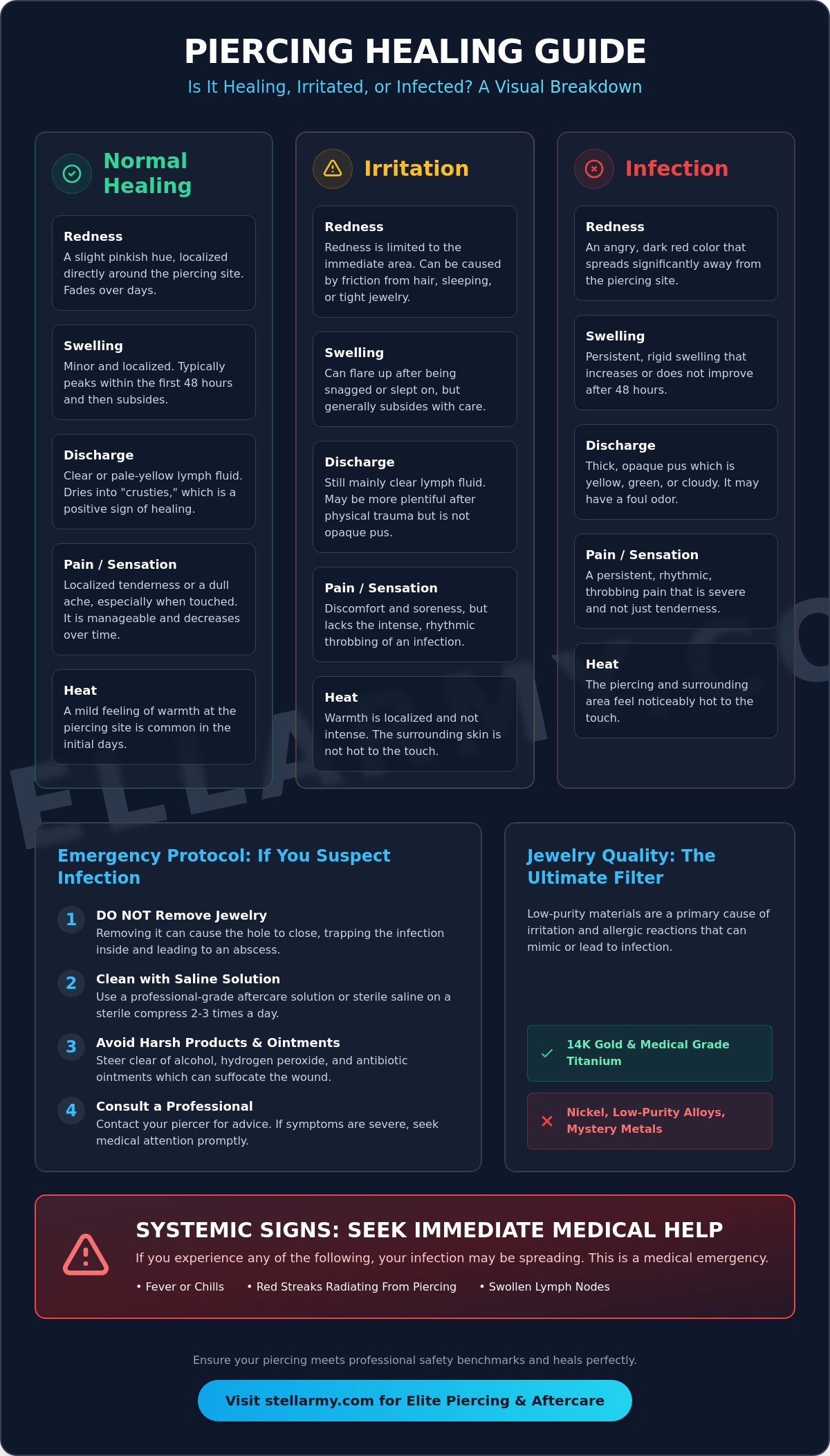
Distinguishing between a healing wound and a clinical infection is the first step in operational mastery of your ear care. Identifying a genuine tanda tindik telinga jangkitan requires a disciplined eye and a no-nonsense assessment of your symptoms. While minor sensitivity is expected, an infection represents a breach in your healing protocol that needs immediate attention. You must evaluate five primary markers: spreading redness, heat, persistent swelling, abnormal discharge, and throbbing pain.
Normal healing often involves localized soreness, but a bacterial presence shifts the stakes. If your piercing feels hot to the touch or the pain transitions from a dull ache to a rhythmic, persistent throb, you're likely dealing with more than just irritation. Precision in your self-diagnosis prevents the stress of permanent scarring and ensures your investment in high-quality jewelry remains secure.
Primary Symptoms of a Bacterial Infection
Monitoring your recovery timeline is essential for identifying failures in the healing process. Watch for these three high-density indicators:
- Intense Redness: While a pinkish hue is normal for new piercings, an angry, dark red color that spreads away from the site is a major signal for infection.
- Abnormal Discharge: Distinguish between healthy lymph fluid, which is clear or white and forms dry crusts, and pus, which is thick, yellow, or green.
- Persistent Swelling: Inflammation should peak within 48 hours; any swelling that increases or remains rigid after this window indicates a localized complication.
Systemic Signs: When to Seek Immediate Help
When an infection bypasses localized defenses, it becomes a systemic issue. Monitor your body's overall performance metrics. A localized warm sensation is common, but a systemic fever or chills indicates that bacteria have entered your bloodstream. Similarly, check for swollen lymph nodes in your neck or behind the ear; this is your body's internal security system reacting to a high-level threat.
If you experience a fever, chills, or red streaks radiating from the piercing site, your minor infection has officially escalated into a medical emergency requiring professional clinical intervention.
Irritation vs. Infection: Distinguishing Normal Healing from Medical Issues
Misidentifying a standard healing response as a tanda tindik telinga jangkitan often leads to premature jewelry removal, which is a critical operational error. Your body requires a specific biological window to stabilize. During the first week, localized tenderness and minor swelling are expected outcomes of the piercing procedure. This is the stabilization phase, where the body begins to form a channel of skin around the jewelry.
Mechanical irritation often mimics infection but requires a different set of protocols. Friction from hair, sleeping on the ear, or overly tight earring backs can cause persistent redness and discomfort. Unlike a true infection, this mechanical trauma lacks the systemic heat and opaque pus discharge. You should consult the official Signs of an infected piercing to verify if your symptoms align with a medical issue or simple physical trauma. If the redness is limited to the immediate area and doesn't throb, you're likely dealing with irritation rather than a bacterial breach.
The 'Crusty' Phase: Why Clear Fluid is Normal
Plasma is your body's natural sealant. It's a clear or pale yellow fluid that dries into what the community calls "crusties." This is a sign of high-performance repair, not failure. Plasma works to transport nutrients to the wound site and seal it from external contaminants. Never pick these crusts with unwashed hands; doing so creates micro-tears that invite bacteria. Instead, use a professional Aftercare Solution to gently soften and remove debris without compromising the new tissue. Transparent fluid is a green light; opaque, foul-smelling pus is a red flag.
Allergic Reactions to Low-Quality Jewelry
An allergic reaction is often mistaken for a tanda tindik telinga jangkitan because both involve redness and swelling. However, allergies are typically characterized by intense itching and a dry, flaky texture. Nickel-rich alloys are the primary cause of these "false infections." They trigger an immune response that disrupts the healing timeline. To eliminate this risk, elite protocols demand the use of 14K gold or medical grade titanium. If you're struggling with persistent sensitivity, switching to hypoallergenic earrings for sensitive ears malaysia is the ultimate filter for long-term comfort and operational success.
Why Infections Happen: From Low-Quality Jewelry to KL's Humid Climate
Identifying the symptoms is only half the battle; understanding the environmental and procedural root causes is how you prevent a total system failure. In Malaysia, your local climate is often your primary adversary. High humidity combined with improper jewelry choices creates a high-risk environment where a tanda tindik telinga jangkitan can manifest rapidly. Mastery of your recovery depends on neutralizing these external threats through disciplined protocol and high-quality materials.
Jewelry design plays a critical role in bacterial management. Many entry-level earrings utilize butterfly backs, which are a legacy design flaw in the piercing industry. These tight metal loops act as a trap for sweat, hair products, and dead skin cells, creating a biofilm that's nearly impossible to clean. Professional grade flatback studs, often made from 14K gold or medical grade titanium, eliminate this trap by providing a streamlined, easy-to-clean surface. This design choice is a fundamental filter for long-term piercing health.
Improper aftercare is another common point of failure. Many people default to "scorched-earth" tactics like using rubbing alcohol or hydrogen peroxide. These chemicals are too aggressive for a fresh wound. They destroy the healthy new cells your body is trying to build, leaving the site raw and vulnerable to opportunistic bacteria. Instead, follow professional piercing aftercare standards by using a dedicated Aftercare Solution that supports biological repair without damaging the tissue.
Environmental Factors in Malaysia
Kuala Lumpur's humidity levels often exceed 80%, creating a persistent moisture trap behind the earlobe. Sweat is acidic and carries surface bacteria directly into the fresh piercing channel. In this tropical climate, keeping the site dry is a non-negotiable requirement. After showering or heavy activity, use a hairdryer on a cool setting to ensure no moisture remains. Additionally, avoid public pools or the ocean for at least 6 to 8 weeks, as these environments are high-density zones for bacterial contamination.
The Dangers of Non-Professional Piercing
High-traffic mall kiosks often rely on piercing guns, which are fundamentally flawed. These devices are made of plastic and cannot be fully sterilized in an autoclave, leading to high cross-contamination risks. Furthermore, guns use blunt force to "crush" an earring through the tissue, causing significant internal trauma. Professional needle piercing utilizes a single-use, hollow-bore needle to create a precise, clean channel, which significantly reduces the inflammatory response and minimizes the risk of a tanda tindik telinga jangkitan from the start.
Emergency Protocols: Steps to Take When Your Piercing is Infected
Protocol execution determines the difference between a minor setback and a permanent scar. Once you've identified a genuine tanda tindik telinga jangkitan, your primary objective is to contain the bacterial presence without compromising the piercing channel. This requires a disciplined, no-nonsense approach to hygiene and a strict adherence to professional standards. Managing an infection isn't about guesswork; it's about applying high-precision care to restore your ear's health.
The "Golden Rule" of infected piercing management is simple: never remove the jewelry. While your instinct might be to pull the earring out to "let the ear breathe," this is a critical operational failure. Removing the stud allows the skin to close over the wound, potentially trapping the infection inside the tissue. This often leads to an abscess, a high-stakes medical complication that requires surgical drainage. Keep the jewelry in place to ensure the infection has a clear exit path for drainage while you execute your treatment plan.
The Sterile Saline Protocol
Successful recovery hinges on consistent, sterile irrigation. DIY salt mixtures are fundamentally unreliable; they lack the precise concentration needed and often introduce new contaminants into the wound. Professional grade saline is the only acceptable standard for elite recovery. To perform a sterile compress, soak a clean gauze pad in a dedicated penjagaan selepas tindik solution and apply it gently to the site for five minutes. This warm compress encourages blood flow and helps draw out discharge without the need for aggressive scrubbing. Repeat this process twice daily until the signs of infection subside.
Managing Earring Backs and Swelling
Inflammation is a natural response to a tanda tindik telinga jangkitan, but excessive swelling can create mechanical issues. If your earlobe begins to swell over the earring back (subang), the jewelry may become "swallowed" by the tissue. This is a high-priority risk that requires immediate intervention. If the earring feels too tight, don't attempt to force it off yourself. Instead, visit a professional boutique to have the jewelry swapped for a longer post. This additional space accommodates the inflammation and prevents the jewelry from becoming embedded, maintaining the integrity of the piercing site.
If home protocols don't show a measurable improvement within 48 hours, or if the redness begins to spread toward your cheek or neck, transition to medical professional care immediately. For those looking to maintain the highest standards of hygiene during recovery, utilizing a specialized Aftercare Solution is the most efficient way to ensure your piercing heals with elite precision.
The Stellar Standard: How Professional Piercing Eliminates Infection Risks
Eliminating the risk of a tanda tindik telinga jangkitan begins long before the procedure starts. It requires a commitment to operational excellence and a refusal to compromise on material quality. While generic kiosks prioritize volume, Stellar functions as a strategic ally in your aesthetic journey. We deploy a high-precision approach that treats every piercing as a clinical procedure, ensuring your results meet the highest percentile of safety and style.
Our infrastructure is designed to act as the ultimate filter against complications. By integrating medical-grade technology with premium jewelry, we provide a seamless recovery experience that respects your time and health. We don't just offer a service; we provide a total system for piercing success that mitigates the common points of failure found in unregulated environments. This professional rigor is why our clients experience a significantly lower rate of post-piercing issues compared to traditional mall outlets.
Premium Materials for Superior Healing
The choice of metal is the most critical variable in your healing equation. 14K gold is the industry standard for biocompatibility, offering a stable, non-reactive surface that encourages rapid tissue integration. Unlike low-quality alloys that leach nickel into your bloodstream, 14K gold remains inert, preventing the allergic triggers that often precede a tanda tindik telinga jangkitan. For those with extreme sensitivities, medical-grade titanium offers an even higher level of protection, serving as a mission-ready material for the most demanding skin types.
Safety is especially paramount for our youngest clients. Our 14K gold screw-back earrings are engineered for high-stakes reliability, featuring a secure locking mechanism that prevents the jewelry from loosening. This design protects against accidental ingestion and ensures the piercing remains undisturbed during active play. For a deeper look at our pediatric protocols, consult our guide on tindik telinga bayi kl to understand how we maintain these elite standards for every age group.
Book Your Professional Consultation in KL
Stellar boutiques are strategically located in major KL shopping malls to provide a sterile, controlled environment for your procedure. Our expert consultants are seasoned technical leaders in the piercing field, trained to execute every placement with total competence. We move beyond the transaction by offering long-term aftercare support through our nationwide reseller and boutique network. This ensures you have access to professional advice and specialized solutions whenever you need a recovery audit.
Don't leave your health to chance with non-sterile equipment or low-grade metals. Secure your recovery by choosing a partner that values precision and quality above all else. Take the first step toward a flawless, infection-free piercing today. Book your elite ear piercing appointment at Stellar Malaysia and experience the standard of excellence you deserve.
Master Your Piercing Recovery Protocol
Managing your ear health requires a disciplined adherence to professional standards and a no-nonsense approach to hygiene. You now have the elite knowledge to distinguish between standard biological repair and a genuine tanda tindik telinga jangkitan. By prioritizing high-performance materials like 14K gold and medical grade titanium, you effectively filter out the most common causes of piercing failure. Precision aftercare is your best defense against the environmental challenges of Kuala Lumpur's humidity.
Don't settle for high-risk kiosks or low-grade materials that compromise your aesthetic results. Our boutiques in premier KL malls provide a sterile, controlled environment designed for total operational mastery. With our specialized aftercare solution and elite jewelry selection, we ensure your piercing heals with the precision it deserves. We act as your strategic ally, providing the expertise needed for a flawless, long-term outcome.
Secure your safe, professional piercing appointment at Stellar Malaysia today and invest in a standard of excellence that protects your health. Your journey to a perfect piercing starts with the right protocols.
Frequently Asked Questions
How do I know if my ear piercing is infected or just irritated?
An infection is characterized by spreading redness, persistent heat, and thick, opaque discharge. While irritation is often caused by mechanical friction or tight jewelry, it typically resolves once the source of trauma is removed. If you observe yellow or green pus and a rhythmic throb, you've likely identified a tanda tindik telinga jangkitan. Irritation remains localized and doesn't usually cause the systemic warmth associated with a bacterial breach.
Should I take my earring out if I see pus or signs of infection?
Never remove your jewelry during an active infection. Removing the earring allows the skin to close prematurely, which traps the bacteria inside the tissue and can lead to a painful abscess. Keeping the stud in place ensures a clear drainage path for discharge while you execute professional aftercare protocols. If the jewelry feels too tight due to swelling, visit a professional boutique to have a longer post installed by an expert.
Can I use Dettol or alcohol to clean an infected piercing?
Avoid aggressive chemicals like Dettol, rubbing alcohol, or hydrogen peroxide. These substances are too harsh for healing tissue and destroy the healthy cells required for biological repair. This damage leaves the wound more vulnerable to opportunistic bacteria. Instead, utilize a specialized Aftercare Solution designed to irrigate the site gently. This high-precision approach supports the body's natural recovery process without the risk of chemical burns or delayed healing timelines.
How long does it take for a minor ear piercing infection to heal?
A minor infection typically resolves within one to two weeks when you strictly follow professional cleaning protocols. Consistency is the ultimate filter for success; you must apply sterile saline compresses twice daily to draw out discharge. If you don't see a measurable reduction in redness and swelling within 48 hours of starting treatment, your recovery protocol has failed. In such cases, transition to a medical professional for a clinical assessment and potential antibiotics.
What are the first signs of a 'tanda tindik telinga jangkitan' in babies?
The first signs of a tanda tindik telinga jangkitan in infants include persistent redness that extends beyond the lobe and a noticeable increase in local temperature. Babies may also show signs of distress, such as excessive crying or pulling at the ear. Monitor for any thick, discolored discharge on the bedding. Because infants have developing immune systems, any sign of fever or spreading inflammation requires immediate consultation with a pediatrician to prevent further complications.
Is it normal for a new piercing to throb or feel warm?
Mild throbbing and a slight warmth are standard biological responses during the first 24 to 48 hours after a piercing. This is the result of increased blood flow to the site as the body begins the initial repair phase. However, if the heat intensifies or the throbbing becomes a persistent, rhythmic pain after this initial window, it indicates a clinical complication. Professional-grade materials like 14K gold help minimize this initial inflammatory response during the stabilization period.
When should I see a doctor for an ear piercing infection?
You should seek medical intervention if you experience systemic symptoms like fever, chills, or swollen lymph nodes in the neck. Additionally, if the redness begins to spread in streaks or the jewelry becomes embedded in the skin due to extreme swelling, immediate clinical care is required. Don't wait for the condition to escalate; if professional aftercare doesn't yield results within two days, a doctor must prescribe the necessary medication to resolve the bacterial presence.
How can I prevent my piercing from getting infected in Malaysia's humidity?
Prevent infections in tropical climates by ensuring the piercing site remains completely dry. After showering or sweating, use a hairdryer on a cool setting to remove moisture trapped behind the lobe. Moisture is a primary catalyst for bacterial growth in high-humidity environments like Kuala Lumpur. Choosing medical grade titanium or 14K gold jewelry further reduces the risk by providing a non-porous, biocompatible surface that is significantly easier to keep sterile than low-quality alloys.