
The local clinic might seem like the logical choice for your child's first earrings, but medical settings often lack the specialized, non-impact technology required for a truly trauma-free experience. Selecting a premium perkhidmatan tindik bayi in Malaysia is about more than just a quick procedure; it's about finding a partner that balances elite sterility with specialized pediatric expertise. You don't want to risk infection or metal allergies by settling for anything less than the industry's highest standards.
We recognize the high-stakes pressure parents feel during this milestone. It's natural to worry about pain or long-term complications. This 2026 comparison guide provides a comprehensive breakdown of the latest piercing systems, material safety, and venue standards across the country. We'll examine the shift toward silent, hand-pressured technology and why medical-grade 14K gold is the only acceptable choice for sensitive infant skin. By the end of this guide, you'll have a clear roadmap to a safe, sterile, and quick session that ensures your baby's comfort and your peace of mind.
Key Takeaways
- Understand the shift from traditional goldsmiths to specialized boutiques that prioritize high-density safety protocols and pediatric precision.
- Discover why hand-pressured, non-impact systems are the elite standard for a professional perkhidmatan tindik bayi, ensuring a sterile and tear-free session.
- Compare the hygiene benchmarks of general clinics against the specialized environmental controls found in premium piercing studios.
- Identify why 14K gold and medical-grade materials are non-negotiable for preventing nickel allergies and ensuring rapid, irritation-free healing.
- Learn how to optimize post-procedure recovery with high-quality 14K gold screw-back earrings and standardized aftercare protocols.
The Evolution of Perkhidmatan Tindik Bayi in Malaysia
The landscape of perkhidmatan tindik bayi has undergone a radical transformation. In previous decades, parents relied on neighborhood goldsmiths or general clinics where the procedure was often a secondary thought. Today, the 2026 standard demands clinical precision and specialized environments. High-growth families now prioritize technical mastery over simple convenience. They seek out boutiques that treat infant piercing as a specialized procedure rather than a retail transaction. This evolution is driven by a zero-tolerance policy for infection and a demand for high-performance materials like 14K gold. Modern perkhidmatan tindik bayi providers now prioritize clinical sterility and pediatric-specific training to ensure the 99th percentile of placement accuracy.
Cultural Significance and Modern Safety Needs
Cultural traditions remain a cornerstone of family life in Malaysia, yet these milestones now intersect with rigorous 2026 medical-grade hygiene standards. Many families view a baby's first earrings as a vital rite of passage. However, an overview of infant ear piercing highlights that historical methods often overlooked the risks of nickel allergies or improper placement. Modern parents are adopting a strategic "wait and see" approach. Pediatricians in Malaysia generally recommend waiting until a baby is at least 3 months old and has completed initial tetanus vaccinations. This ensures the child's immune system is robust enough for the procedure. You can find comprehensive data on these benchmarks in The Ultimate Guide to Baby Ear Piercing in Kuala Lumpur, which outlines the current safety hierarchy for infant care.
Navigating the Malaysian Piercing Landscape
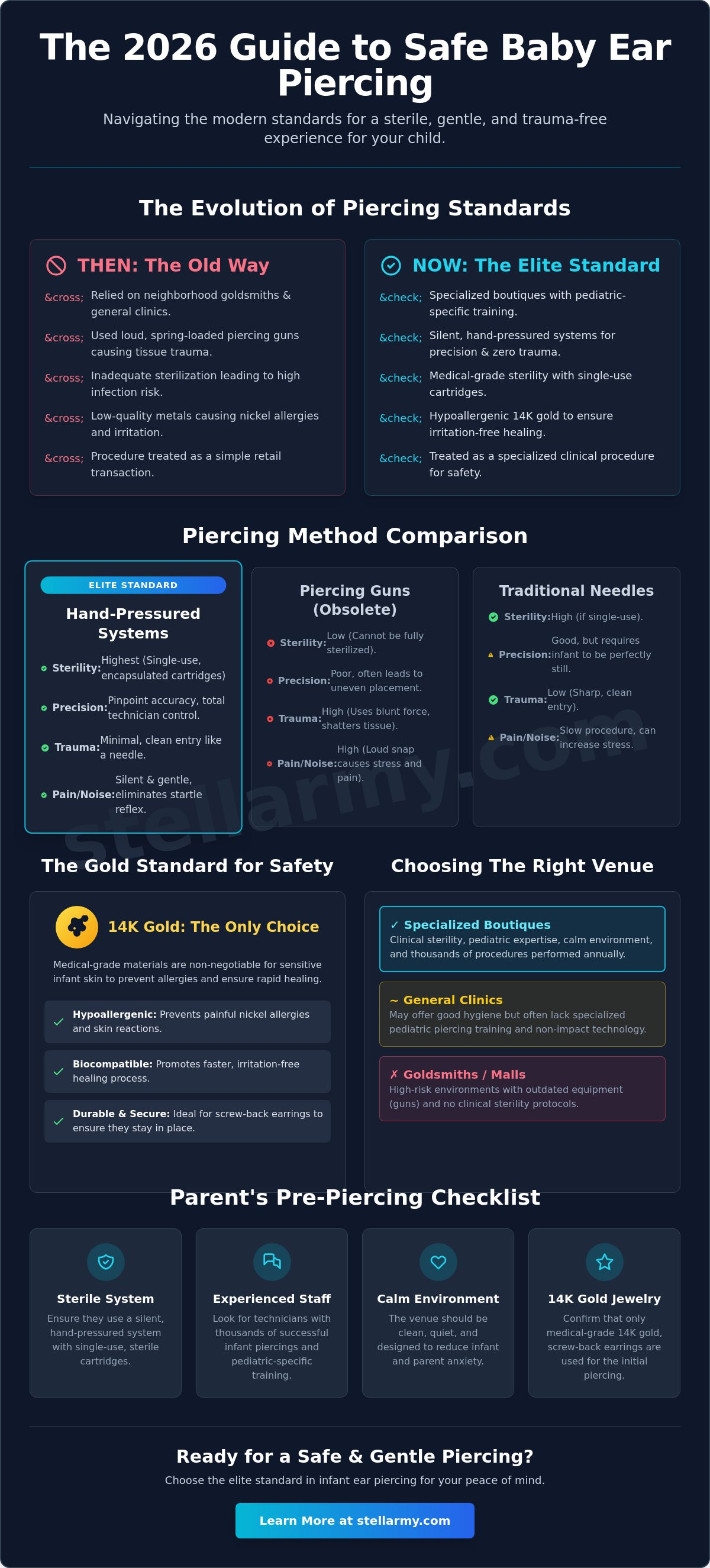
The era of loud, spring-loaded piercing guns is effectively over. These devices cause unnecessary trauma to delicate tissue and cannot be fully sterilized. The current elite standard relies on hand-pressured, non-impact systems. These tools are silent and offer the technician total control, eliminating the "startle" reflex caused by the loud snap of traditional equipment. When identifying a certified perkhidmatan tindik telinga kuala lumpur provider, look for the following operational signals:
- Use of single-use, encapsulated cartridges to prevent cross-contamination.
- Technicians who have performed thousands of successful procedures.
- A dedicated, calm environment designed to reduce infant and parent anxiety.
- Transparent protocols for tool sterilization and skin preparation.
A professional consultation in 2026 includes a thorough assessment of earlobe anatomy and a clear explanation of sterile protocols. Elite providers in Malaysia now perform over 10,000 piercings annually, building a repository of expertise that generalist clinics cannot match. This high-density experience allows for a session that is over in seconds, minimizing the window for discomfort and ensuring a high-performance outcome for your child.
Piercing Methods Compared: Sterile Systems vs. Traditional Needles
Piercing technology has diverged into two distinct categories: clinical needles and specialized hand-pressured systems. For a professional perkhidmatan tindik bayi, the choice impacts both healing time and the baby's stress levels. Traditional spring-loaded guns are obsolete in 2026. They use blunt force to drive a stud through the ear, causing significant tissue trauma and unnecessary pain. These devices are difficult to fully sterilize and often lead to uneven placement. Modern parents now demand systems that prioritize precision and speed without the aggressive impact of outdated hardware.
Tissue trauma is the primary differentiator between these methods. While a needle is sharp, it requires the infant to remain perfectly still for an extended period. This is rarely feasible. Hand-pressured systems offer a middle ground, providing the sharpness of a needle with the speed of a cartridge. This results in the fastest possible healing for babies, as the clean entry point minimizes inflammation. Following a pediatrician's safety guide is essential for understanding how these mechanical differences affect the long-term health of your child's earlobes.
The Precision of Hand-Pressured Systems
Modern hand-pressured devices utilize encapsulated cartridges. This design ensures that the earring and the clasp are never touched by the technician or the device itself, eliminating the risk of cross-contamination. These are silent, "no-bang" systems. They remove the loud snap associated with older guns, which often triggers a startle response and leads to tears. By using a controlled squeeze, the technician ensures 99th percentile accuracy in placement. For a deeper technical breakdown, you can review our Ear Piercing Needle vs Gun Malaysia guide to see why hand-pressure is the elite choice for lobes.
When is a Needle Appropriate?
Needles are technically superior for complex cartilage work, such as helix or forward helix piercings, but they are rarely the first choice for baby lobes. The technical difficulty of using a hollow needle on a moving infant introduces unnecessary risk. A needle requires a multi-step process: the pierce, the insertion of a taper, and finally the jewelry transfer. This extends the procedure and increases the window for distress. While some clinics promote needles as the only sterile option, modern encapsulated systems provide the same level of clinical hygiene with significantly higher efficiency. If you want to ensure a quick and comfortable session, you can book your appointment deposit with a specialist who understands these nuances.
Choosing the right method for perkhidmatan tindik bayi means looking beyond the surface. It's about selecting a system that respects the delicate anatomy of a child. Hand-pressured systems deliver the speed of a gun with the sterility of a needle, creating a high-performance solution for modern families who value both safety and comfort.
Choosing the Right Venue: Professional Boutiques vs. General Clinics
The environment where your child receives their first earrings dictates the entire success of the procedure. For parents seeking a professional perkhidmatan tindik bayi, the choice usually falls between a general medical clinic and a specialized piercing boutique. While both claim to offer safety, their operational focus differs significantly. A general practitioner manages a wide spectrum of health issues, meaning ear piercing is often a low-priority, infrequent task. In contrast, an elite boutique operates with a high-density focus on a single procedure, achieving a level of mastery that generalists cannot replicate.
Specialized boutiques prioritize the "vibe" factor, which is a critical trust signal for both the infant and the parent. A high-stress, clinical atmosphere often triggers a baby's fight-or-flight response before the technician even begins. Professional boutiques solve this by creating curated environments designed to soothe and distract. This isn't just about aesthetics; it's about operational efficiency. A calm baby allows for 99th percentile placement accuracy, ensuring the final result is symmetrical and aesthetically perfect. Elite boutiques often perform over 10,000 piercings annually, building a repository of expertise that a standard clinic simply cannot match.
The Specialist Boutique Advantage
Boutiques offer direct access to 14K gold screw-back earrings, which are the gold standard for infant safety. Most clinics carry a limited inventory of basic surgical steel, which may still contain trace amounts of nickel. High-performance 14K gold is non-reactive and facilitates faster healing. Technicians at these venues undergo rigorous screening and training in infant anatomy, understanding how to manage the unique behavioral challenges of a moving child. This specialized expertise is why many parents now seek out a dedicated perkhidmatan tindik bayi rather than a standard medical check-up.
The Clinical Experience: Pros and Cons
A medical setting is appropriate for infants with specific health conditions, such as blood clotting disorders or compromised immune systems. In these cases, having a doctor present provides an extra layer of high-stakes reliability. However, for the average healthy child, the clinical experience often falls short. Common pitfalls include a lack of hypoallergenic jewelry variety and equipment that hasn't been updated to the latest hand-pressured standards. According to medical advice on ear piercing, the safety of the procedure depends heavily on the sterility of the equipment and the quality of the jewelry used. If a clinic uses the same room for sick patients and piercing procedures, the risk of cross-contamination increases. True medical-grade safety must apply to the entire workflow, from the air purification in the room to the encapsulated cartridges used for the piercing itself.
Safety Standards and Material Selection for Infant Ears
Material selection represents the most critical trust signal in any professional perkhidmatan tindik bayi. While aesthetic appeal matters, the biological compatibility of the metal determines the success of the healing process. In 2026, the industry has moved away from low-karat alloys that often contain hidden nickel. Nickel is the leading cause of allergic contact dermatitis in children, leading to swelling, redness, and delayed healing. High-performance 14K gold serves as the gold standard because it strikes the perfect balance between purity and durability. It's essentially non-reactive, providing a sterile environment for the earlobe to recover without systemic irritation.
Standard butterfly backs are a significant operational risk for infants. They are easily snagged on clothing and can become a choking hazard if they come loose. A professional setup uses screw-back earrings. These secure the stud with a threaded back that covers the sharp post, protecting the baby's delicate skin behind the ear. This design ensures the jewelry remains in place during sleep and play, providing a high-stakes safety barrier that standard jewelry simply cannot offer. This focus on mechanical safety is what separates elite boutiques from generalist retailers.
Material Science: 14K Gold vs. Titanium
Medical-grade titanium and 14K gold offer the highest levels of biocompatibility for sensitive infant skin. Titanium is exceptionally lightweight and inert, making it ideal for babies with known metal sensitivities. However, 14K gold remains the elite choice for its classic aesthetic and proven track record in pediatric piercing. We strictly advise against using 925 sterling silver for initial piercings. Silver oxidizes when it comes into contact with body fluids, potentially leaving permanent dark "tattoos" on the skin. For those seeking the ultimate percentile of quality, our 18K gold piercing options in our perkhidmatan tindik bayi catalog provide even higher purity levels for total peace of mind.
The Precision Aftercare Protocol
Healing isn't just about the procedure; it's about the following 60 days of disciplined maintenance. The 2026 infection landscape requires a no-nonsense approach to hygiene. We recommend using specialized piercing aftercare solutions twice daily. Avoid the outdated practice of twisting or rotating the studs, as this creates micro-tears and introduces bacteria into the wound. For a detailed breakdown of daily maintenance, refer to our 2026 Precision Aftercare Protocol. If you notice persistent discharge, excessive heat, or localized swelling around the lobe, consult your technician immediately.
Secure your child's health by choosing only the highest quality materials and a proven safety workflow. Explore our medical-grade 14K gold earring collection today.
The Stellar Advantage: Elite Baby Piercing in Kuala Lumpur
Stellar Malaysia represents the ultimate filter for technical excellence in infant care. While generalist clinics offer basic services, we provide a specialized infrastructure designed for high-performance outcomes. Our commitment to the 99th percentile of safety and hygiene isn't just a claim; it's a disciplined operational standard. We understand that for KL parents, the procedure is a high-stakes event. Our technicians are elite consultants trained in the "Gentle Piercing" technique, a proprietary workflow that minimizes infant distress through precision and speed. This no-nonsense approach ensures your child's first earrings are a milestone of joy rather than a source of stress.
Why Stellar is the Preferred Choice for KL Parents
We've eliminated the friction typically associated with a perkhidmatan tindik bayi. By utilizing a silent, hand-pressured system, we remove the "startle" reflex that causes tears in traditional settings. Our curated selection of hypoallergenic jewelry includes medical-grade 14K gold earrings and exclusive Disney Characters Earrings. These aren't just accessories; they are high-quality medical-grade components designed to prevent irritation. Our 14K gold screw-back earrings provide a secure, snag-free fit that ensures your child's safety long after you leave the boutique. For a deeper dive into our methodology, read our Gentle Baby Ear Piercing Malaysia guide.
Our operational mastery is reflected in our rigorous screening and verification of all materials. We provide:
- Clinical-grade sterilization of all piercing stations before every session.
- Precision placement using advanced anatomical mapping for perfect symmetry.
- Comprehensive aftercare solution provided to facilitate rapid healing.
- Access to elite 18K gold and medical-grade titanium options for ultra-sensitive skin.
Booking Your Appointment
Our booking process is as efficient as our piercing sessions. We value your time and prioritize a low-friction experience from the initial consultation to final aftercare support. You can secure your session at our Kuala Lumpur or Selangor locations by placing an ear piercing appointment deposit. This ensures you receive a dedicated time slot with our top-tier specialists, moving you quickly through the process without the wait times found in general clinics.
Don't settle for the generalist approach. Experience the elite standard of perkhidmatan tindik bayi at Stellar Malaysia. Our focus on quality over quantity ensures that every child receives the meticulous care they deserve. Book your elite piercing session today and join the thousands of parents who trust our disciplined approach to pediatric safety.
Securing Your Child's Milestone with Elite Precision
Selecting a professional perkhidmatan tindik bayi is a strategic decision that impacts your child's long-term comfort and health. We've outlined how the 2026 standard for pediatric piercing relies on the synergy of hand-pressured technology and medical-grade material science. By moving away from generalist clinics and embracing specialized boutiques, you choose an environment designed for precision, sterility, and infant-specific care. High-performance 14K gold and encapsulated systems are no longer luxuries; they are the baseline for a safe, irritation-free milestone.
Stellar Malaysia operates as a premium partner for families who refuse to compromise on safety. Trusted by thousands of Malaysian parents, we are specialists in 14K gold hypoallergenic jewelry and utilize sterile, encapsulated piercing systems to ensure total operational mastery. Our technicians provide the speed and accuracy necessary for a tear-free session every time. You can Book Your Professional Baby Piercing Appointment at Stellar Malaysia now to secure your session. We look forward to providing your child with a safe, beautiful, and world-class piercing experience.
Frequently Asked Questions
What is the best age for perkhidmatan tindik bayi in Malaysia?
Malaysian pediatricians generally recommend waiting until a baby is at least 3 months old before undergoing a professional perkhidmatan tindik bayi. This timeframe ensures the infant has received their initial round of tetanus vaccinations. Waiting until this developmental milestone allows the child's immune system to stabilize, which significantly reduces the risk of complications during the critical early healing phase.
Is the piercing procedure painful for infants?
Modern hand-pressured systems minimize discomfort by utilizing a non-impact mechanism that is significantly faster and quieter than traditional equipment. Most infants experience only a brief moment of surprise rather than prolonged distress. The precision of this high-performance technology ensures the session is over in seconds, maintaining a low-friction experience for both the parent and the child.
Why should I choose 14K gold earrings for my baby?
14K gold is the elite standard for pediatric piercings because it is highly biocompatible and virtually free of irritating nickel. Lower-quality metals often trigger allergic contact dermatitis in sensitive infant skin, leading to swelling and delayed recovery. By selecting 14K gold, you ensure a high-stakes safety barrier that prevents systemic irritation and supports rapid tissue regeneration.
How long does it take for a baby’s ear piercing to heal?
Earlobes typically require an initial healing period of approximately 6 to 8 weeks to form a stable channel. However, it's recommended to keep the initial piercing studs in place for at least one year to prevent the hole from closing. Consistent application of a specialized aftercare solution during the first two months is essential for maintaining a sterile environment and ensuring successful long-term results.
Can I bring my own earrings for the piercing session?
You cannot bring external jewelry for the initial piercing session due to strict clinical sterility protocols. Professional boutiques use pre-sterilized, encapsulated cartridges that are designed to interface perfectly with the piercing device. Using external earrings compromises the sterile field and increases the risk of infection. You can switch to your own high-quality jewelry once the initial 8-week healing phase is complete.
What should I do if my baby’s ear looks red after piercing?
Slight redness is normal for the first 24 to 48 hours as the body initiates its natural healing response. If the redness persists, or if you notice localized heat, excessive swelling, or discharge, you should contact your technician or a healthcare professional immediately. These are red flags for potential infection that require swift intervention to maintain the integrity of the piercing and the child's comfort.
Are there any specific medical conditions that prevent ear piercing?
Infants with blood clotting disorders, congenital heart conditions, or compromised immune systems should consult a pediatrician before scheduling a perkhidmatan tindik bayi. These conditions may require a specialized clinical setting rather than a boutique environment to manage high-stakes health risks. Always disclose your child's complete medical history during the consultation to ensure a safe and professional workflow.
How much does a professional baby piercing service cost in KL?
The total cost for professional baby piercing in Kuala Lumpur depends primarily on the material selection of the jewelry, such as 14K gold or medical-grade titanium. Many specialized boutiques offer the piercing procedure as a value-added service when you purchase their high-quality piercing studs. It's best to check with the specific provider for a detailed breakdown of their current jewelry inventory and service packages.