

A small piece of jewellery can make a thoughtful gift, even for someone who rarely wears it. Earrings feel personal without being bold, especially when their style suits the recipient’s everyday look.
It’s understandable to hesitate: a gift may look beautiful but still feel too striking or difficult to wear. The right choice depends on practical details, including material, stone, shape and how often the recipient might wear the earrings.
This guide explains how prices in Malaysia vary by material and design, what to consider when comparing stones, and how studs, hoops and drop styles differ. You’ll also learn how to choose earrings that suit someone’s taste without relying on a dramatic design. The goal is a thoughtful, wearable gift that feels right for the person receiving it.
Key Takeaways
- Learn which design and material factors influence prices in Malaysia, so you can compare options with a clearer budget in mind.
- Match the shape and scale to the recipient’s everyday style for a gift that feels easy to wear.
- Compare metal choices with comfort and skin sensitivity in mind before settling on a finish.
- Explore how gold colour and stone details can change the look of a piece without making it feel too bold.
- Use simple care habits to help keep each piece looking its best over time.
Earring prices in Malaysian ringgit
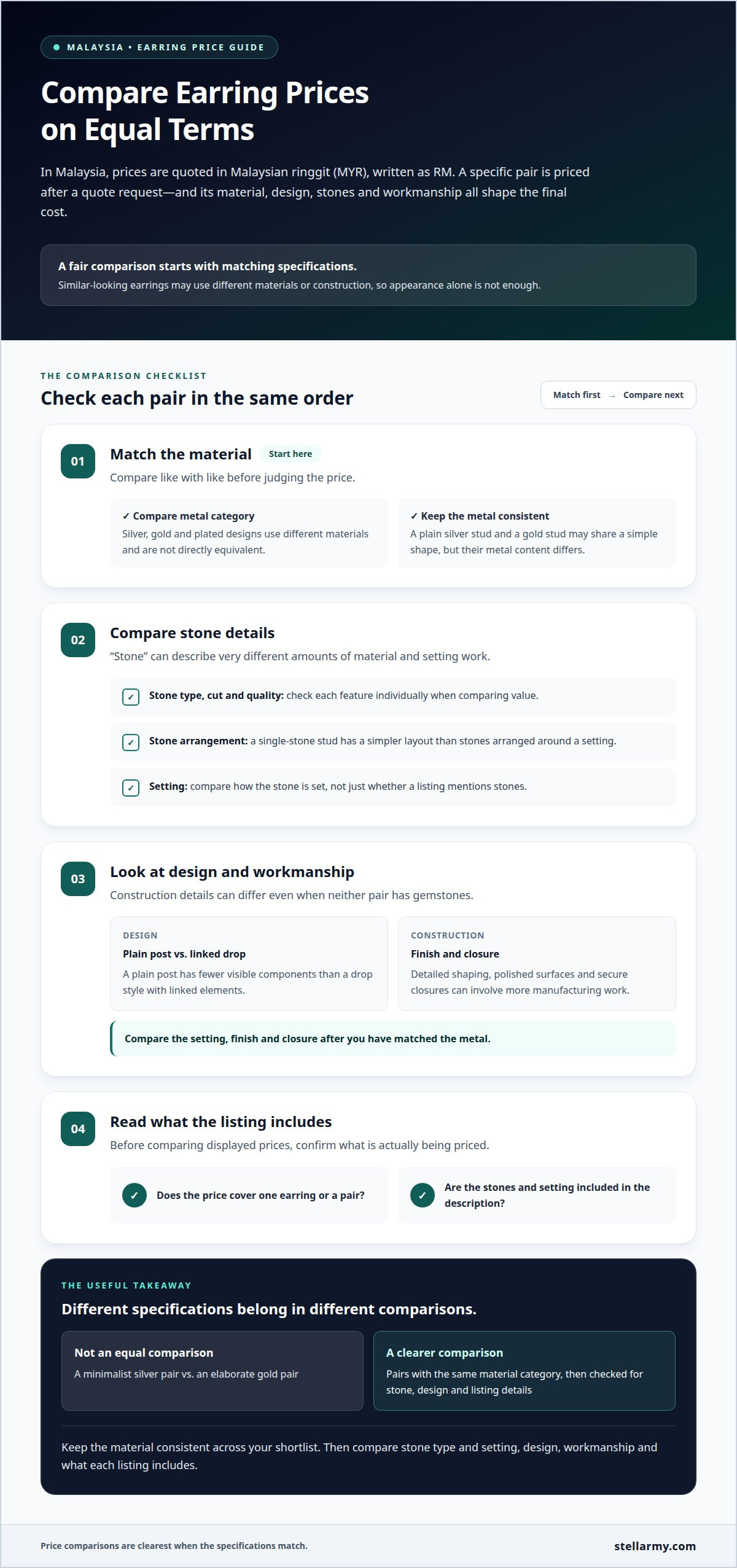
Malaysian retail prices are quoted in Malaysian ringgit, abbreviated MYR and written RM. For a specific pair, price depends on the item and is given after a quote request. Material, design, stone choice and workmanship shape the final cost. An advertised price range only helps when it describes comparable pieces, not simply similar-looking jewellery. Compare two pairs with matching materials before drawing conclusions.
Start by comparing the metal. Silver, gold and plated designs use different materials, so their prices are not directly equivalent. A plain silver stud and a gold stud may share a simple silhouette, but their metal content differs. For a useful comparison, match the metal type first, then look at the setting, finish and closure. This keeps the focus on actual differences between pairs.
Stone details create another distinction. A small accent stone, a larger centre stone and a multi-stone arrangement involve different amounts of material and setting work. For example, a single-stone stud has a simpler layout than a design with stones arranged around its setting. Stone type, cut and quality also affect a piece’s value. Compare these features individually rather than relying on the word “stone” alone.
Design and construction matter even without gemstones. A plain post design has fewer visible components than a drop style with linked elements. Detailed shaping, polished surfaces and secure closures can involve more manufacturing work. Check whether the listed price covers one earring or a pair, and whether the description includes the stones and setting. These details make listings easier to compare on equal terms.
To assess earring prices, use a consistent method. First, choose the same material category. Next, compare stone type and setting, then check the design and what the listing includes. A minimalist silver pair and an elaborate gold pair belong in different comparisons. This gives a clearer picture of value than choosing the lowest displayed price without checking the specifications.
For a gift, set your priorities before comparing Malaysian retail prices. If everyday wear matters most, focus on a simple design and comfortable-looking construction. If the recipient prefers a statement piece, weigh the design and stone details more heavily. Keep the material consistent across your shortlist. This makes MYR prices more useful for comparing meaningful differences between earrings, rather than treating unlike designs as interchangeable.
Everyday earrings, studs and drop earrings
For regular wear, start with silhouette and movement. Studs sit close to the earlobe, while hoops and drops create more visible outlines. Consider which shapes feel familiar to the person receiving them.
Stud and Hoop Styles
Stud earrings offer a compact profile, making them a straightforward choice for someone who prefers subtle jewellery. A small stone or plain metal shape keeps attention near the earlobe. Hoop earrings form a loop, with size and thickness changing their visual weight. An 8 mm diameter stainless-steel hoop is one example of a small, defined hoop. Compare its diameter and thickness with the recipient’s usual accessories.
Consider the closure and overall shape alongside the style. A smooth, simple stud has a different presence from a textured one, even when both are small. Hoops may be round, oval or shaped, so consider whether the recipient prefers clean lines or decorative details. For a gift, a familiar shape can be easier to wear than a distinctive design. These details help narrow your earring choices without losing sight of everyday use.
Drop and Dangle Styles
Drop earrings hang below the earlobe, often with one fixed element. Dangle earrings move more freely, creating greater motion and visibility. Chandelier styles extend this effect with several decorative sections branching or layered below the ear. Compare length, the number of hanging elements and visual movement before choosing a pair.
A short drop adds detail without extending far below the lobe. A longer dangle creates a more noticeable line beside the face. For someone who rarely wears jewellery, a compact drop may feel more versatile than a large chandelier design. Construction matters too: it affects whether the hanging part stays relatively still or swings as the wearer moves. Consider this when choosing earrings as a gift.
Use these style checks to narrow the choice:
- For a minimal look: choose a small stud or a neat, narrow hoop.
- For a little movement: consider a short drop with one simple feature.
- For a statement: look at longer dangles or layered chandelier shapes.
Think about where the recipient might wear the pair. A compact stud can suit workdays and casual outfits, while a more noticeable drop may work better for occasions. If their usual accessories are delicate, avoid choosing a gift that sharply contrasts in scale. A small change in shape can still feel personal.
Use their existing style as your guide. Notice whether they choose close-fitting pieces, loops or designs with movement. Then select a similar scale in a fresh shape or finish. Explore understated styles as a starting point for choosing a wearable design.
Earring materials
Material affects appearance, comfort and care. When choosing a gift, compare the metal named in the description with the recipient’s known skin sensitivities.
Materials for Sensitive Ears
For sensitive ears, start with clearly identified materials. Medical-grade titanium, gold and sterling silver are options to compare. The material matters because the post and backing touch the ear directly. A decorative coating doesn’t identify the metal underneath. Read the description for the stated metal rather than judging by colour alone.
Next, consider the wearer’s experience. If they’ve noticed discomfort with particular jewellery, avoid choosing an unidentified metal just because its finish looks familiar. A simple design can also make the material easier to assess. Consider the post and backing as well as the visible front, since both parts touch the ear.
Allergy and Infection Risks
Wearing jewellery can involve risks beyond material sensitivity. Wikimedia Foundation identifies allergic reactions, infections, excessive scarring and unexpected physical injuries as possible consequences of body piercing. An allergy may cause an uncomfortable reaction, while an infection concerns the pierced area. These are distinct risks, so a metal choice alone can’t address every concern.
For newly pierced ears, cleanliness and aftercare matter alongside the jewellery. Don’t treat redness or discomfort as proof of a specific cause. A reaction may relate to the material, while infection is a separate concern. If symptoms develop, seek appropriate medical advice rather than relying on a material change alone.
Checking Genuine Gold and Silver
To assess whether a piece is genuine gold or silver, begin with its product description. Look for the stated material and purity, such as 14K gold or 925 sterling silver. These terms identify a specific metal category. A gold-coloured surface alone doesn’t establish that the piece is gold, and a silver tone doesn’t prove sterling silver.
Compare the description with the item’s markings and purchase documentation. Treat these as supporting details, not a visual test: colour and shine cannot reliably establish metal content. If a listing uses terms such as “gold-tone” or “silver-tone,” read them as descriptions of appearance, not proof of solid gold or sterling silver. Keep the description with the receipt for future reference.
Material also shapes everyday care. Sterling silver, brass and base metals may tarnish or corrode with water exposure, so removing them before showering is generally advised. Gold, silver and titanium each have a distinct look, but their finish, construction and contact points still deserve attention. Compare the complete piece, not just its front.
For a considered choice, follow this sequence: identify the stated metal, account for the wearer’s known sensitivities, then review the post and backing. A clear material description provides a stronger basis for comparison than colour alone. This approach helps you choose a design with both appearance and comfort in mind.
Gold, white gold and rose gold earrings
Gold colour and karat are separate details to compare when choosing a gift. Yellow gold has a classic warm tone, while white gold looks cooler. Rose gold has a pink-toned finish. The right option depends on the recipient’s usual jewellery colours, preferred style and the look they wear most often.
Check the metal description before comparing different gold shades. A colour name describes appearance, while a karat label identifies the stated gold grade. For example, a listing for 916/22K yellow gold gives both details. Don’t use yellow, white or rose colour alone to judge the stated metal content. Read the full description, including any stated grade.
A 916/22K yellow-gold example, Earrings 3010(C), weighs approximately 0.80-1.00 g. It measures 1.3 cm high by 0.5 cm by 0.5 cm. Those details show why size and weight help describe a specific piece. Compare dimensions and weight only when listings provide them, and avoid treating one example as a standard for every gold design.
For white gold, focus on the written description and overall finish. Compare its cooler tone with the recipient’s usual accessories, such as silver-toned jewellery or a watch. Rose gold may suit someone who already wears warm or pink-toned accessories. These visual comparisons can help narrow the choice without assuming all designs share the same shade or proportions.
Platinum is another precious metal to consider alongside gold. Compare the named material, colour and design, rather than assuming two pieces are equivalent because they look similar. Gold and platinum are different material categories, so their descriptions matter. A clear product listing should identify the metal and any stated grade, allowing a more informed comparison.
Use these checks to assess a gold piece:
- Read the full metal description: note the colour and stated karat grade.
- Compare proportions: use listed measurements to understand scale.
- Review weight: compare it only with another piece described on the same basis.
- Match the finish: consider whether yellow, white or rose tones fit their usual style.
For someone who rarely wears jewellery, a simple gold stud makes the colour the main detail. A small yellow-gold design keeps a classic look; white gold can feel understated, while rose gold adds a warmer accent. Let the recipient’s existing pieces guide the finish, then use the material description and dimensions to make your final comparison.
How should I clean and care for earrings?
Start with the material, because care needs vary. Sterling silver, brass and base metals may tarnish or corrode after water exposure, so removing them before showering is generally advised. Diamond designs need a different approach: use mild detergent in water and a soft brush.
For diamond jewellery, keep cleaning gentle. Mix mild detergent with water, then use a soft brush to clean the piece. Work carefully around the setting, where dirt can collect. Rinse away the solution and dry the item thoroughly before storing it. Avoid forceful brushing, which can disturb delicate details or loosen a setting.
Water exposure deserves attention with silver, brass and base-metal designs. Remove them before showering and dry them if they get wet. This simple habit helps limit the exposure associated with tarnishing or corrosion. Don’t treat every metal identically: a routine suited to a diamond piece may not suit a silver design.
Use this practical care sequence after wearing a pair:
- Identify the material: check whether it is silver, brass, a base metal or a diamond design.
- Remove before showering: especially for sterling silver, brass and base metals.
- Clean diamonds gently: use mild detergent, water and a soft brush.
- Dry before storage: put the piece away only after removing moisture.
Storage matters too. Keep each pair in a clean, dry place rather than beside a sink or shower. Separate pieces to reduce tangling and contact between different designs. A dedicated pouch or compartment makes pairs easier to find and helps prevent chains from catching on posts or closures.
Newly pierced ears need a distinct care routine from established piercings. The listed healing period for an ear piercing is 6-12 months. During that period, follow the piercing aftercare guidance rather than applying jewellery-cleaning steps to the piercing itself. Cleaning a diamond setting with detergent and a soft brush is not a substitute for piercing aftercare.
Inspect the piece before wearing it again. Look for dirt around a setting, moisture on the surface or a closure that no longer fastens securely. If a diamond design still looks dirty after gentle cleaning, avoid using harsh chemicals or abrasive tools. Match the method to the material, and keep the routine simple and consistent.
Choose a care routine that fits the material and how you wear each pair. Explore styles suited to your care routine.
Stellar Malaysia
Stellar Malaysia helps you connect material, style and comfort when choosing jewellery or considering a piercing. Its range includes 14K gold, 925 sterling silver and medical grade titanium earrings, giving you distinct material options to consider for a thoughtful gift. If the recipient is planning a new piercing, Stellar Malaysia also offers ear piercing.
Use what you’ve learned about their preferred designs and metal sensitivities to guide the conversation. A clear idea of whether they favour a subtle everyday piece or a more noticeable style can help narrow your choice. For piercing questions, the ear piercing service is a relevant next step.
Contact Stellar Malaysia to discuss your earring or piercing choice.
Choose a Gift They Can Make Their Own
Let the gift feel like an invitation, not a test of someone’s style. A thoughtful pair gives someone who wears little jewellery room to try a new detail at their own pace. Choose with the person in mind, then leave space for them to decide when and how it becomes part of their routine.
Presentation can make your choice feel personal without making it formal. Add a short note explaining what made you think of them, such as a colour they often wear or a familiar style. This context turns the gift into a considered gesture while keeping the focus on their preferences. Their response can also guide future choices, whether they wear the pair often or save it for a special occasion.
There’s no need to predict every detail of someone’s taste. A considered choice is a strong starting point, and the wearer can make it their own over time. For guidance on choosing earrings or exploring piercing options, contact Stellar Malaysia about your next step. Make the choice with care, and let the recipient enjoy it in their own way.
Frequently Asked Questions
Are they a good gift for someone who does not wear much jewellery?
Yes, a small, familiar design can make a thoughtful gift for someone who wears little jewellery. Notice what they already choose, such as discreet pieces, warm metal tones or simple shapes. If you’re unsure, opt for a lightweight-looking stud rather than a large, highly decorative style. Include a gift receipt if available, so they can decide whether the pair feels comfortable and personal.
How do I choose a pair that matches someone’s personal style?
Use their everyday accessories as a practical guide. If they wear simple watches and plain outfits, consider a small stud or a clean hoop. If they prefer expressive clothes, a drop design may feel more aligned with their style. Note whether they choose warm or cool metal colours, then match the finish. For a personal touch, pick a shape that echoes something they already wear.
Should I take them out before showering?
Yes, remove sterling silver, brass and base-metal pieces before showering, as water exposure may contribute to tarnishing or corrosion. Dry them if they get wet, then store them somewhere clean and dry. Care depends on the material, so don’t assume every pair needs the same routine. Diamond pieces have a separate cleaning method: mild detergent in water and a soft brush.
What styles are trending in 2026?
Rather than relying on a single trend, choose a style that suits the wearer’s habits. Small studs offer a restrained look, while hoops add a clear outline. Short drops provide detail with limited movement; chandelier designs feel more prominent. For a 2026 gift, focus on a shape and scale they’ll enjoy wearing, rather than choosing a style solely because it appears fashionable.
What material is best for sensitive ears?
Gold, platinum and surgical stainless steel are suggested options for reducing the risk of irritation or allergies. Medical-grade titanium is another material to consider, especially if the wearer prefers a clearly identified metal. Previous reactions can guide the choice: if a particular material caused discomfort, avoid choosing it again. The post and backing matter too, since they touch the ear directly.
Which styles make timeless gifts for women?
Simple studs and classic hoops are enduring gift choices because their shapes work with varied outfits. A small drop adds detail while staying less dramatic than a chandelier design. Choose a modest scale if you don’t know her preferences well. A familiar metal colour also makes the piece easier to pair with jewellery she already owns, keeping the gift personal without feeling overly specific.
What types are available in Malaysia?
Options in Malaysia include studs, hoops, drops, dangles and chandelier designs. Material choices can include gold, sterling silver and medical grade titanium. Stellar Malaysia offers 14K gold, 925 sterling silver and medical grade titanium jewellery, as well as Disney character designs. The right selection depends on the intended look, the wearer’s comfort and whether the piece is for an existing piercing or a new one.
What styles and materials are common choices?
Studs, hoops and drops are familiar style categories, each creating a different look: close-fitting, circular or hanging. Gold, sterling silver and titanium offer distinct material options. Rather than treating one combination as universally popular, consider the recipient’s routine and existing accessories. For example, a simple stud can suit understated tastes, while a small hoop adds a noticeable shape without a long hanging element.