

Yes, earrings suit men. An average stud earring is 20 gauge, and earrings for men range from subtle studs to hoops and dangles. The right choice comes down to your personal style, where you’ll wear them and which metal feels comfortable for everyday use.
A simple stud keeps the look understated, while a hoop or dangle makes a more noticeable statement. Metal matters too: gold, sterling silver and titanium each create a different look. The best fit for daily wear may not be the one you’d choose for a special occasion.
This guide compares men’s earring styles and metals, including gold, platinum, sterling silver and titanium. You’ll learn how to choose a look for everyday outfits or dressier events, and what to consider if you’re planning a new piercing. The aim is to help you make a confident choice that suits you, not to prescribe who can wear earrings.
Key Takeaways
- Choose an earring style based on the look you want, from low-key to more noticeable, and how it fits your personal style.
- Consider which ear you want to wear an earring in, without treating tradition as a rule you have to follow.
- Match your choice to the occasion: a restrained design can suit everyday outfits, while a bolder piece can add emphasis for a special event.
- Compare metals by their appearance and practical fit for regular wear, especially if you have sensitive skin.
- For a new piercing, plan around the healing period before changing jewellery; Stellar Malaysia offers ear piercing and earring options in gold, sterling silver and medical grade titanium.
Are these earrings designed specifically for men?
Men’s earrings aren’t defined by a single shape, size or side. A stud, hoop or diamond design can suit anyone, so start with the look you want rather than a gender label. A small, plain stud creates a quieter effect; a larger drop draws more attention. Choose a piece that fits your clothes and routine.
There’s no universal rule that an earring belongs in the left or right ear. Choose a side based on comfort, hairstyle or how you want the piece to appear. For example, a single stud on the side usually visible in photographs creates a deliberate focal point. If you prefer balance, wear a matching pair.
For sensitive skin, make the metal part of the decision, not an afterthought. Medical grade titanium, 14K gold and 925 sterling silver offer distinct material options. Consider which metals you already wear comfortably, then choose an earring with a simple finish. No material choice can promise that every wearer will avoid irritation, so comfort and personal experience matter.
How many earrings you wear depends on the balance you want. One stud gives a clean, minimal look; a pair creates symmetry. If you have several piercings, make one larger piece the focal point and keep the others smaller. For example, pair a hoop in the first lobe piercing with a discreet stud above it.
Face shape can guide proportions, but it shouldn’t dictate your choice. For a round face, a slim drop can add a longer visual line. A small round stud or hoop can complement angular features. If your face is long, a wider hoop or compact stud can add horizontal emphasis. Compare the earring’s outline with your jaw and cheek lines.
Size is easiest to judge against your earlobe and usual outfits. An average stud earring is 20 gauge, a useful reference for understanding the post size rather than the visible design. A compact stud works well under headphones or with a structured shirt; a larger diamond or hoop stands out more. Check both the front diameter and post fit before choosing.
Try a simple selection sequence: decide whether you want one or two earrings, choose the side or sides, then compare shapes and sizes. A coordinated collection can make mixing pieces easier, but matching isn’t essential. For instance, a plain titanium stud beside a gold hoop creates contrast without relying on a strictly “men’s” design.
Earring styles: studs, ear cuffs, dangles, hoops and piercings
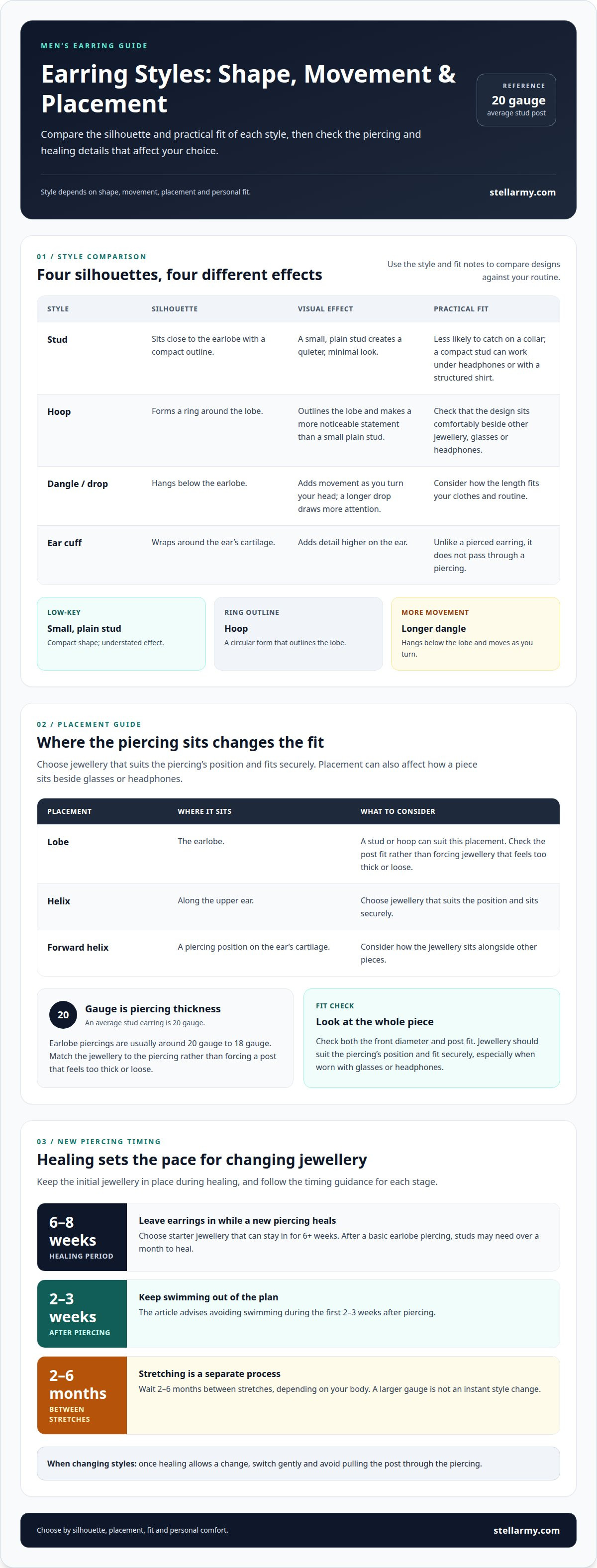
Studs, cuffs, dangles and hoops create different silhouettes, while piercing placement determines where jewellery sits. Compare shape, movement and fit before choosing a design.
Comparing Stud, Cuff, Dangle, and Hoop Styles
A stud sits close to the earlobe, keeping its outline compact. Hoops form a ring, while dangles hang below the lobe and move as you turn your head. An ear cuff wraps around the ear’s cartilage rather than passing through a piercing. Lobe, helix and forward helix piercings offer different positions for these styles.
Match the design to your routine. A small stud is less likely to catch on a collar, while a longer dangle creates more movement. A hoop outlines the lobe; an ear cuff adds detail higher on the ear. For a layered look, consider how each piece sits beside the next.
Choosing Piercings and Single-Earring Meanings
Choose the left or right ear based on the look you prefer, your hairstyle and which side you want to feature. A single earring can be a personal style choice, but its meaning isn’t universal. Don’t assume the side signals someone’s identity or intent. A plain stud on either side, for example, can simply complement an outfit.
Placement also affects your choice. A lobe piercing suits a stud or hoop; a helix piercing sits along the upper ear. Jewellery must suit the piercing’s position and fit securely, especially when worn with glasses or headphones.
Gauge describes piercing thickness. Earlobe piercings are usually around 20 gauge to 18 gauge. Choose jewellery that fits the piercing rather than forcing a post that feels too thick or loose. Stretching is a separate process: wait 2-6 months between stretches, depending on your body. Don’t treat a larger gauge as an instant style change.
Healing affects when you can change designs. Leave earrings in for 6-8 weeks while a new piercing heals, and choose a starter earring that can stay in for 6+ weeks. After a basic earlobe piercing, studs may need over a month to heal. The healing period can mean wearing the initial jewellery for a month or two.
Keep swimming out of the plan during the first 2-3 weeks after piercing. Once healing allows a change, switch styles gently and avoid pulling the post through the piercing. If a new lobe or cartilage piercing is your next step, explore ear piercing options suited to those placements.
Earring styles and product names
A product name can tell you more than its visual style. Look for the design, metal, decorative detail and size in the title. “Sterling silver round zirconia stud” identifies a material, a stone detail and a classic shape. This structure helps you compare jewellery listings without relying on a collection name or product photograph alone.
Start with the style word. “Stud” describes a compact front, while “hoop” signals a circular form. “Huggie” usually refers to a close-fitting hoop. A “dangle” or “drop” suggests a design that hangs below the earlobe. These terms describe different silhouettes, helping you narrow your choices before comparing details such as finish or stone setting.
Material names matter too. A title that says “sterling silver” identifies a different material from one that says “14K gold” or “medical grade titanium.” Read the words as product information, not as a guarantee of comfort or durability. For example, two stud designs can share the same shape but differ in metal, colour and decorative detail.
Product names sometimes include a specific size. The Huggie Thin Sterling Silver Flat Hoop Earring has an 8 mm size designation. The Lucid Sterling Silver Round Zirconia Stud Earring also has an 8 mm size designation. These examples show why the measurement belongs beside the style name: one 8 mm reference describes a hoop, while another labels a stud.
Check what the measurement refers to before comparing two items. A product title may state a size, but the number alone doesn’t explain whether it measures the front, diameter or another feature. Use the product description to identify the measured part. Compare like with like, such as hoop diameter against hoop diameter, rather than treating all 8 mm earrings as identical.
Decorative terms add another layer. “Round zirconia” signals a particular stone appearance and shape; “plain stud” suggests a simpler front. A diamond detail creates a different visual emphasis from a smooth metal surface. Decide whether you want the metal, shape or stone to stand out, then choose a name that reflects that priority.
Treat collection names as browsing labels, not substitutes for specifications. A collection can group designs under one theme, but the individual title should still identify its style and material. For a practical shortlist, record each item’s style, metal, stated size and decorative feature. This four-part comparison makes similar jewellery easier to assess.
Everyday and occasion wear
Choose an everyday earring to suit your usual clothes and schedule. A plain stud pairs easily with a T-shirt, button-down or office shirt, adding detail without changing the outfit’s overall shape. If you wear glasses or headphones daily, choose a design that sits comfortably alongside them. The best everyday jewellery is a piece that fits naturally into your routine.
For a special occasion, use the earring as a deliberate accent. A polished hoop can sharpen a dark suit, while a stone-set stud adds a brighter detail to a simple shirt. Match the earring’s visual weight to your other accessories: a bold watch already draws attention, so a restrained earring can keep the overall look balanced.
Consider the setting before choosing a design. A client meeting, family gathering and evening event may call for different levels of emphasis. For a formal dinner, a small metallic stud can look composed beside a tailored jacket. At a concert or celebration, a longer dangle or more noticeable hoop can suit relaxed clothing and become a focal point.
Material affects how an earring looks with your wardrobe. Silver-toned jewellery creates a cool contrast with a black shirt, while gold adds warmth to earth-coloured clothing. If you wear a particular metal in a watch, ring or chain, repeating that tone can coordinate your outfit. Mixing finishes can also look intentional when the designs are a similar scale.
Before leaving home, check the earring with your collar, glasses and other jewellery, then decide whether it complements or competes. For example, a large hoop beside a patterned shirt can create several strong focal points. A small stud can simplify the combination, while a plain shirt gives a more decorative piece room to stand out.
Plan for changes throughout the day. If work clothes give way to evening plans, a compact stud can remain understated in both settings, while a removable cuff can add a sharper accent later. Keep your choice consistent with any dress expectations at your workplace or event. A clean, minimal design offers flexibility when the day includes professional and social settings.
For a reliable rotation, choose one understated pair and one statement design. Wear the simpler pair with daily staples such as a polo shirt or knitwear. Save the more distinctive option for occasions when you want the jewellery to stand out, such as a celebration or dinner. This two-style approach makes choosing easier without requiring an earring for every outfit.
Gold, platinum, sterling silver and titanium
Metal changes an earring’s colour and the impression it creates. Compare gold, platinum, silver and titanium by appearance, material preference and how each suits your wardrobe.
Gold Earring Material
Gold offers a warm tone, while white gold gives a cooler, silver-like appearance. Purity affects the choice: 999 gold has higher gold purity than 916 gold. For frequent daily wear, 916 gold is more durable than 999 gold. Treat those numbers as material distinctions, then choose the colour and purity that suit your regular outfits and jewellery.
Sterling Silver Earring Material
Sterling silver gives an earring a bright, cool-toned finish. It pairs naturally with monochrome clothing, denim and other silver jewellery. Compare the full design, not just the metal: a plain silver stud reads differently from a silver hoop with a decorative front. If you wear a silver-toned watch most days, matching tones can create a coordinated look.
Titanium Earring Material
Titanium is another earring material, with a look distinct from gold or silver. Medical-grade titanium earrings are an option for those considering material as well as appearance, especially when choosing jewellery for sensitive skin. Compare the metal and design together. A simple titanium stud, for example, keeps attention on its clean shape.
Compare platinum by its colour and overall effect. Its pale, bright appearance can suit someone who prefers a cooler finish without choosing silver. Look at the earring beside your usual accessories: platinum next to a silver chain creates a close tonal match, while pairing it with yellow gold makes the contrast more noticeable.
Use a three-part decision process. First, choose a warm tone such as gold or a cool tone such as silver, white gold or platinum. Next, consider the material you prefer for regular wear. Then compare specific designs, such as a gold stud, silver hoop or titanium earring. This keeps colour preference separate from the material decision.
If sensitive skin is a concern, prioritise the material rather than choosing by colour alone. Compare the stated metal across the earring and its parts, then select a design that fits your style. Your experience with jewellery can also guide your preference. A metal that feels comfortable in another piece may help narrow your options.
For a practical takeaway, choose 916 gold for frequent wear over 999 gold, based on durability, and select 999 when higher gold purity matters more. For cooler tones, compare sterling silver, white gold, platinum and titanium by how each looks with your accessories. The strongest choice balances your preferred material with a design you’ll wear confidently.
Stellar Malaysia: 14K Gold Earrings
Stellar Malaysia offers 14K gold earrings for a polished look, alongside 925 sterling silver and medical grade titanium options. If you’re choosing jewellery for a new piercing, Stellar Malaysia also offers ear piercing, helping you consider the piercing and earring together.
Compare the metal and style with how you intend to wear the earring. Gold brings a warm tone, sterling silver a cooler finish, and titanium offers another material option. For a piercing, consider whether a lobe or cartilage placement fits the look you want. These options provide a focused starting point for choosing earrings that suit your style and plans.
Contact Stellar Malaysia to discuss ear piercing or choose among its earring options.
Let your style evolve with every choice
Your next pair doesn’t need to define your style for good. Treat it as a starting point: choose a design that feels right now, then notice how it fits your routine and personal expression. Make a confident choice without relying on rules about who should wear a particular look.
As your wardrobe or preferences shift, your jewellery can change too. A new pair can mark a change in how you dress or simply bring fresh energy to a familiar outfit. Give yourself room to experiment at your own pace. There’s no single final answer for men’s earrings, only the choice that feels most like you.
For a personal next step, start a conversation with Stellar Malaysia about your earring or piercing plans. Choose with intention, wear your style with confidence, and let your next look be yours.
Frequently Asked Questions
Are earrings suitable for men?
Yes, earrings suit men, and the right design depends on individual taste rather than gender. A plain stud can work with a uniform or business-casual outfit, while a hoop or decorative piece can express a bolder preference. If you’re choosing your first pair, consider your usual clothes and accessories. Select a design that fits how you want to present yourself.
Can I view or try men’s earrings in person?
At Stellar Malaysia, you can browse curated jewellery collections online or view jewellery in person and receive an ear-piercing consultation. When deciding between designs, compare their shape, material and colour with your usual wardrobe. An in-person consultation can help if you’re planning a piercing alongside your earring choice.
Should men wear earrings on the left or right ear?
Either ear is suitable; choose the side that fits your preference and everyday look. If your hairstyle usually covers one ear, for example, wearing an earring on the more visible side makes it easier to notice. You can also consider how you wear glasses or other accessories. Treat assumptions about a particular side as personal or cultural references, not universal rules.
What are men’s earrings called?
They’re generally called earrings, with names based on design rather than the wearer’s gender. A small piece attached at the front is a stud; a circular design is a hoop; and a piece hanging below the lobe is a drop or dangle earring. An ear cuff wraps around part of the ear. Product descriptions may also identify the material, such as gold, silver or titanium.
What size earrings look best on men?
There isn’t one size that suits every wearer. Consider how much of the earring you want visible beside your earlobe, hairstyle and glasses. A compact design keeps the look subtle, while a larger front or longer drop is more prominent. Compare the earring from the front and side in a mirror, since its profile can look different from its product photograph.
What type of earrings should men start with?
A simple stud is a practical starting style because its compact shape works with varied outfits. Choose a plain design first, then decide whether you prefer a warmer or cooler metal tone. If you’re planning a new piercing, select jewellery intended for that purpose and consider its material before choosing a decorative design. This keeps your first decision focused on comfort, fit and the look you prefer.
What types of earrings are popular for men?
Common styles include studs, hoops, huggies, dangles and ear cuffs. A plain stud offers a restrained look, while a hoop creates a more defined outline. Huggies sit close to the lobe, and dangles add movement. Cuffs provide an ear-jewellery option without a lobe piercing. Choose by silhouette and intended use, rather than assuming one style suits every man.
How do men choose the right earring style for their face shape and personal style?
Start by matching the earring’s outline to the effect you want. A longer drop can add a vertical accent; a wider hoop creates more horizontal emphasis. Then compare the shape with your usual clothes and accessories. For a straightforward test, hold a few different silhouettes near your ear in a mirror. Choose the one that feels balanced with your features and offers your preferred level of visibility.