

Most parents view post-piercing maintenance as a simple cleaning routine, but the truth is far more rigorous. Effective baby ear piercing aftercare is a precision biological recovery protocol where speed and safety are the only metrics that matter. You are likely facing a flood of conflicting advice while managing the very real fear of infection or jewelry failure. It is stressful to balance a child's comfort with the technical requirements of wound management. We recognize that you value quality over quantity and require a solution that delivers high-performance results without the friction of trial and error.
We understand that you demand a zero-failure outcome for your infant. This article provides the elite standards necessary to ensure a fast, infection-free healing process that respects your time and your child's safety. You will learn the exact steps to achieve complete healing within six to eight weeks, eliminate swelling, and identify the precise moment it is safe to transition to new 14K gold or medical grade titanium earrings. We are moving past guesswork and into a world of total operational mastery over your child's recovery. This protocol covers everything from sterile saline application to the structural integrity of your jewelry choices.
Key Takeaways
- Leverage the infant's high metabolic rate to accelerate healing through a controlled biological recovery protocol.
- Deploy 14K gold or Medical Grade Titanium as your primary defense against nickel-induced inflammation and allergic triggers.
- Implement the 2026 low-friction baby ear piercing aftercare protocol to protect the delicate fistula and prevent unnecessary tissue trauma.
- Utilize the 'Normal vs. Not' framework to accurately distinguish between standard healing responses and actual bacterial infections.
- Achieve complete, complication-free healing within the 6-8 week window by adhering to elite-level technical standards and professional follow-up.
The Science of Healing: Why Baby Ear Piercing Aftercare Requires a Precision Approach
Effective baby ear piercing aftercare is not a casual hygiene routine; it is a high-stakes biological recovery protocol. When a professional pierces an infant's ear, they are creating a controlled puncture wound in a high-growth environment. Understanding The Science of Healing is the first step toward operational mastery of this process. Infants possess an accelerated metabolic rate, which means their cells turn over and regenerate significantly faster than adults. While this speed is an advantage for recovery, it also presents a risk: the body may attempt to close the new channel before the tissue has properly epithelialized.
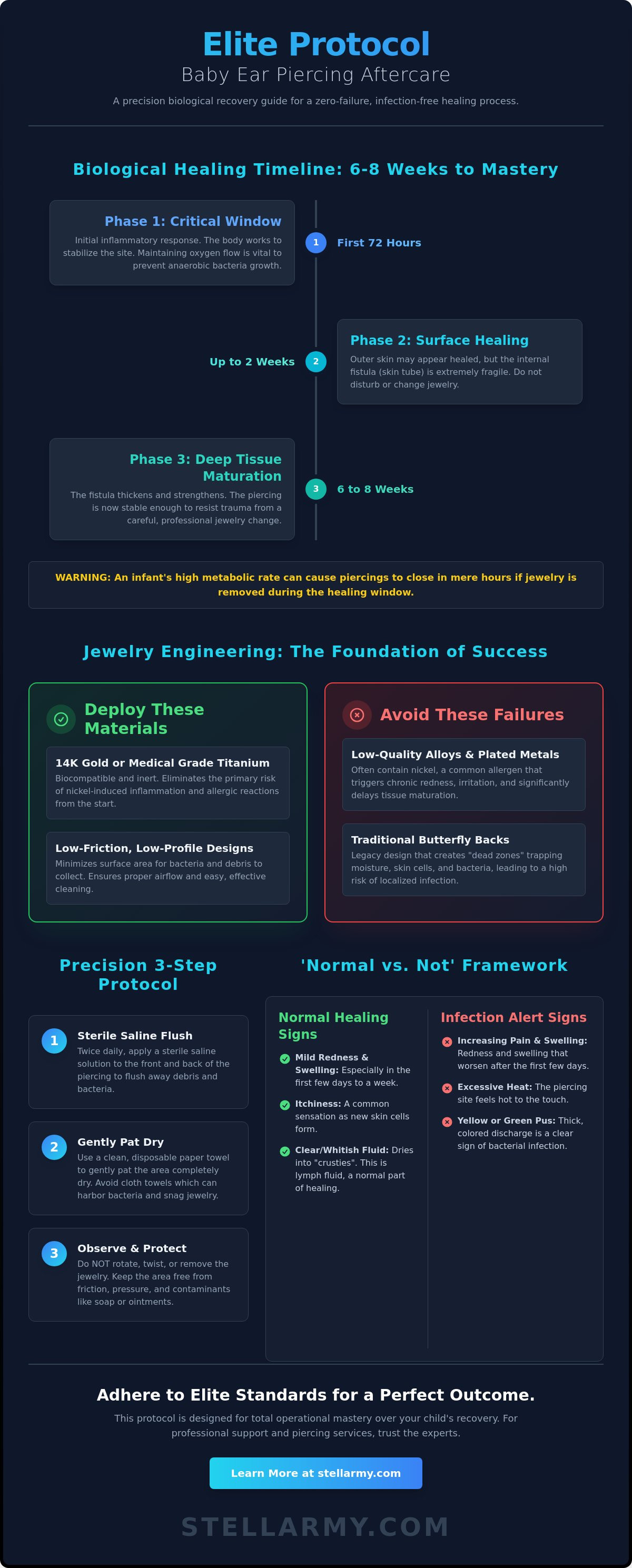
The first 72 hours represent the "Critical Window" for long-term success. During this phase, the body initiates a complex inflammatory response to stabilize the site. Maintaining consistent oxygen flow to the piercing channel is vital. If the area is smothered by heavy ointments or tight jewelry, you create an environment for anaerobic bacteria to thrive. These pathogens exist without oxygen and are the primary cause of deep-tissue infections. Precision care ensures the site remains clean, ventilated, and undisturbed during this volatile initial period.
Infant Biological Healing Timelines in 2026
Recovery happens in two distinct stages: surface healing and deep tissue maturation. Within the first two weeks, the outer skin may look perfect, but the internal fistula, the tube of skin forming around the jewelry, is still fragile. We maintain a non-negotiable 6-8 week minimum before any jewelry change occurs. This timeframe allows the new skin to thicken enough to resist trauma. Infant piercings close remarkably fast because of their rapid healing capacity. If jewelry is removed for even a few hours during this window, the body's high-speed repair mechanism can seal the hole, requiring a professional re-pierce.
Environmental Factors: Managing KL Humidity and Sweat
Kuala Lumpur's tropical climate adds a layer of complexity to the recovery process. High humidity levels can trap moisture behind the earlobe, creating a breeding ground for bacteria. Sweat contains salts and oils that can irritate a fresh wound if left to sit. To maintain our precision aftercare standards, you must keep the area dry after outdoor exposure. While air conditioning provides relief from the heat, it can also strip moisture from the skin, leading to micro-cracks and irritation. Balance is key. Use a sterile saline solution to flush out sweat and salt, then gently pat the area dry with a clean paper towel to prevent moisture buildup. This disciplined approach eliminates the environmental variables that often lead to complications in tropical regions.
Selecting the Right Foundation: How Jewelry Engineering Impacts Recovery
Successful baby ear piercing aftercare begins with the hardware you install. In the 2026 precision protocol, we view jewelry not as an accessory, but as a medical-grade implant that must facilitate rapid healing. 14K gold and Medical Grade Titanium are the only acceptable standards for this mission. These materials are biocompatible, meaning they don't leach toxins into the bloodstream. Nickel is the primary enemy here. Even trace amounts of nickel in low-quality alloys trigger systemic inflammatory responses in infants, leading to chronic redness and delayed tissue maturation. By selecting high-purity metals, you eliminate the risk of metal hypersensitivity before the healing process even starts.
Mechanical engineering is just as critical as material purity. Traditional butterfly backs are a legacy design that frequently fails in infant applications. Their intricate loops create "dead zones" that trap moisture, dead skin cells, and environmental pollutants. This accumulation of debris is the leading cause of localized infections. Following the elite standards for Preventing Infection requires hardware that maintains a clean, accessible wound site. Modern engineering favors designs that minimize surface area for bacteria while maximizing security.
The Stellar Standard: 14K Gold and Screw-Back Security
Screw-back earrings represent the gold standard for infant safety. These designs feature a threaded post and a backing that screws into place, effectively locking the jewelry. This prevents the earring from being overtightened against the lobe, a common mistake that cuts off blood flow and stalls recovery. The "Safety Clutch" mechanism ensures a consistent gap for oxygen circulation. Furthermore, screw-backs eliminate the risk of the jewelry falling out or becoming a choking hazard. Parents looking for hypoallergenic earrings for sensitive ears malaysia should prioritize these specific engineering specs to ensure a zero-friction healing experience.
Flatback Labrets: The Modern Solution for Comfort
Flatback labrets are a superior ergonomic choice for babies who spend the majority of their time lying down. Unlike traditional posts that can poke the side of the head during sleep, flatbacks provide a smooth, flush surface against the skin. This reduces pressure-point irritation and prevents micro-trauma to the piercing site when the child moves. The streamlined design also makes it much easier to clean the posterior earlobe, as there are no hidden crevices for discharge to collect. Secure your child's recovery by choosing a professional piercing service that utilizes these medical-grade standards from day one.
The Precision 3-Step Daily Cleaning Protocol for Infant Piercings
Modern baby ear piercing aftercare has shifted toward a "low-friction" philosophy. We've moved past the legacy advice of rotating or twisting earrings. Twisting disrupts the forming fistula, the delicate tube of skin maturing around the post. Every rotation breaks the new cellular bonds, effectively resetting the healing clock. Instead, we prioritize a hands-off approach that minimizes tissue trauma. Sanitization occurs twice daily, once in the morning and once before bed. This "Goldilocks Zone" provides enough protection against pathogens without over-stripping the skin's natural protective barrier. We exclusively use sterile saline solutions. Avoid hydrogen peroxide or alcohol; these harsh chemicals destroy healthy cells and delay recovery.
Adhering to these American Academy of Pediatrics guidelines ensures you're operating within medically recognized safety parameters. By removing mechanical friction from the routine, you allow the body's natural recovery systems to function at peak efficiency.
Step 1: Sanitized Preparation
Before touching the piercing site, execute a rigorous 20-second hand-washing routine with antibacterial soap. This is your primary defense against cross-contamination. Conduct the cleaning in a quiet, distraction-free environment to keep the infant calm. Sudden movements increase the risk of accidental snagging or micro-tears. Perform a brief visual inspection. Look for any excessive discharge or swelling that deviates from the standard healing baseline established in the first 72 hours. This preparation phase is about risk mitigation and situational awareness.
Step 2: The Saline Flush
Apply your aftercare solution directly to the front and back of the earlobe. Avoid using cotton balls or swabs; their fibers can snag on the jewelry and introduce foreign matter into the wound. The goal is a thorough flush that allows the saline to penetrate the internal piercing channel. If you notice "crusties"—dried lymph fluid—don't pick at them. Use the "Soak and Soften" method by saturating the area with saline until the debris naturally slides away. This keeps the tissue intact and the healing process on track.
Step 3: Moisture Management
Once the site is clean, moisture management is your final task. Use a clean, disposable paper towel to pat the area dry. Never rub. Leaving the earlobe damp, especially in high-humidity environments, creates a reservoir for fungal or bacterial growth. Ensure the jewelry backing is secure. It should sit firmly on the post without compressing the lobe. Compressed tissue limits blood flow, which is the engine of cellular repair. This disciplined 3-step protocol ensures your child's recovery remains efficient and infection-free.
Identifying and Managing Complications: From Redness to Infection
Precision baby ear piercing aftercare requires a high level of situational awareness. You must be able to distinguish between the body's natural inflammatory response and a genuine biological complication. During the first 48 to 72 hours, minor localized redness and a small amount of clear discharge are standard indicators of the healing process. However, when these symptoms persist or escalate, it signals a breach in the recovery protocol. We utilize the 'Normal vs. Not' framework to help parents categorize these signals. A slight pink tint is normal; a deep, spreading crimson is a red flag. Clear fluid is part of the repair cycle; cloudy, yellow, or green discharge is a sign of bacterial presence.
Distinguishing between a metal allergy and a bacterial infection is critical for your next steps. A metal allergy, often triggered by low-grade alloys containing nickel, typically manifests as intense itching and dry, flaky skin without significant heat. In contrast, a bacterial infection presents with localized warmth, persistent throbbing, and swelling that feels firm to the touch. If you have followed our elite standards and utilized 14K gold or medical-grade titanium, the risk of allergy is nearly zero. This allows you to focus purely on hygiene management. Maintain a strict 'No-Touch' policy outside of your two daily cleaning windows. Over-cleaning is as dangerous as under-cleaning; it strips the skin of its protective oils and causes micro-cracks that invite pathogens.
Red Flags: When to Take Immediate Action
You must monitor the site for specific red flags that require professional intervention. True infection presents as heat, extreme sensitivity, and green or yellow discharge. If the earring backing appears to be sinking into the earlobe, the tissue is likely swelling over the jewelry. This is an embedded backing and requires immediate attention from a professional. Crucially, you should never remove the earring during an active infection. Removing the post allows the surface to seal shut, effectively trapping the bacteria inside the lobe and potentially leading to an abscess. Keep the channel open to allow for drainage while you seek medical advice.
Managing Accidental Snags and Trauma
Accidental snags from towels or clothing are common operational hazards. If a snag occurs, do not panic. Immediately wash your hands and perform a saline flush to clear any micro-tears of potential bacteria. Avoid using ointments, which can trap heat and block oxygen flow. Monitor the site closely for the next 24 hours for any increased swelling. For detailed troubleshooting on mechanical trauma, consult our piercing aftercare guide. If the trauma causes significant bleeding or the jewelry is dislodged, book a professional check-up at our Kuala Lumpur piercing studio to ensure the structural integrity of the piercing remains intact.
The Stellar Standard: Professional Aftercare Support in Kuala Lumpur
Execution of the 2026 precision protocol concludes with a transition from active wound management to long-term styling. While the heavy lifting of baby ear piercing aftercare occurs at home, professional oversight remains a critical component of our elite standards. We don't view a piercing as a one-time transaction. It's a high-stakes biological project that requires a verified baseline of success before you move to the next phase. Professional follow-up appointments allow our specialists to inspect the fistula's structural integrity. This ensures the internal tissue has matured enough to handle jewelry changes without risking a collapse of the piercing channel.
The path to a lifetime of healthy piercings is paved with disciplined adherence to quality. By the eight-week mark, most infants have reached a stable recovery plateau. However, the transition from 'healing' earrings to 'permanent' jewelry must be handled with technical precision. Rushing this stage or downgrading to inferior materials can undo months of progress. We advocate for a gradual transition that prioritizes hypoallergenic stability over aesthetic variety during the first year of the piercing's life.
Selective Percentile Quality: Our Commitment to Your Baby
Our brand operates on a selective percentile-based quality standard. Every specialist undergoes a rigorous screening process to ensure they meet our technical benchmarks for infant care. We provide sterile, mall-based boutiques across Kuala Lumpur that offer a controlled, high-density environment far superior to generalist shops. This infrastructure is designed to minimize external variables and maximize safety. Secure your child's initial session or a professional recovery check-up by booking a piercing service today to ensure your results remain within our elite performance parameters.
Transitioning to Permanent Jewelry
Once you surpass the eight-week milestone, you can begin exploring different jewelry architectures. We recommend staying with 14K gold for at least the first twelve months. This material provides the most stable environment for a maturing piercing site, offering a superior barrier against environmental irritants. When choosing the second pair, look for the same mechanical security features discussed in our earlier protocols. You can find high-performance options in our guide to 14K gold earrings for kids. Adhering to this elite standard ensures your child's piercings remain healthy, secure, and infection-free for years to come.
Secure Your Child's High-Performance Healing Results
Mastering the elite standards of baby ear piercing aftercare is about more than just hygiene; it's about operational mastery over a delicate biological process. You've learned to leverage material engineering by choosing 14K gold and medical grade titanium to prevent systemic inflammation. You've also adopted a low-friction cleaning protocol that respects the forming fistula and accelerates recovery. These disciplined choices eliminate the common stressors of infant infection and jewelry failure, ensuring a seamless transition to permanent styling.
Our mission-ready team provides the ultimate filter for technical excellence in infant care. We operate sterile, hygienic boutiques across Selangor and KL, staffed by specialists trained in high-stakes pediatric piercing. By choosing a partner that values quality over quantity, you secure a zero-complication outcome for your child. Book Your Professional Baby Piercing Appointment in KL today to access our elite jewelry options and professional oversight. You're well on your way to ensuring a safe, beautiful, and infection-free experience for your little one.
Frequently Asked Questions
How many times a day should I clean my baby's new ear piercing?
Clean the piercing site exactly twice a day, once in the morning and once in the evening. This frequency maintains a sanitized environment without over-stripping the skin's natural moisture. Over-cleaning can lead to micro-cracks and irritation, while skipping sessions allows bacteria to accumulate. Consistency is the primary metric for success in baby ear piercing aftercare. Use a sterile saline solution to ensure the wound remains clear of debris and pathogens throughout the day.
Can I use alcohol or Dettol to clean my baby's ears?
Avoid using alcohol, Dettol, or hydrogen peroxide on fresh piercings. These substances are too aggressive for an infant's delicate tissue and can kill healthy cells required for regeneration. Harsh chemicals often delay the healing process and cause unnecessary stinging or discomfort. Instead, utilize a dedicated aftercare solution or a sterile saline spray. These options provide high-performance sanitization while respecting the biological needs of the healing fistula and ensuring a zero-friction recovery.
Is it normal for my baby's ear piercing to bleed slightly in the first few days?
Minor spotting or localized bleeding within the first 48 to 72 hours is a standard part of the body's inflammatory response. The piercing creates a small puncture wound, and light discharge or scabbing is expected as the site stabilizes. If the bleeding is persistent or heavy, apply gentle pressure with a clean gauze. Monitor the area for significant swelling or heat, which could indicate a breach in the recovery protocol and require professional inspection.
Should I rotate the earrings while cleaning them?
Do not rotate or twist the earrings during the cleaning process. Modern precision protocols identify rotation as a primary cause of tissue trauma and delayed healing. Twisting breaks the new skin cells attempting to form the internal piercing channel, effectively resetting the recovery clock. A hands-off approach is more efficient. Simply flush the area with saline solution to remove debris without disturbing the jewelry's structural position or causing unnecessary pain to the infant.
What should I do if my baby's earring backing falls off?
If a backing falls off, immediately wash your hands for 20 seconds and sanitize the replacement backing with aftercare solution. Re-insert the earring post carefully if it has slipped out, but don't force it if you feel resistance. An infant's piercing can close in a matter of hours due to their high metabolic rate. If you cannot replace the jewelry easily, contact a professional piercer immediately to avoid the need for a traumatic re-pierce.
How long does it take for a baby's ear piercing to heal completely?
Initial surface healing typically occurs within 6 to 8 weeks. During this window, the earrings must remain in place to prevent the channel from sealing shut. However, deep tissue maturation can take up to a full year. Adhering to a disciplined baby ear piercing aftercare routine during the first two months is critical for long-term success. Avoid changing the jewelry until a professional confirms the fistula is structurally sound and ready for a transition to new studs.
Can my baby go swimming after getting their ears pierced in KL?
Avoid swimming in pools, lakes, or the ocean for at least two weeks following the procedure. Chlorine and bacteria found in public water sources can irritate the wound and introduce pathogens into the piercing channel. If swimming is unavoidable, perform a thorough saline flush immediately afterward. In the high-humidity environment of Kuala Lumpur, keeping the site dry and free from contaminants is a non-negotiable safety standard for preventing fungal or bacterial growth.
When is the best time to change my baby's first earrings?
Wait at least 8 weeks before attempting to change the initial jewelry set. This timeframe allows the internal skin tube to become sufficiently durable for a hardware swap. Changing the earrings too early can cause micro-tears and introduce bacteria into the raw tissue. When you do transition, select high-quality 14K gold or medical grade titanium to maintain the site's biological stability. Always ensure your hands and the new jewelry are fully sanitized before the swap.